Ocoee River Raft Guide Gear FAQ: What Do the Professionals Carry?
Experienced guides rely on specialized equipment for safety, comfort, and performance. Here are answers to common questions about the gear you see your Ocoee River raft guide using on a daily basis. Many guests begin to notice the difference between standard commercial river gear and professional outfitting once they hit the Class III rapids detailed in the Middle Ocoee Guidebook.
As an ACA-certified instructor and veteran professional, I stress that guide gear is not about looking cool; it's about being prepared for high-consequence situations. Navigating the Class IV hydraulics of the Upper Ocoee Guidebook requires high-flotation PFDs, throw ropes, and specific rescue knives. Professional gear is mandatory when reading complex Ocoee River Hydrology and mitigating the inherent risks of swiftwater.
Safety protocols dictate exactly how this gear is carried and deployed. A key example is understanding swiftwater safety protocols regarding exposed carabiners, which can become deadly entrapment hazards. By studying the technical mechanics of benchmark drops like Broken Nose and Table Saw, you will quickly realize why professional-grade gear—and the knowledge to use it—is a non-negotiable requirement for an Ocoee guide.
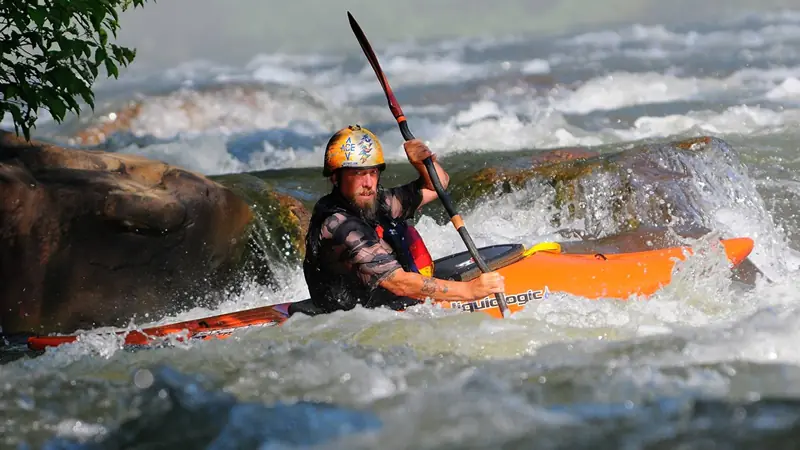
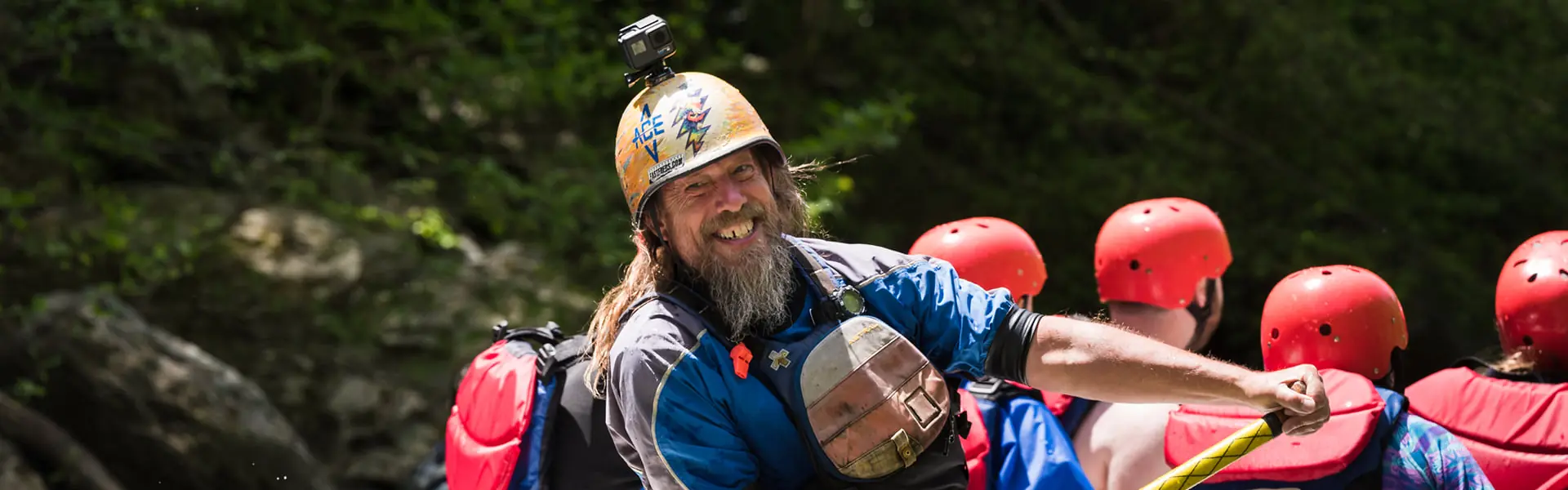
Why do the guides' helmets look different?
The guides generally invest in better, higher-performance helmets. This is especially true for those of us that are private boaters and spend a lot of time on the river.
Why do some guides have very different Personal Flotation Devices (PFD)?
Personal Flotation Devices (PFD) are an important investment for any boater and especially professional boaters. PFDs suitable for commercial work are quite expensive. Senior guides and private boaters have often taken Swiftwater Rescue (SWR) courses and wear "rescue vests" which have specialized safety features.
Why don't guides wear regular swimsuits?
A good pair of guide shorts will last more than one season. They also provide pockets for essential small items. Guides and their gear take a lot of abuse daily. In cooler weather, experienced guides never wear cotton; quick-dry shirts are the only way to go if you are on the river all day on a daily basis.
Why don't experienced guides go barefoot or wear flip flops?
We wear water shoes when conditions call for them; I personally wear Astral Brewers. They provide warmth and protection for my feet against rocks and terrain. If I am concerned about fungus or need air flow, I wear Chaco sandals. Flip flops fall off easily and offer no protection.
What's in the bag my guide straps to the raft?
That is a dry bag containing a First Aid Kit. This kit meets the required USFS standards for the Ocoee River. It is a little heavy, but essential for safety.
What is a throw rope and why is it in a bag?
Throw ropes are used to extend the reach of the rescuer. They are very handy for retrieving swimmers from a distance. The rope is most often enclosed in a bag to keep it organized and to help prevent entrapment hazards.
Why do the guides carry knives?
A river knife is a must to cut ropes as a safety measure. Carrying a knife is mandatory if you carry a rope, to help prevent entrapment if the rope gets snagged.
What do guides use to unpin rafts?
Carabiners, webbing, and prusik loops are useful for retrieving pinned rafts. These devices are used to build mechanical advantage systems (like a Z-drag) to pull heavy, water-filled rafts off rocks.
Why are the guides carrying water bottles?
A water bottle is needed when you are on the river all day with few breaks. Hydration is a must for guides; we consume a lot of water to stay sharp and healthy in the heat.