Inherent Risks & Weight Limits: Honest Answers on Safety
Safety is not a marketing slogan; it's physics. Below is the unfiltered truth about the risks of whitewater rafting, including the specific legal definitions in Tennessee and the physical realities of rafting while overweight. Many outfitters gloss over these facts, but understanding the raw power of the river is the mandatory first step before tackling the Class III rapids detailed in the Middle Ocoee Guidebook or the Class IV hydraulics of the Upper Ocoee Guidebook.
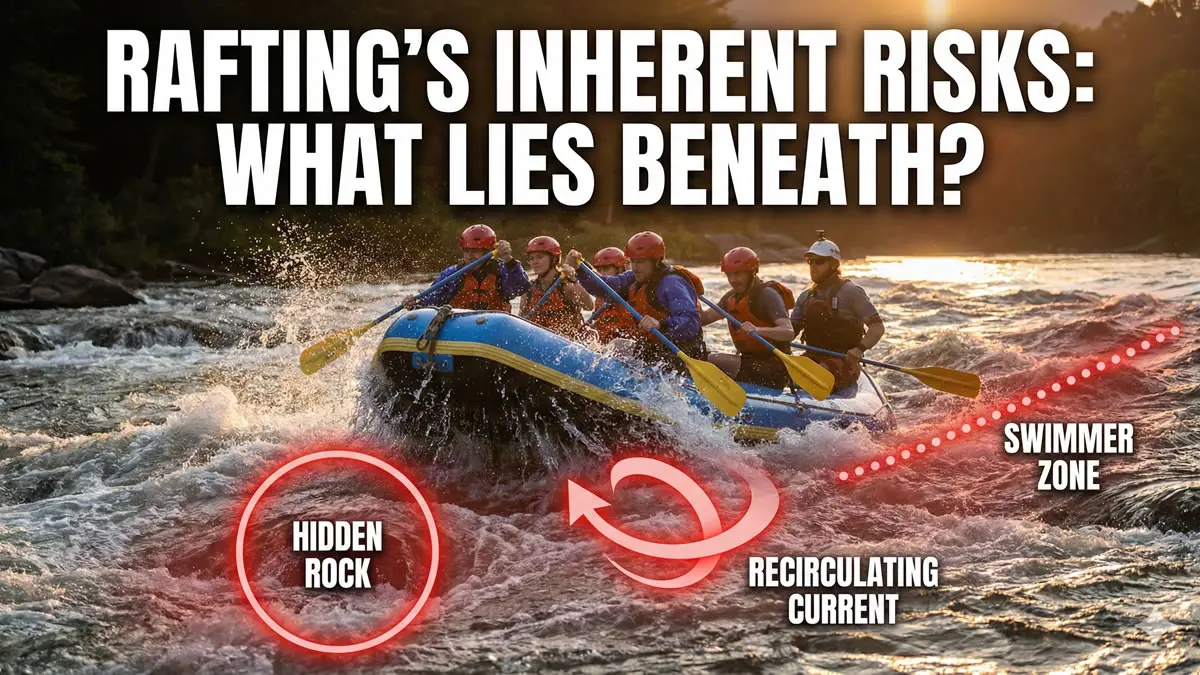
As a veteran professional guide and ACA-certified instructor, I believe guests and guide trainees alike must respect the river's hydrology. Whitewater inherently involves unpredictable forces, and navigating it safely requires strict adherence to swiftwater safety protocols. The water does not care about your experience level when you encounter subsurface river hazards like sieves, undercut rocks, and powerful hydraulic holes.
Before you step into a boat or study the anatomy of river gear, you must accept that an out-of-boat experience (swimming) is a very real possibility. By studying the technical mechanics of benchmark drops like Broken Nose and Table Saw, you will quickly realize why physical fitness, active listening, and total honesty about your physical capabilities are required for a successful and safe trip down the Ocoee River.
Tennessee Law Definition
"(2) 'Inherent risks of whitewater activities' means those dangers or conditions that are an integral part of whitewater activities, including, but not limited to: (A) Water; (B) Rocks and obstructions; (C) Cold water and weather; and (D) The potential of a participant to act in a negligent manner..."
Inherent Risks vs. Residual Risks
Inherent risk can be controlled to achieve a residual risk through controls. Section (D) of the inherent risks is within your control. You should have the ability and fitness to follow instructions and make an honest effort.
No one died or was seriously injured in this video footage. It is safe for all ages to watch! Much of this video was shot at the Olympic Channel of the Upper Ocoee. You can reduce your risks by requesting a competent river guide and honestly evaluating your fitness.
Tennessee Code: Liability For Activities
§ 70-7-201 - Part definitions
As used in this part, unless the context otherwise requires:
- (1) "Engages in whitewater activity" means whitewater rafting;
- (2) "Inherent risks" include water, rocks, cold weather, and participant negligence;
- (6) "Whitewater professional" means any entity engaged for compensation in whitewater activity.
§ 70-7-202: Limited Liability
A whitewater professional shall not be liable for an injury to or the death of a participant resulting from the inherent risks of whitewater activities.
§ 70-7-203: Exceptions
Liability is not limited if the professional provided faulty equipment, failed to warn of known dangerous latent conditions, or committed gross negligence.
Is There a Weight Limit for Whitewater Rafting?
Whitewater rafting can be an intimidating prospect due to the need for proper protective gear, swift water, and the ability to re-board the raft in an emergency. Additionally, body weight is a key factor in determining one's safety and suitability for the activity.
The Specific Challenges
- Paddling Difficulty: Paddling requires core and upper body strength. Excess weight can make it difficult to maneuver the raft through technical rapids.
- Recovery: A heavier person is harder to pull back into the raft. In a rescue scenario, it may not be possible for other rafters to rescue them.
- Gear Fit: Life vests must fit snugly. On overweight individuals, PFDs may ride up over the face, creating a serious drowning hazard.
- Raft Balance: A significantly heavier person can unbalance the raft, causing it to list or ride lower in the water, increasing the risk of getting stuck on rocks.
Have questions about your specific situation?
If you are concerned about fitness, weight, or safety protocols, don't guess. Contact me directly before booking. I will give you the honest assessment most outfitters won't.
Ready? Book Your Trip (Save 10%)