Middle Ocoee Guidebook: 27 Rapids, Raft Lines, and Kayak Beta
This 101 for Middle Ocoee Rapids and Routes course was built to bridge the gap between carnage videos and technical mastery. Originally inspired by a conversation in 2016 about the harshness of my guide failure (carnage) videos, I developed this resource to provide a roadmap for three specific groups: Ocoee River Raft Guide Trainees learning the Standard Commercial Raft Lines, Rising Intermediate Private Boaters seeking beta for Personal First Descents, and the interested public who want to understand the hydrology behind the ride. Mastering these lines is a prerequisite for anyone looking to eventually step up to the Class IV challenges detailed in my Upper Ocoee Guidebook.
As a veteran professional guide and ACA-certified instructor, I believe that true river sense is built on a foundation of technical precision rather than "sneaking" around features. Whether you are studying the anatomy of a whitewater raft to better understand how thwarts and tubes react to pressure, or you are a trainee learning to execute command-perfect runs, this guide provides the necessary technical edge. This index covers 27 distinct rapids, offering specific analysis for standard flows as well as specialized PFD beta for kayakers who must navigate safely alongside commercial raft traffic.
Safety is the primary driver of this technical audit, particularly when dealing with high-consequence hydrology. Every boater should be intimately familiar with swiftwater safety protocols and the inherent risks of the Ocoee River before putting on the water. By understanding the subsurface hazards of benchmark drops like Broken Nose and Table Saw, you can move beyond survival and toward the technical mastery required of an elite river professional.
2026 Middle Ocoee Recreation Release Calendar
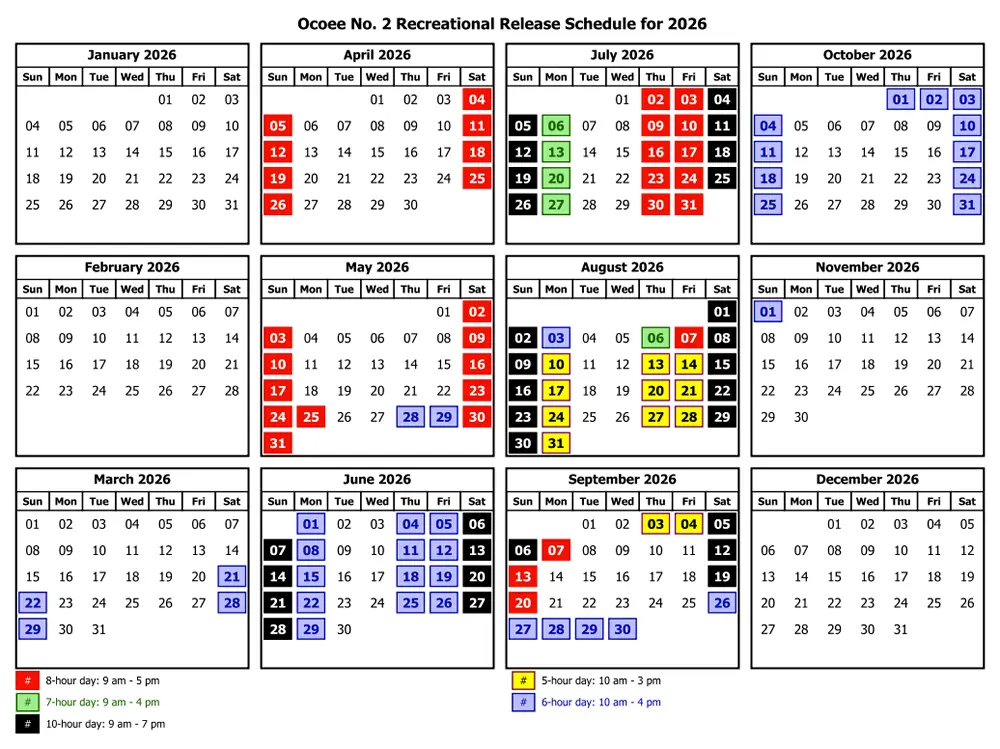
Note: This Middle Ocoee release schedule is subject to change by TVA and through the Ocoee Outfitter's Association by negotiation with TVA.
Mastering the Middle Ocoee requires developing river sense, which is a trait that first year rookies often lack. This guide provides technical routes for Standard Raft Lines, High Water Raft Lines, and Kayaker Personal First Descent Lines rather than sneaks. Kayaking among the rafts during the July peak season is much like riding a motorcycle in city rush hour traffic. Comfort around rafts and solid hole surfing skills are mandatory. I am constantly updating this beta with fresh footage to ensure it remains the most reliable technical resource on the river possible.
Standard Commercial Raft Lines (Normal Flow)
This playlist (two videos) indexes the twenty seven rapids of the Middle Ocoee at normal recreational flows. It serves as the primary visual reference for guide trainees studying the standard commercial routes between weekday twelve hundred and weekend sixteen hundred cubic feet per second.
Use this index to memorize the sequence of rapids and the specific entry moves required for each major feature. The footage covers the river from the put in below the dam to the take out below the powerhouse to establish a baseline for reading water.
High Water Raft Lines (~3000 CFS)
The character of the river changes drastically as the flow approaches three thousand cubic feet per second. This video documents the high water lines at levels near the commercial rafting cutoff where speed and hydraulic power increase significantly.
Notice how many standard gate rocks become submerged sleepers while holes like Double Suck become significantly more powerful. Guides must adapt their angles and momentum to account for the increased river speed and push common at these higher levels.
Kayak Beta for Personal First Descents
Private boaters often struggle when blindly following rafts because commercial lines are designed for heavy rubber boats rather than nimble kayaks. This guide focuses on kayak specific beta for paddlers attempting their personal first descent of the Middle Ocoee.
These routes prioritize control and catching eddies rather than simply surviving the main flow of the commercial convoy. Study the separation between the raft traffic and the technical moves available to hard boats to maintain your autonomy on the river.
The Middle Ocoee River Rapid Names
The names of rapids along the Middle Ocoee section of the Ocoee River are colorful and reflect the pop culture of the 1970s. The rapids are listed below in the order they are encountered from the dam to the powerhouse. Targeting a specific rapid? Select it from the table below to jump straight to the technical beta and video analysis.
Middle Ocoee Rapid Index
Middle Ocoee River Access Points
Rogers Branch (Mile 24): A large parking lot along the lake above Ocoee Dam #2.
Go Forth Creek (Mile 22): An intermediate access point for the Middle Ocoee section with a small parking lot.
Big Creek Access (Mile 19): Primarily for private boaters.
Note: the Middle Ocoee is largely road side but in some places is less accessible or there is no space to park or pull off the road.
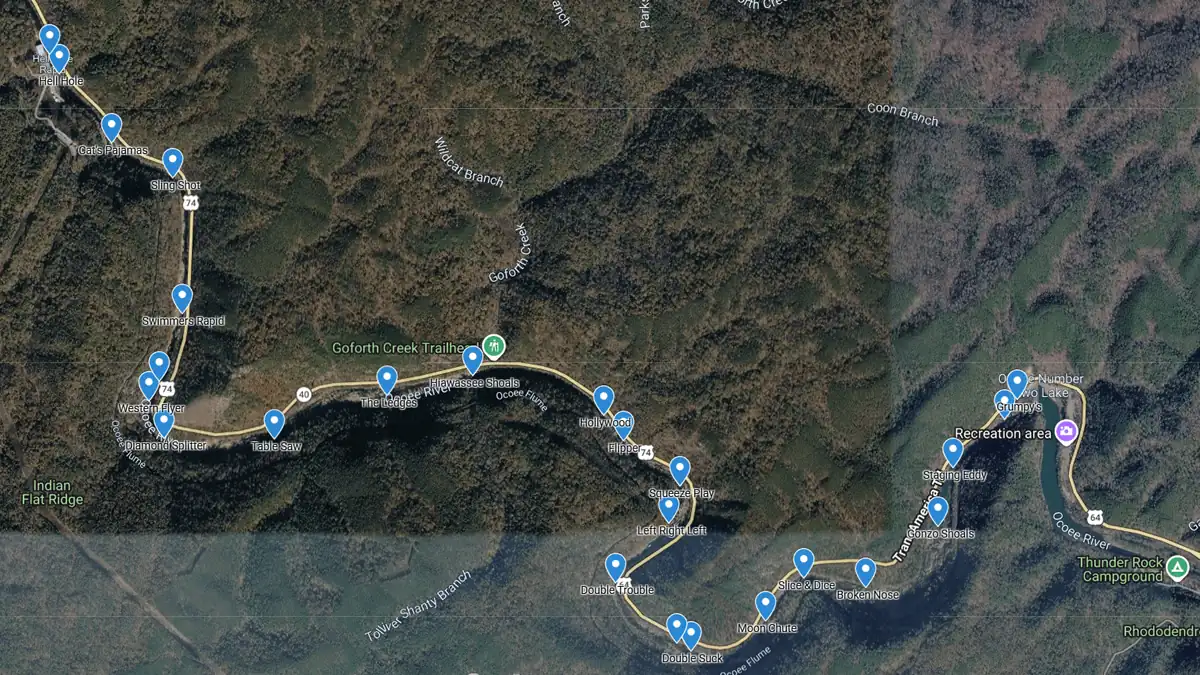
Interactive Google Map of the Middle Ocoee River
Grumpy's Ledge Rapid (aka Snow White)
Class III (III+ at High Water). Grumpy's Ledge is rated Class III between 1,200 and 1,600 cfs. At higher flows, this rapid really deserves respect. To run this rapid clean, make a nice controlled peel out from the ramp eddy. Follow the current to just a few feet left of White Face Rock; beware of getting too close to Pyramid Rock as there is a shallow rock lurking there.
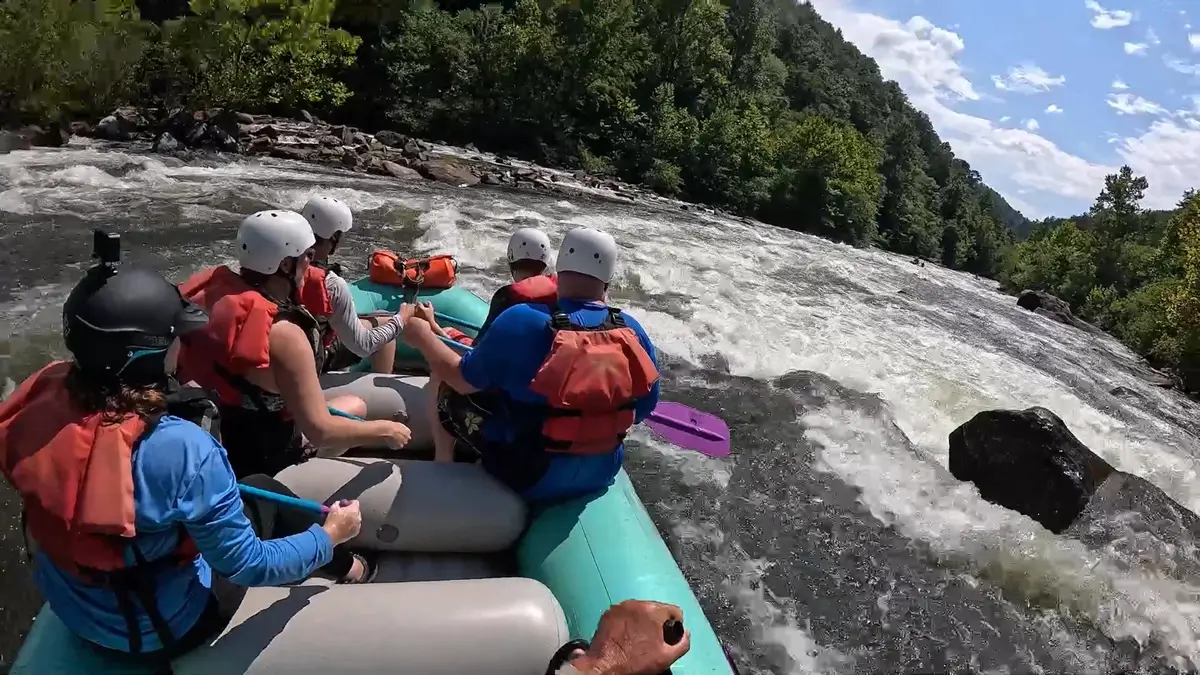
Horseshoe Rock Cluster behind Pyramid Rock has been the scene of many pins, dumps, and flips resulting in long swims through the ledge hole or potential foot and body entrapment. You want to remain right of Horseshoe Rock Cluster! To avoid this, be careful not to get too close to Pyramid Rock as there is a lurking FU Rock just under the surface. The FU Rock is found about three feet from the front of Pyramid Rock along a straight line to White Face Rock. FU Rock is your left gate rock when making the move between Pyramid Rock and White Face Rock. I generally pivot my raft as the front left tube clears FU Rock.
White Face Rock is often pinned by first year rookies and multi-year rookies. Interaction with White Face Rock always carries the risk of creating swimmers. Read the AW accident reports as the outcomes have occasionally included fatalities.
After safely navigating between Pyramid Rock and White Face Rock, continue following the wave train to the tongue through the Grumpy's Ledge hole. The feature known as Guide Ejector will be to your left as you ride the tongue. Guard rocks are pointed out in my linked videos.
Standard Release 1,200 - 1,600 CFS
Raft Lines
Animation: Topo View of Grumpy's Line Classic Raft Line at Grumpy's Ledge How to run with No Crew StrokesKayak Lines
Introductory Classic Line Challenge Line: White Face Boof to House Rock Attainment Running Laps at Grumpy's LedgeHigh Water Lines up to 3,000 CFS
At high water the line is similar, but you must drive further left and drop the ledge to the left of Guide Ejector. Note that the rocks lurking to the right of Pyramid Rock are well covered at high water and no longer in play.
Raft Lines
Grumpy's Ledge High Water LineNorth Shore Rapid
Class III. North Shore is a fun and relatively easy rapid located just below Grumpy's Ledge. It consists of easy boogie water; simply follow the flow. Its name is derived from the sweet wave trough that offers excellent surfing for hard boaters (kayaks and canoes). There are several surfable waves in this section, including a spot or two that can accommodate a raft.
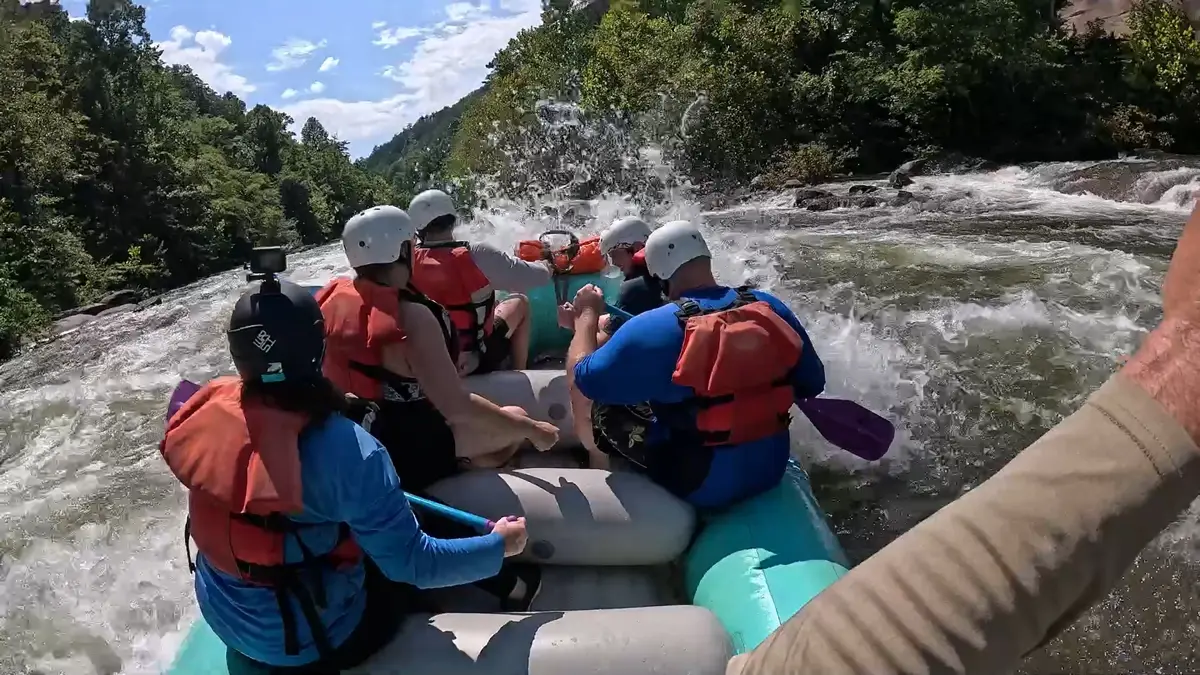
The lead boat of the rafting trip will often set safety for Grumpy's Ledge river right at the top of North Shore Rapid.
Standard Release 1,200 - 1,600 CFS
Raft Lines
North Shore Rapid Normal FlowKayak Lines
North Shore Rapid Kayak PFDStaging Eddy Rapid
Class III. Staging Eddy is easy Class III where you will eddy out your raft river right to regroup. The opening feature of this rapid is called Power Flow, a great surf spot for hard boats. While awaiting the rest of your trip to regroup, get in line to surf the fun hole in the center of the river. Be careful not to break ranks with another company's trip that is already surfing. Try to be courteous to kayakers in the river left eddy. If anyone falls out here it's no big deal.
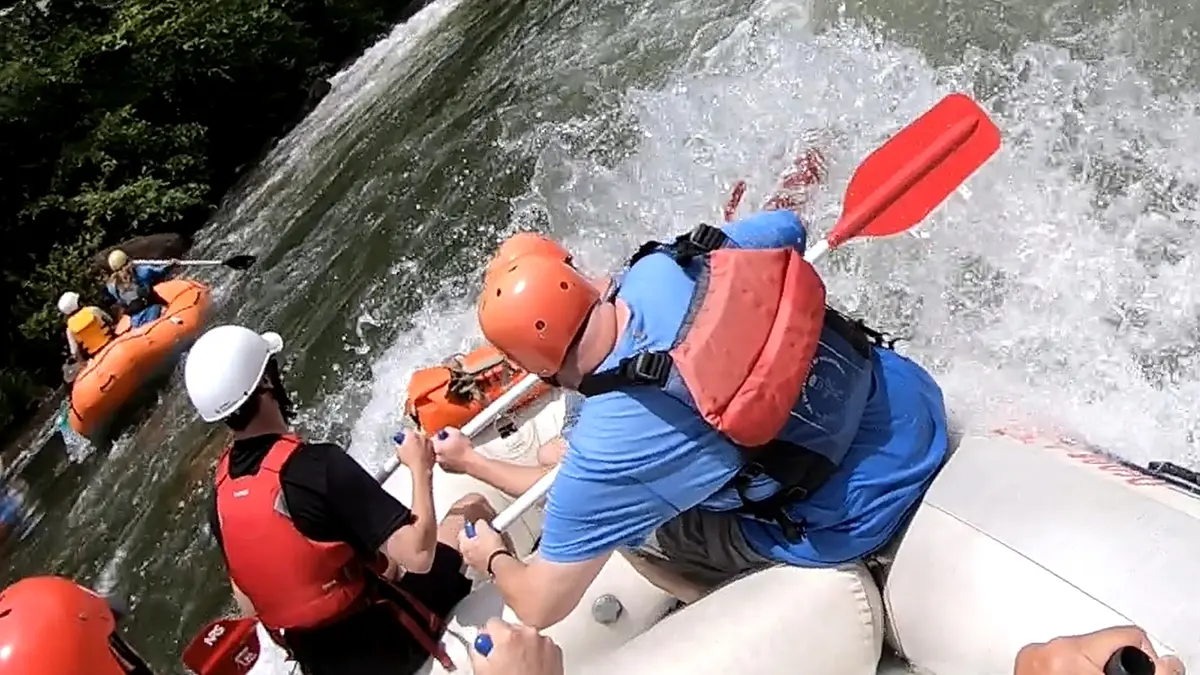
Have you ever considered hydrology of the rock that forms the classic surfing feature at Staging Eddy?
Standard Release 1,200 - 1,600 CFS
Raft Lines
Staging Eddy Normal FlowKayak Lines
Staging Eddy Introductory Line Challenge: Surf Ferries at Power FlowGonzo Shoals Rapid
Class III. Gonzo Shoals is Class III but very shallow with multiple gate rocks. You will begin near the center of the river as you leave Staging Eddy. Follow the flow somewhat toward the left of center before working back towards the huge Gonzo Nose Rock near the center of the river. There is a another marker/gate rock thirty feet or so to the left of the big Gonzo Nose Rock. Pass the small gate just to the right and follow the main flow over a ledge and work your way left with the flow to the bigger double ledge. Your main concern and primary hazard of this rapid is getting flat pinned so pay attention. Hold some left angle making this move and it will be easier!
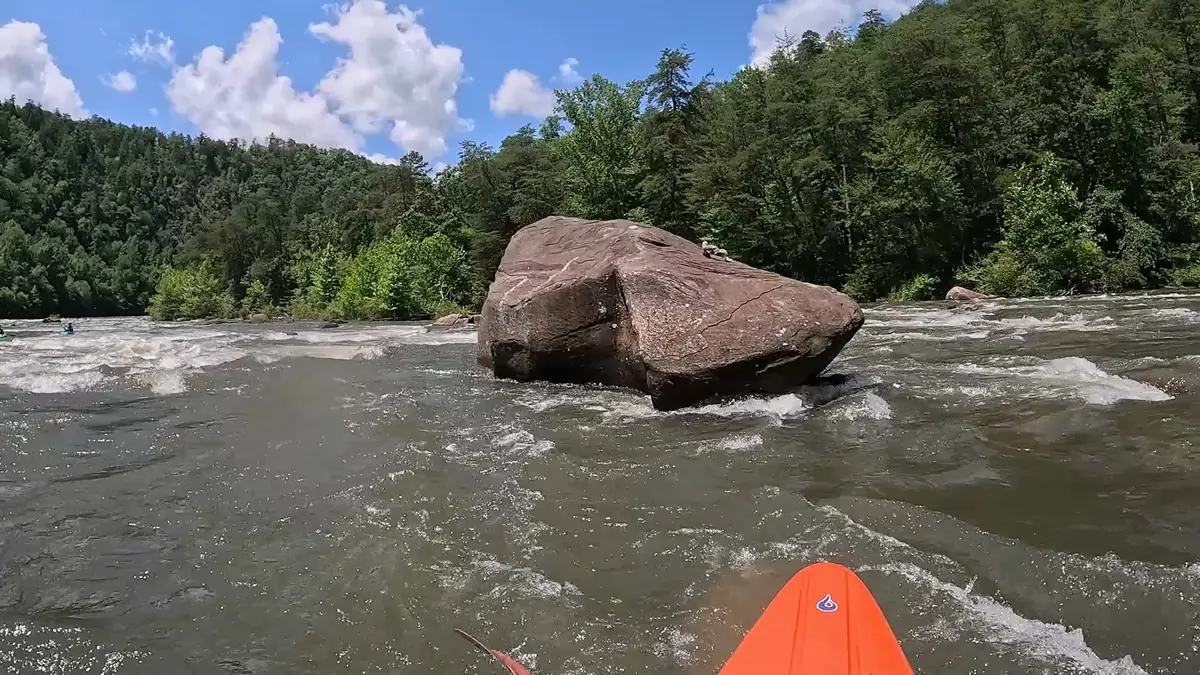
After dropping the largest ledge in Gonzo, look for the lurking gate rocks just down stream. Navigate them and work towards the right thirty or forty feet towards the flow headed towards Good Luck Rock. Be alert; the line is narrow and rafts tend to bunch up and get stuck here. As soon as you pass Good Luck Rock, begin heading river right and following the flow. Don't be lazy here or you will pay! You will be about 30 feet from the river right bank as you begin the approach to Broken Nose rapid. Watch these videos carefully for cues and the gate rocks.
Standard Release 1,200 - 1,600 CFS
Raft Lines
Gonzo Shoals Normal FlowKayak Lines
Gonzo Shoals Introductory Line Challenge: Attainments around Gonzo Rock Challenge: Walk the Plank Challenge: "Walk the Plank" 2x w/ AttainmentBroken Nose Rapid
Class III+ (at Normal Flow). Broken Nose is a Benchmark Class III+ rapid between 1,200 and 1,600 cfs. The approach is shallow, so look for the green water and avoid rocks. Pile-ups frequently occur in the approach; if you get stuck, senior guides will have no mercy! Be aware of the shallow rocks in the approach. Meet the seam in S-wave square and maintain your left boat angle with a right draw stroke (lefties will use a pry stroke) as you drop into the breaking wave. Don't point at the river right bank. If you get hung up on the rocks along the river right banks because you failed to maintain left boat angle, Look Upstream! Do not pull back out into traffic without verifying you have time and space.
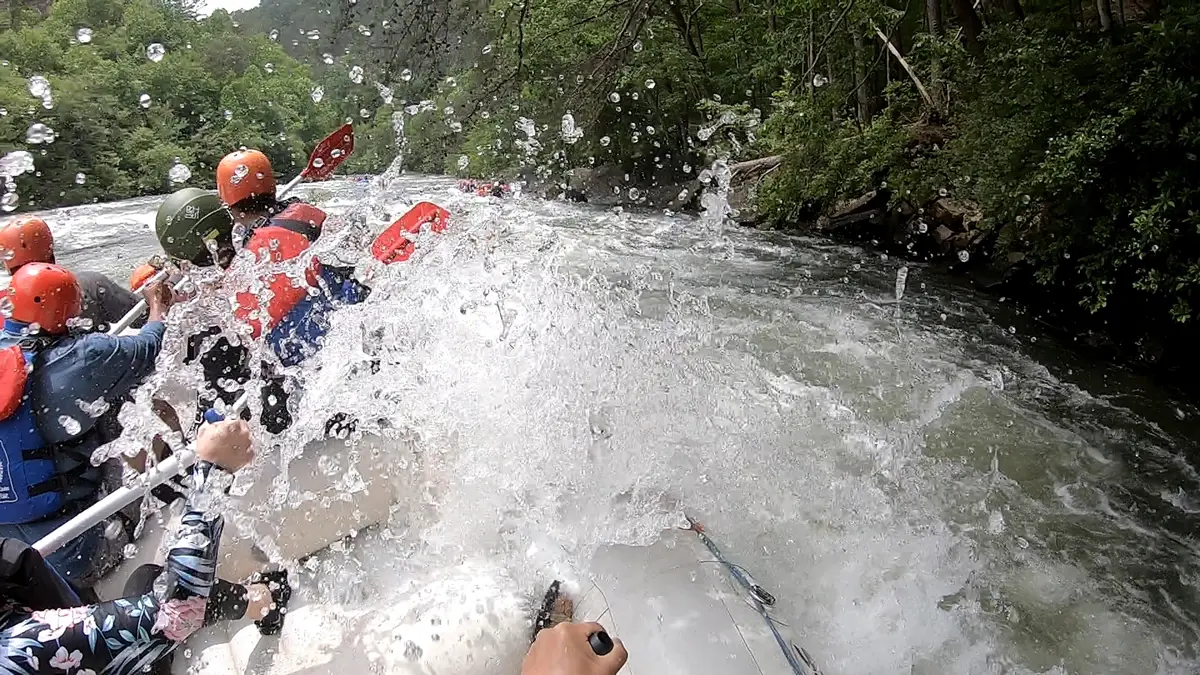
Keep your paddle in the water driving at all times for best results to avoid these pins. Avoid Eddy #5 that kayakers catch, as it can be a bad pin for rafts. Coffee Break Rock, left of center in the final ledge, should also be avoided. No matter what you do, keep your raft perpendicular over both ledges. If you are out of control, have your guests get down before dropping the ledges. Some guides either surf the bottom ledge on purpose or "by accident," so pay attention.
New guides may have trouble escaping the surf if they get caught by the bottom ledge at Broken Nose rapid. And whatever you do, don't even look at Kimberly's Rock, as it can be a horrible pin. You should be right of Kimberly's, but there is a route to the left. Watch the videos to see the alternate high-water line at Broken Nose.
Also consider the hydrology of Broken Nose and the underlying rock structures. This is added to help with reading water and understanding the flow dynamics that form S-wave and the ledge holes.
Standard Release 1,200 - 1,600 CFS
Raft Lines
Broken Nose Normal FlowKayak Lines
Broken Nose Introductory Line Challenge: Catch the Five Classic Eddies Challenge: Elevator Attainment (Eddy 3 to 2)High Water Lines up to 3,000 CFS
High water line at Broken Nose goes right of the island; avoid the S-wave and both ledges. The ledges can become trashy at high water and swimmers can be difficult to recover!
Raft Lines
Broken Nose High Water LineSecond Helping Rapid
Class III. Second Helping comes with great splash potential to please guests. As you exit, there are a few options through gate rocks to begin working left to follow the flow. Do not be lazy! Take the highest option you can. If you wait until the last minute to work left and miss the move, you will be screwed and pinned. Many a rookie has lost a lot of swim beer here and held trips up for long periods of time, dropping them further to the bottom of the rotation. You have been warned. This rapid is likely most challenging at 1,200 cfs and below due to shallow rocks and pin potential.
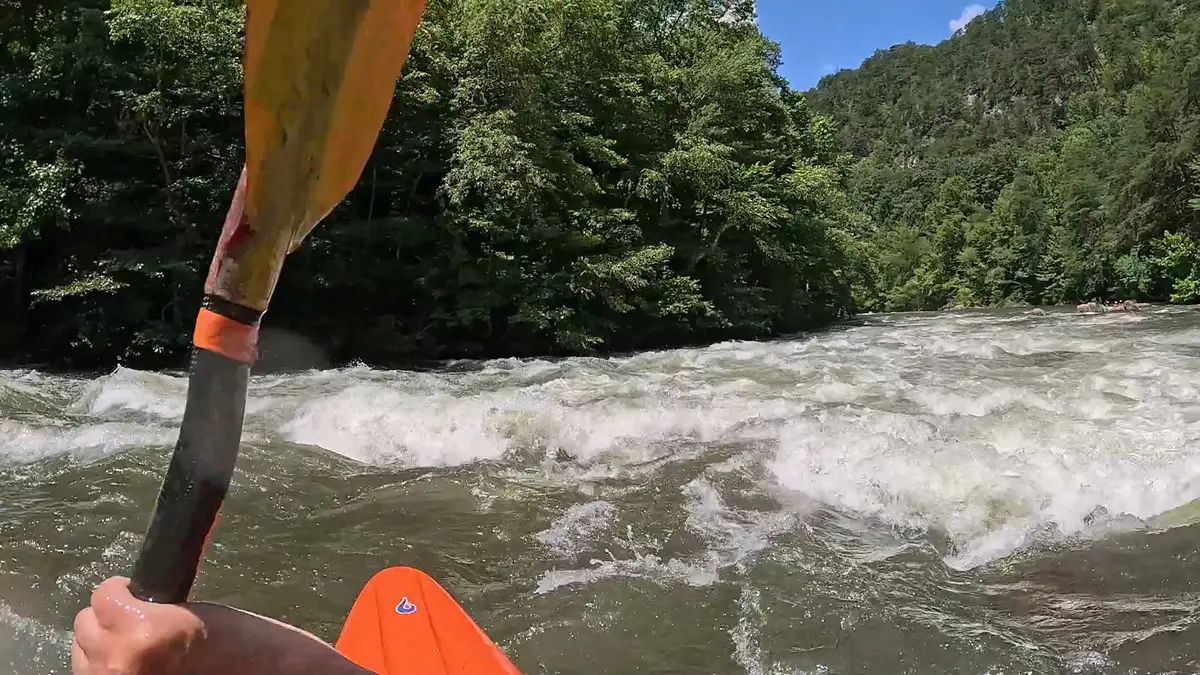
After navigating the gate rocks successfully, work left in a diagonal line toward the ledge and obvious wave train. Make this line have no mercy for and lost, confused, or out of control rafts. Penalty points are high for those who miss this move. After dropping the ledge, preferably on the tongue, follow the wave train to the big pool below. If you are just a little right of the wave train, you will encounter two pin rocks just below the water surface, likely ejecting yourself and almost certainly losing some guests in the shallow rocky rapid. You will not be able to rescue said guests due to being pinned. Watch the videos carefully for cues and the shallow pin rocks.
Standard Release 1,200 - 1,600 CFS
Raft Lines
Second Helping Normal FlowKayak Lines
Second Helping Introductory LineSlice & Dice Rapid
Class III. Slice & Dice is a rapid where swims can be nasty. The rocks lurking at Washing Machine are sharp, and the rapid lived up to its name! The opening move is either dropping the big ledge called Slice aka Dragon Slayer just left of center. Watch the videos carefully for cues. There is a bad hazard called Ankle Breaker Rock if you drop the ledge too far left. Be careful not to lose guests dropping this high ledge. If someone pops out, make sure you recover them ASAP! As mentioned above, swimming Washing Machine is likely to create injuries. Slice has surf opportunities but watch for upstream traffic; there is another surf spot just river left.
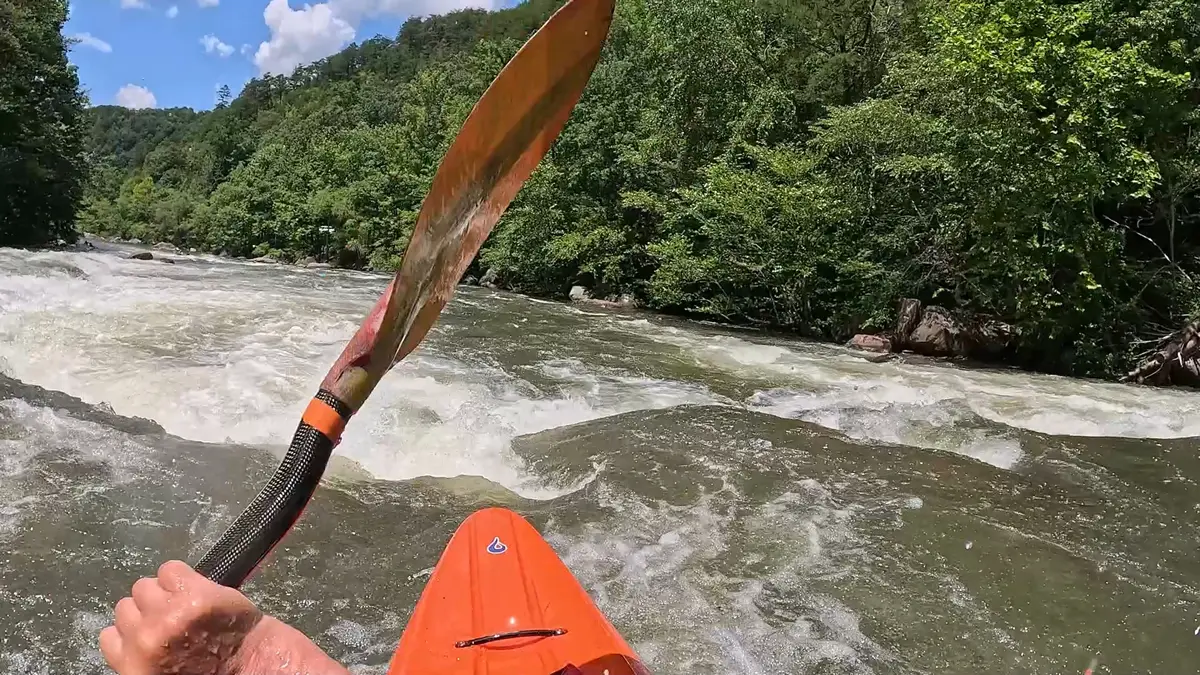
Alternately, there is a ramp move closer to the river left bank to avoid the big ledge. If you take this route, follow the current. You will angle right and charge between gate rocks as you drop a smaller ledge. Some rafting outfitters require their guides to use this line (kayakers beware if you are sneaking and watch for rafts).
After successfully running either of these options, you will head toward the center of the river to run the obvious tongue through Washing Machine. The sticky hole will be to your left. This part of the rapid is made up of offset holes. There are some great splash opportunities in the run-out. Watch for kayakers in the shallow river left eddy, or better still, catch the river right eddy and regroup with your trip.
You may see some senior guides drop-surfing Washing Machine, and many of us can make it look easy. Beware, there is a steep learning curve here. Injuries and evacuations are common when rafts flip here! If you are a first-year guide, absolutely do not attempt this move.
Standard Release 1,200 - 1,600 CFS
Raft Lines
Slice and Dice Normal FlowKayak Lines
Slice and Dice Introductory LineHigh Water Lines up to 3,000 CFS
It is wise to take the river left line into Slice and Dice at high water to avoid the big ledge.
Raft Lines
Slice and Dice High Water LineMoon Chute Rapid
Class III. Moon Chute is super fun and a great place to spin. It is possible to enter this rapid in front of or behind Elephant Rock; if you have a really weak crew, consider the right line behind the Elephant's Butt. Spin on the eddy line, or at least use the eddy line to avoid pinning to the left of Butt Crack Rock. If you blow the line and go left of Butt Crack Rock (aka Dark Side of the Moon), don't panic. There is an escape route; look for the current leading left of the island and commit! Ask your trainer about this option and maybe they will show you. Bonus points if your trainer demonstrates how to unpin a raft from Dark Side of the Moon.
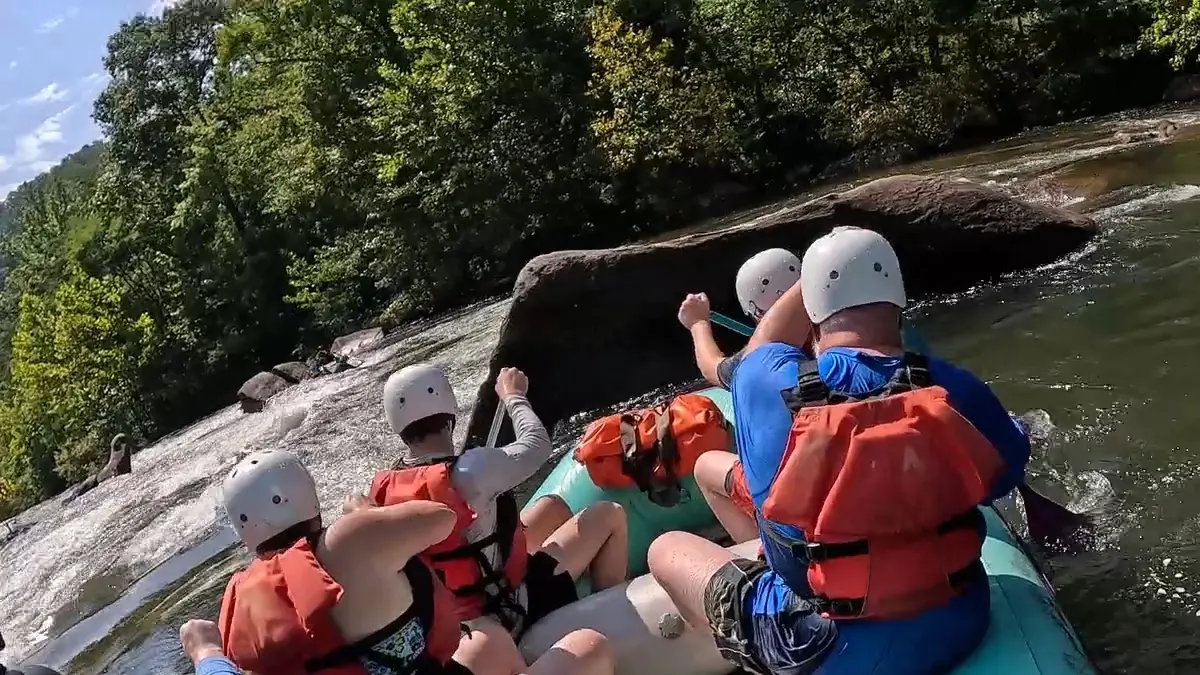
Assuming you successfully made the move right of Butt Crack Rock, follow the flow and stay toward the river right side of the final chute. Look for shallow rocks to avoid. You really want to follow the green water here. Beware of the large rock defining the river left edge of the chute. It can flip rafts especially if you have a heavy crew that low sides away from the rock. Needless to say it is shallow here!
Standard Release 1,200 - 1,600 CFS
Raft Lines
Moon Chute Normal FlowKayak Lines
Moon Chute Introductory Line Challenge: River Right Micro Eddy Challenge: Attainment Around Moon RockHigh Water Lines up to 3,000 CFS
At high water there is a much more direct line on river right.
Raft Lines
Moon Chute High Water LineDouble Suck Rapid
Class III. Double Suck is a technical Class III where boat angle is everything. The standard line run by most rafts begins near the center of the river, working river left until you pass just left of Alligator Rock. At which point, you will work right through some gate rocks and over a small ledge to join the other line.
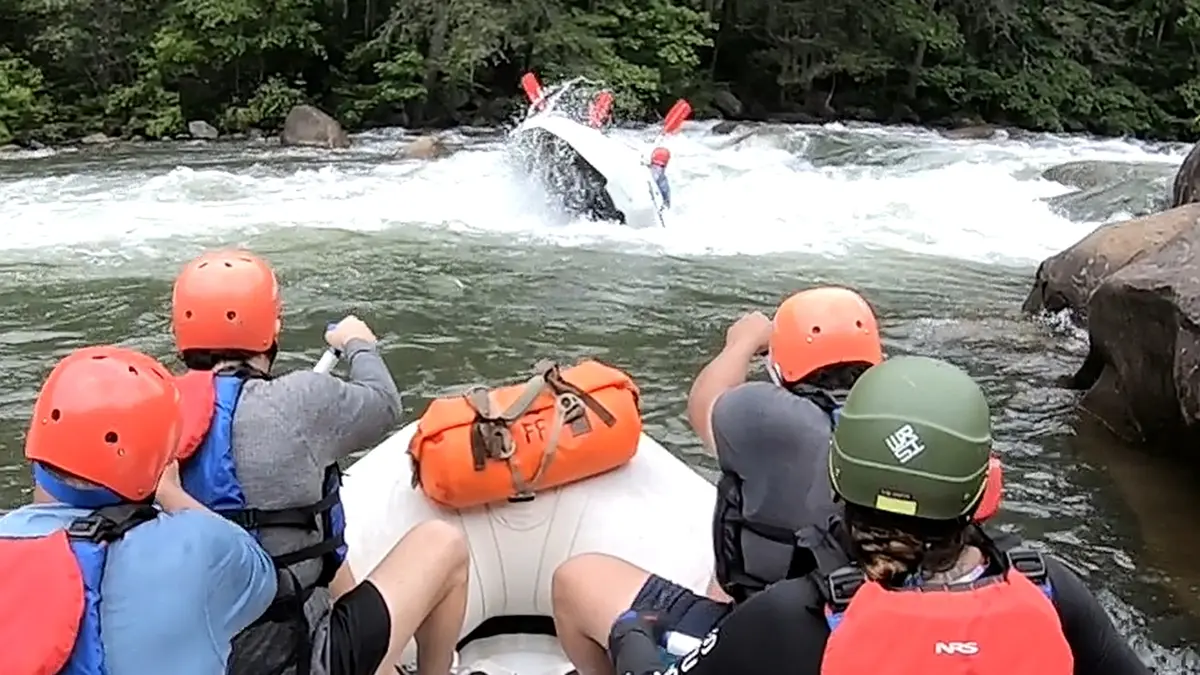
My favorite line is often referred to as the kayak line. It is found river right, and while more direct, it is also more technical with less margin for error as you navigate narrow gates. Once you drop the small ledge, you merge with the main flow where the two lines merge.
After navigating the small ledge and working downstream, be aware of the power of the eddy lines; while small, they will impact your boat angle. I prefer to go left of the rock directly in front of the raft. Going right is possible, but avoid getting lost in the trees. If you have a weak crew, it is best to go left. After making the move, look left and follow the flow to the main line over the big ledge. You will pass a marker/gate rock to your right (see video linked below). If you miss this move, it is going to be rocky and you won't get to surf later.
When dropping the ledge, use left angle if you intend to join the queue in the big eddy behind the island to surf. If you are not stopping to surf, point straight downstream through the hole. Regardless of the line you choose, try not to hit the guide setting safety for surfers.
Standard Release 1,200 - 1,600 CFS
Raft Lines
Double Suck Normal FlowKayak Lines
Double Suck Introductory Boof LineHell's Half Mile Rapid
Class III. Hell's Half Mile is easy Class III boogie water. It is best to enter the rapid close to the large rock protruding from the center of the good-sized ledge below Double Suck. If you are too far left, there is a lot of pin potential; some of these pins can be really bad; especially if you play beer bingo.
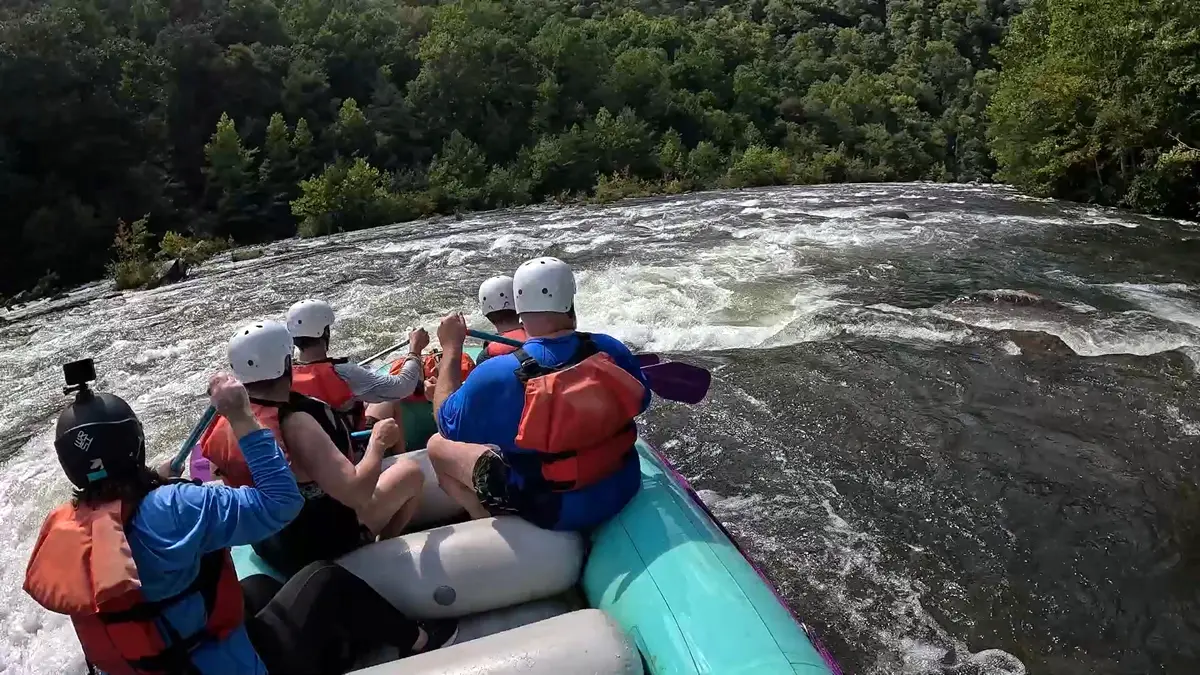
Once you have made this move, follow the water towards Choppin' Broccoli, a popular play spot for throwing loops in playboats. You want to thread between the ledge and an exposed rock to the right of the ledge. From here, you will follow the flow left of center down towards the river right bank and Double Trouble.
Standard Release 1,200 - 1,600 CFS
Raft Lines
Hell's Half Mile Normal FlowKayak Lines
Hell's Half Mile Introductory Line Challenge: Classic Intermediate Moves Challenge: Surfing Slot MoveDouble Trouble Rapid
Class III. Double Trouble is a fun Class III rapid with two large standing waves followed by a breaking wave for a really good splash. You begin working toward the left, following the current. Be sure to line up for the wave train and two big standing waves. Don't forget to angle right for the best possible raft photos.
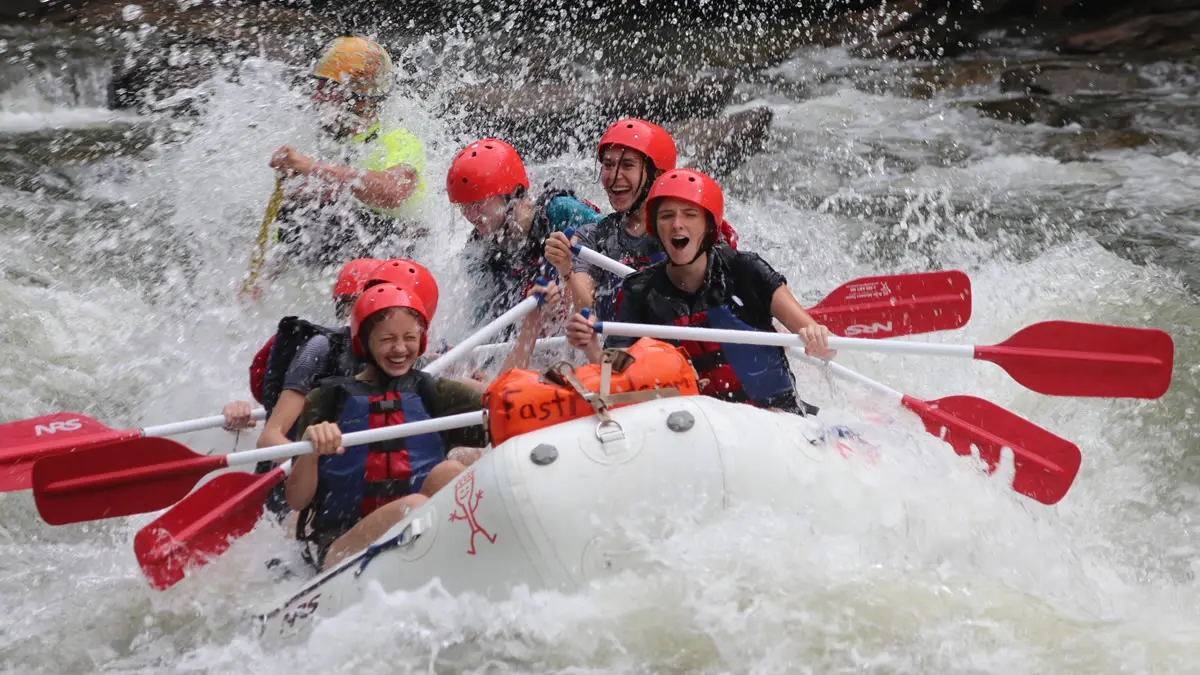
Maintain proper spacing or photographers will be angry. You could slip lower into the rotation line-up and lose trips if you don't deliver good photos for your outpost to sell. Remember to remind your guests to smile for the photos here!
Standard Release 1,200 - 1,600 CFS
Raft Lines
Double Trouble Normal FlowKayak Lines
Double Trouble Introductory LineLeft Right Left Rapid
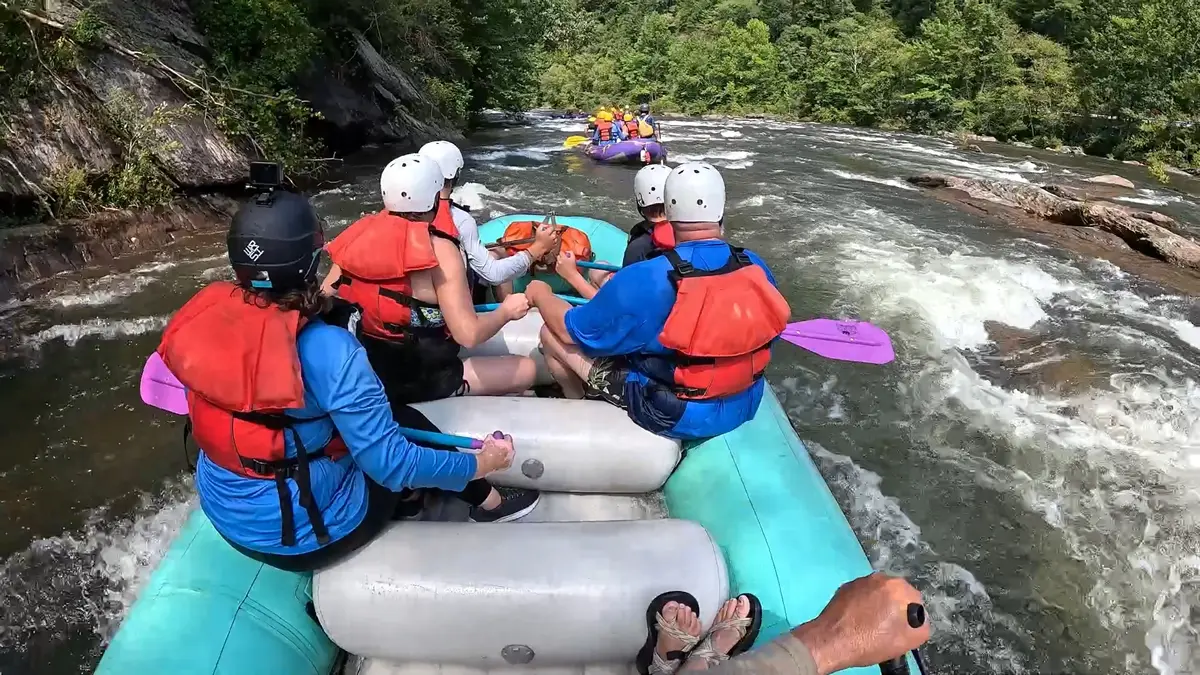
Class II. Left Right Left is a super easy Class II and is named to help rookies remember how to run it; assuming they can remember the name. You enter this rapid close to the river left bank. Watch for a pretty bad pin rock you will pass to the left near the top of the rapid. After passing this rock, you will point a little to the right, and then you will point a bit to the left to follow the flow. There is a good chance to splash a really weak wave hole at the bottom.
Standard Release 1,200 - 1,600 CFS
Raft Lines
Left Right Left Normal FlowKayak Lines
Left Right Left (99 Eddies) IntroSqueeze Play Rapid
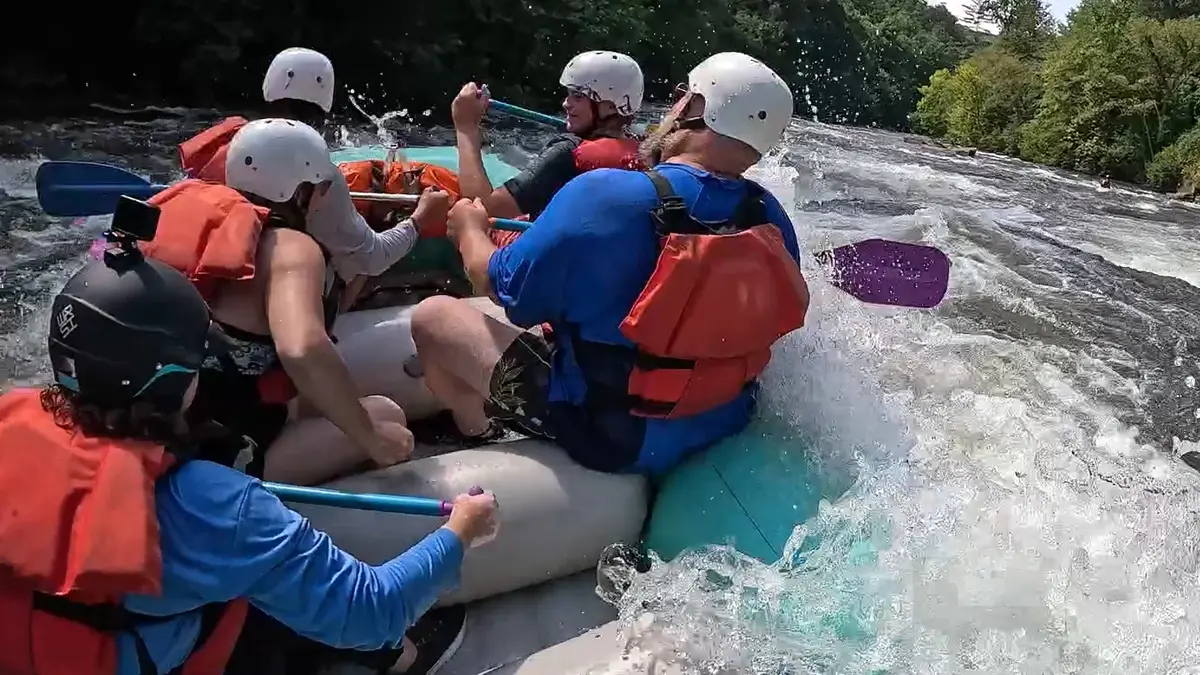
Class III. Squeeze Play is really just fun splashy boogie water. In the days of bucket boats, it was a bit of a squeeze between the angular boulder and the river left bank. But now, using today's self-bailing boats, it is really easy. I like to run much of it sideways for better splashes, and I do much the same in my kayaks. The wave train after the squeeze has some real fun potential. Some guides love to do pop-ups here.
Standard Release 1,200 - 1,600 CFS
Raft Lines
Squeeze Play Normal FlowKayak Lines
Squeeze Play Introductory Line Challenge: I Think I Can Slot MoveFlipper Rapid
Class III. Flipper earned its name for its ability to flip rafts or kayaks. Beware of Flipper Rock just below the first ledge near the main flow. If you are kayaking, it is a cool move to catch the micro eddy behind Flipper Rock before paddling upstream into the hole to throw an ender. If an unsuspecting raft hits the Flipper Rock, there is a strong chance of an unintended surf quickly followed by a flip.
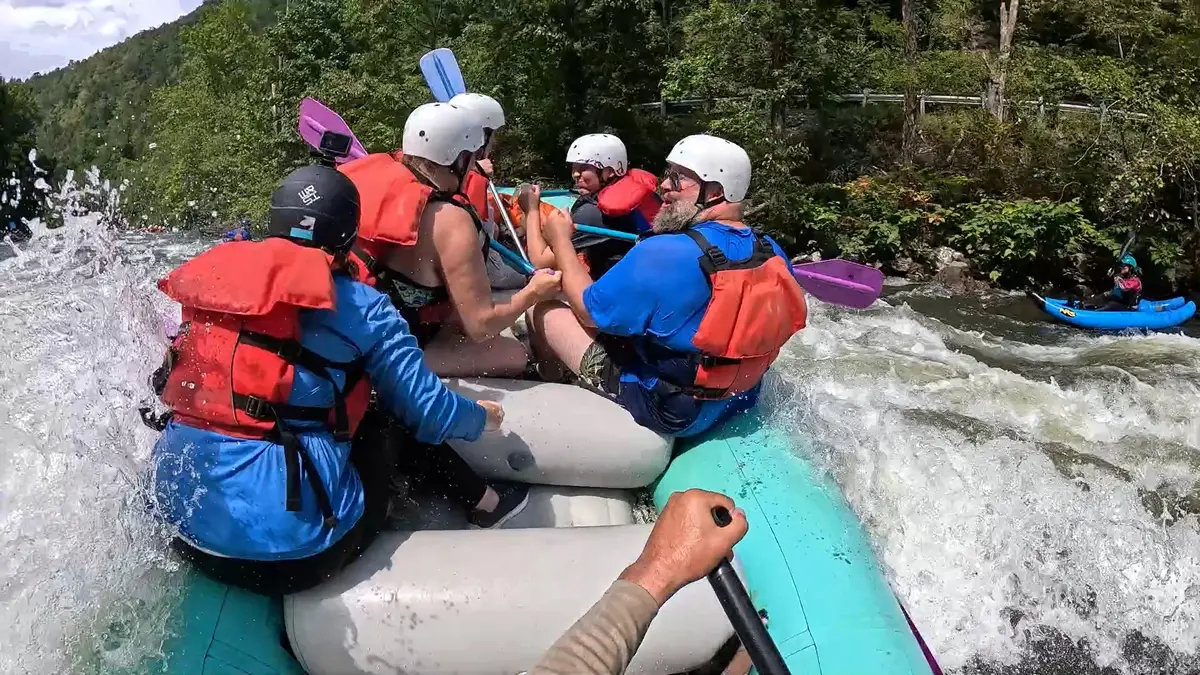
Many kayakers play here and more than a few raft guides love to queue up to surf the ledge below Flipper's first ledge. It can be done safely, but safety should be set because flips are common here.
After successfully running the first ledge, follow the flow toward a pyramid wave over the second ledge. There is potential for two great splashes, and there is another breaking hole wave just below the second ledge. Be careful not to hit O.S. Island just to the left of the desired line through the second ledge. If you blew your line at the first ledge, there is a rocky escape left of O.S. Island, but coach your guests and consider having them get down so they don't fall out onto the rocks.
Standard Release 1,200 - 1,600 CFS
Raft Lines
Flipper Normal FlowKayak Lines
Flipper Introductory LineHigh Water Lines up to 3,000 CFS
At high water, Flipper Rock is covered up and not in play.
Raft Lines
Flipper High Water LineHollywood Rapid
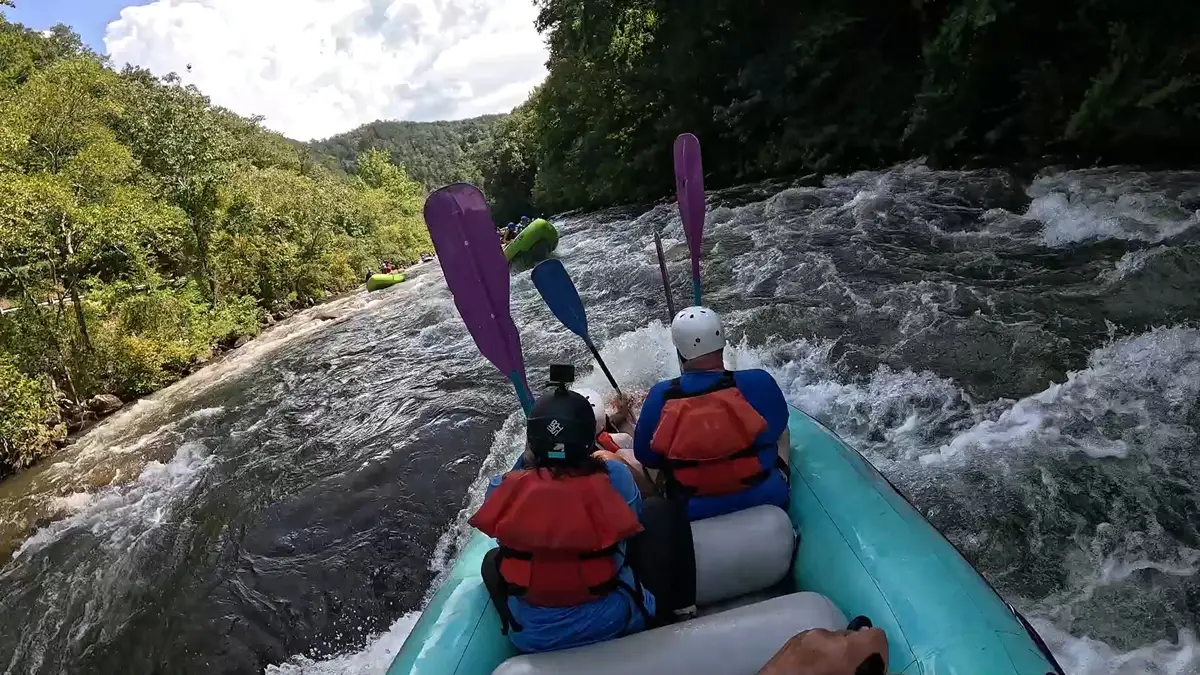
Class III. Hollywood is a very easy rapid. You work your way left after running Flipper and follow the wave train. If you want to stop here to surf and play, it takes a bit more work or control. Be advised it is bad etiquette to knock someone out of a surf here; such behavior could result in bad river karma.
Standard Release 1,200 - 1,600 CFS
Raft Lines
Hollywood Normal FlowKayak Lines
Hollywood Introductory LineHiawassee Shoals Rapid
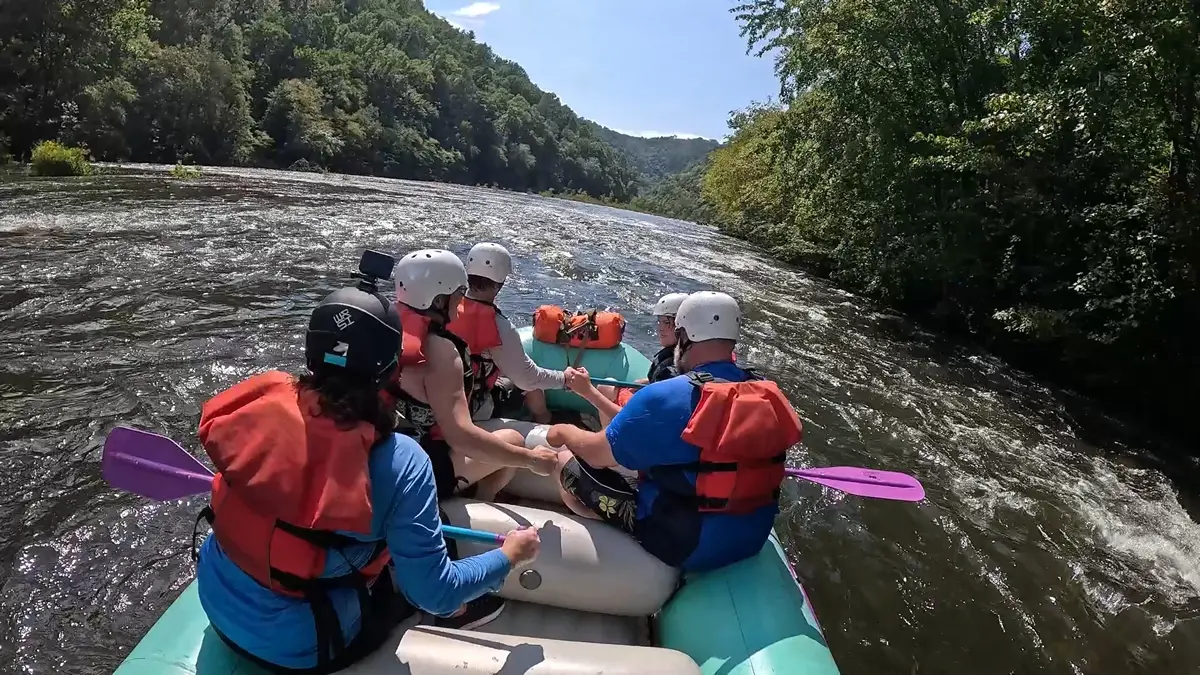
Class II. Hiawassee Shoals resembles the Ocoee's sister river, the Hiwassee, hence its name. As "shoals" suggests, it is very shallow. The only challenge here is to remain focused and not get pinned on shallow rocks. You begin toward the center of the river and weave your way through gates following the water. This will lead you toward the river right bank and a narrow line, much of which is a single boat wide. Pay attention and look for the green water. At high water, the shoals totally wash out and it is super easy.
Standard Release 1,200 - 1,600 CFS
Raft Lines
Hiawassee Shoals Normal FlowKayak Lines
Hiawassee Shoals Introductory LineHigh Water Lines up to 3,000 CFS
At high water, the shoals washout completely, making navigation very straightforward.
The Ledges: Sneaky Pete and Surprise
Class III. The Ledges are very technical. The greatest hazard is being pinned, but both ledges can hand out beatings and flips. Surprise Ledge is more likely to create flips and beat-downs, so respect this river section. The entrance to Sneaky Pete begins near the center of the river with a large V-tongue called Gene Simmons' Tongue pointing downriver. Within 50 feet, those electing the line to the left will maneuver diagonally to the left avoiding Sneaky Pete Ledge and Razor Rock. Use care, as there are many shallow rocks to avoid. This will be a test of your water-reading skills. From here, keep your stick in the water and follow the flow and green water to Surprise Ledge.
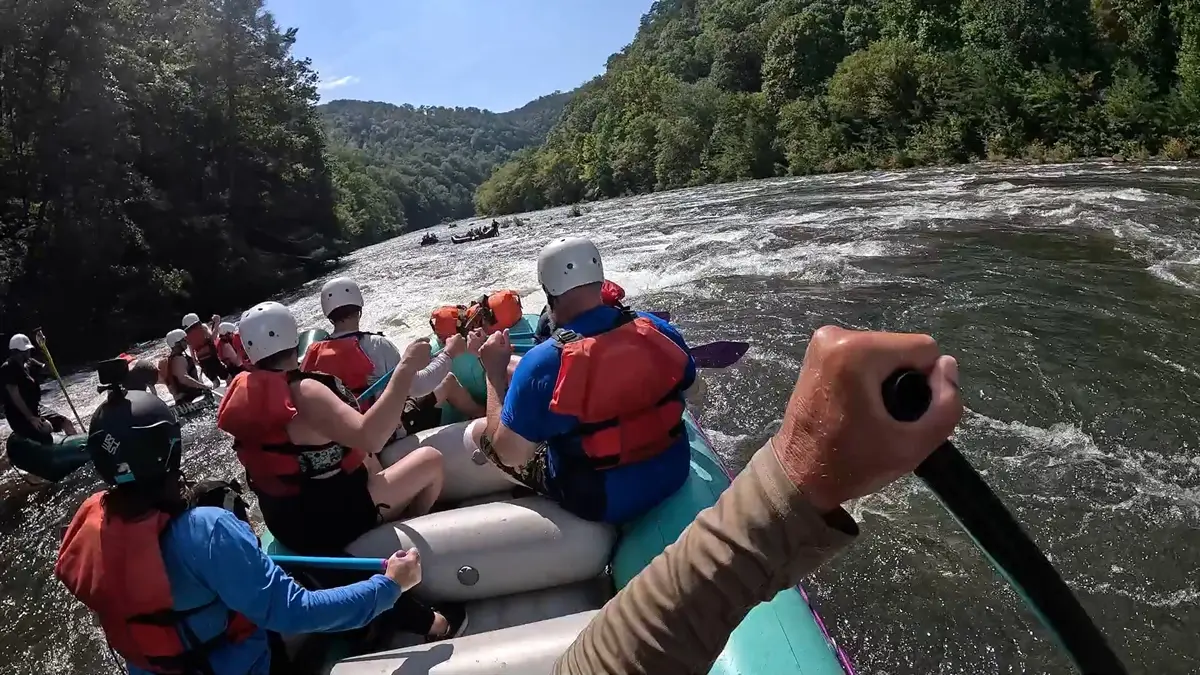
If you don't want the line to the left then the so-called hero line is straight ahead. Just follow the small wave train. Do not drop the ledge near the funny little wave; it is warning you that Razor Rock and another hidden pin rock roughly one boat-width to the right are lurking.
You will notice most of the current is flowing over the ledge just before the ledge angles to the right. Follow the water over the ledge. You are still not out of the woods; there are several shallow rocks to work around to reach Surprise Ledge, and you will need to merge with the other line. Watch for traffic. Snidely Whiplash Rock and another are gate rocks of the merge. Be wary if you see a senior guide parked here; refer to rock's name.
Follow the small wave train to Surprise Ledge but be aware the wave train moves latterly between 1,200 and 1,600 cfs. This it will feel different on weekdays and weekends during the peak season. There is pin potential on bother sides of the line; be accurate. Get your crew down when in doubt.
If there is a traffic jam and multiple boats are pinned and blocking Surprise Ledge, there is an escape route for those brave enough to take the hero line. Once you drop Sneaky Pete, follow the water downstream and to the right. You will have to be aggressively/effectively paddling to make the right-hand turn above the river right side of Surprise Ledge.
Once you make this move successfully, do not take the first tongue downstream; keep moving laterally to river-right for the second downstream tongue, at least thirty more feet to the right of the first tongue. Then follow the green water downstream through a narrow channel, watching for the many shallow rocks. This line is called The Horse With No Name. I train my rookies how to do this; ask your trainer to show you this line.
Standard Release 1,200 - 1,600 CFS
Raft Lines
The Ledges Normal FlowKayak Lines
The Ledges Introductory LineTable Saw Rapid
Class III+. Table Saw is a benchmark Class III+ by which others are measured in the southeast. It is one of my favorite rapids despite its rather low rating. The long, shallow approach to Table Saw gives many new guides trouble, as well as western big water guides learning the Ocoee River. This is a test of your water-reading skills, especially in the afternoon when the sun's glare makes it nearly impossible to see the rocks just under the surface. You must look for the small ripples and other tells to alert you to the presence of these rocks.
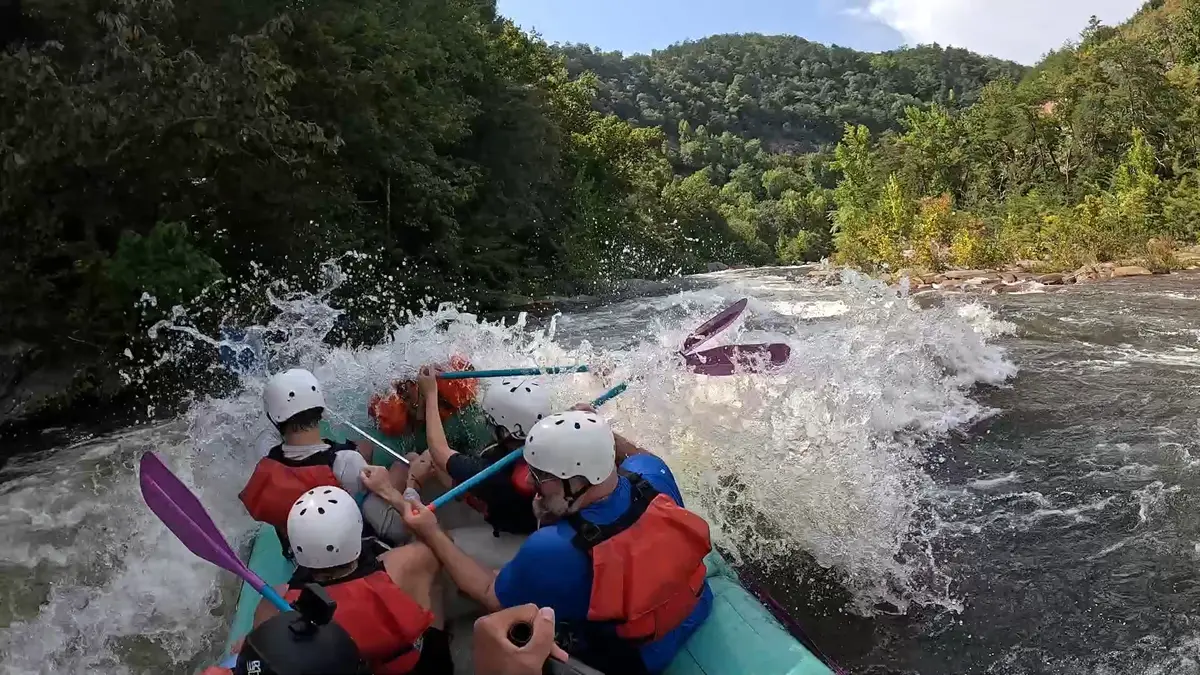
Follow the green water and look for the small but visible wave train as you approach the small ledge about 100 feet above Table Saw proper. How you run Table Saw will vary depending on level. At normal levels, you will punch the breaking wave called Mike Tyson at the top with some gusto while maintaining your river left angle. This is important to avoid Prudential Rock at the bottom river-right of the rapid. Prudential Rock is both undercut and has a sieve.
Watch Low Water Video of Table Saw FeaturesAt high water, Prudential Rock is covered up and not in play. You are more concerned with avoiding the new holes and hydraulics appearing on river left. Watch the videos below to get a feel for the rapid at both levels. I do not advise you attempt the spin I demonstrate in the first normal flow video; unless you can really read water and understand hydrology, it is not a wise move for rookies.
Technical Audit: Table Saw Hydrology & Low Water FeaturesStandard Release 1,200 - 1,600 CFS
Raft Lines
Table Saw Normal Flow (with spin) Table Saw Standard LineKayak Lines
Table Saw Introductory LineDiamond Splitter Rapid
Class III. Diamond Splitter starts with an opening move from the run-out of Table Saw. You must move to the right, either above or below a rock jumble that splits the current. If you go right or above the jumble, you are opting for the line to the right of Diamond Splitter Rock for the bigger drop. Be aware of a large, ugly piece of blast rock from road construction (circa 2011). This blast could be in play especially on weekdays with less water. It may have the potential to harm a raft or toss unwary guests into the river or bank.
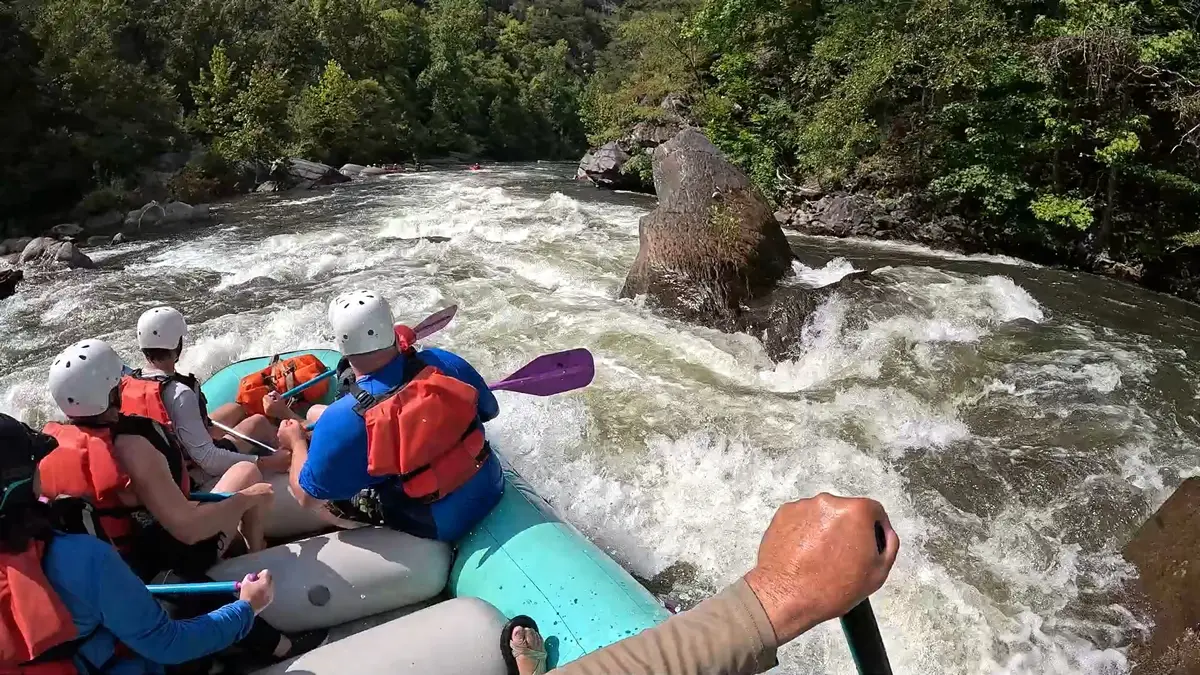
If you move to the left or below the rock jumble, you are opting to run left of Diamond Splitter Rock through Witch's Hole. Be aware of rafts potentially surfing Witch's Hole; the river is shallow here and a collision could have consequences. However, there is plenty of room to avoid a crash by carving left or right.
Many outfitter trips will regroup in the large eddies below Diamond Splitter. This is a good location with access to a portage trail to Table Saw on river-left. If you have time, you may wish to try surfing Witch's Hole. It takes some practice to get good surfs here, as boat angle is everything.
Standard Release 1,200 - 1,600 CFS
Raft Lines
Diamond Splitter Normal FlowKayak Lines
Diamond Splitter Introductory Left Line Challenge: Catch Diamond Cutter EddyWestern Flyer Rapid
Class III. Western Flyer is an easy read-and-run rapid. As you run it, there is a nice wave hole on the left side of the wide wave train that can produce a huge splash for your guests.
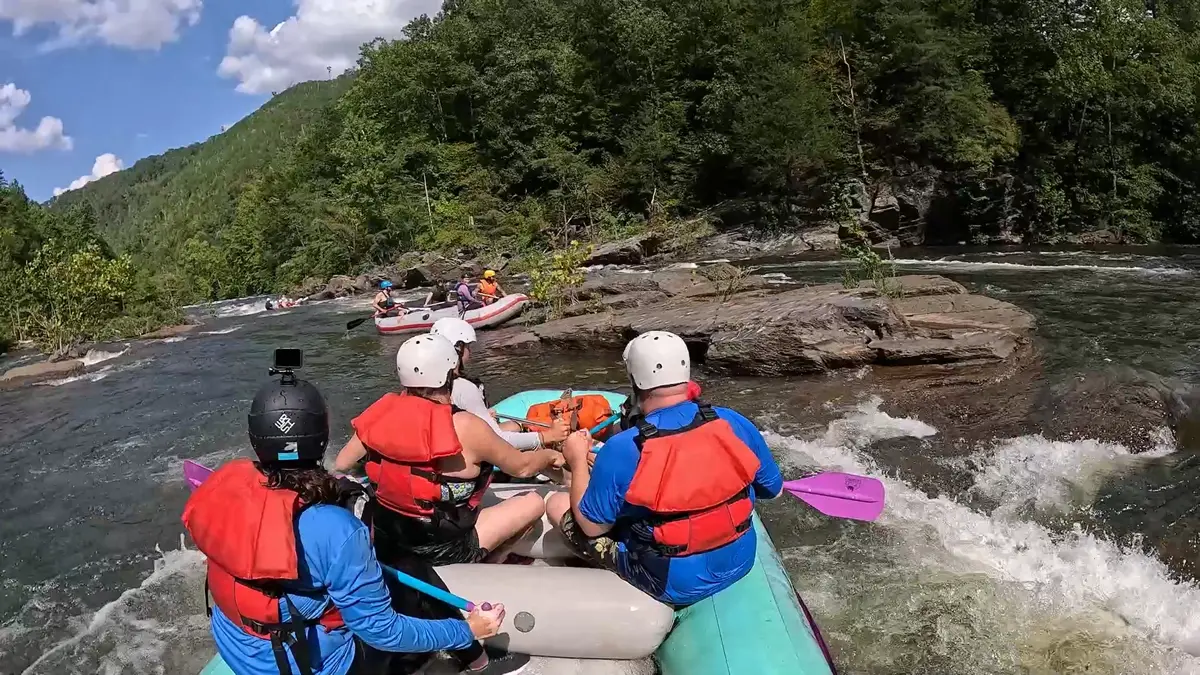
There are a couple of potentail fun holes to play just above Western Flyer. To gain access to the surfs go around the river left side of the small island.
Standard Release 1,200 - 1,600 CFS
Raft Lines
Western Flyer Normal FlowKayak Lines
Western Flyer Introductory LineDixie Drive Rapid
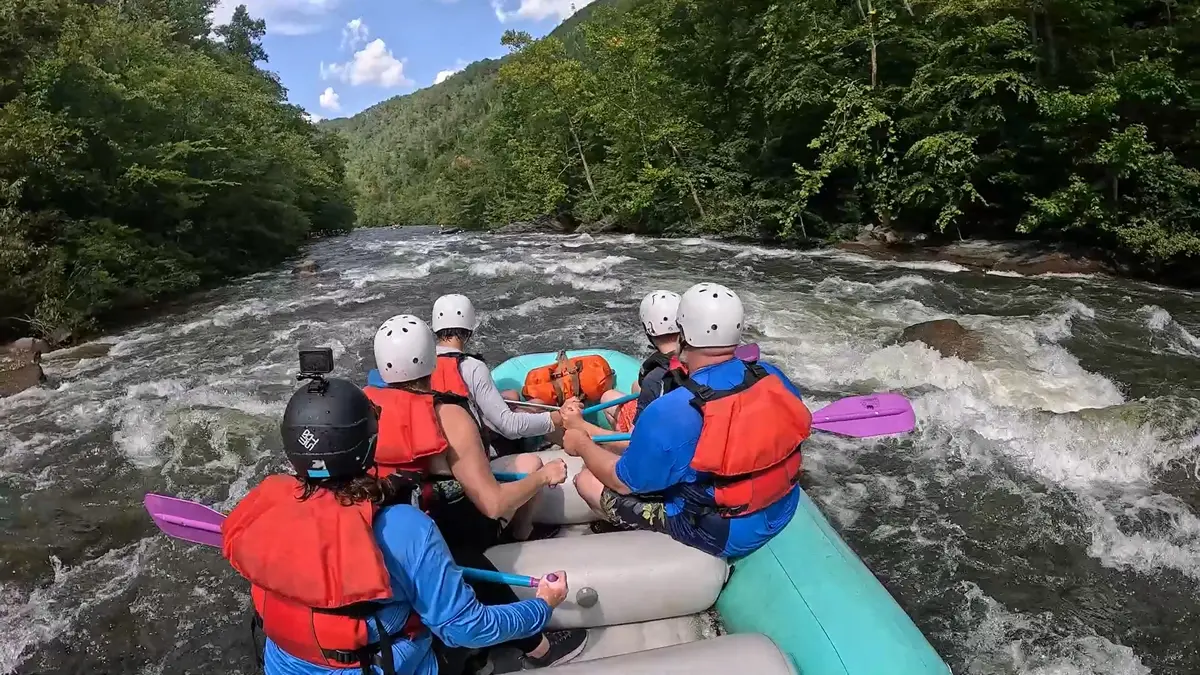
Class III. Dixie Drive is also known as "Left Or Right" because there are two rocks in the center of the rapid with great pin potential. When training up-and-coming guides, I like to get them pinned here; it serves as excellent pin practice, and they never forget those rocks are there afterward. At high water, this rapid washes out and the pin potential disappears.
Standard Release 1,200 - 1,600 CFS
Raft Lines
Dixie Drive Normal FlowKayak Lines
Dixie Drive Introductory Line Challenge: Center Eddy to High Right EddySwimmers Rapid
Class II. Swimmers is a great river stretch to teach up-and-coming kayakers; it is super chill read-and-run water. There are a couple of potential play spots for rafts, but you will see those when you are ready.
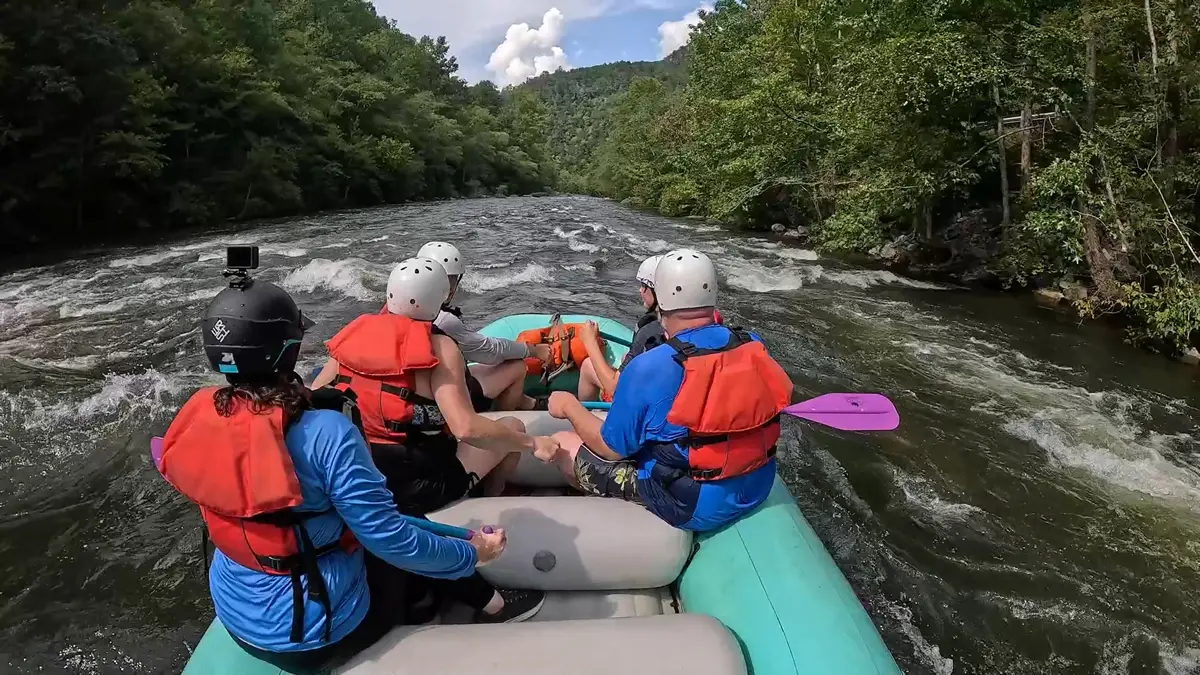
Sometime during the winter prior to the 2026 season Running Rock moved and fractured (look before you jump lol). Be aware of the undercut rock at the bottom of the rapid in the center of the river. It can create awful pins that may take an hour or more to unpin. This rock is known as Running Rock, You're Fired, and Birth Control. It was blasted off the side of the mountain when the flume line was being constructed from the dam to the powerhouse. I have participated in pin practice here, and there is video available on my channel. This rapid washes out at high water and becomes just waves.
Standard Release 1,200 - 1,600 CFS
Raft Lines
Swimmers Normal FlowKayak Lines
- Swimmers is a Class II read-and-run line.
High Water Lines
Washes out; mostly straightforward waves.
Slingshot Rapid
Class III. Slingshot, also known as Accelerator, is an easy Class III rapid. You can spin the raft clockwise along the river right eddy line for lots of great laughs with your guests. However, be aware of the rock jumble just above and river-right of Humpty Dumpty Rock. Striking these rocks can eject people, leading to potential contact with the rocks. If you watch for them, they are easy to avoid.
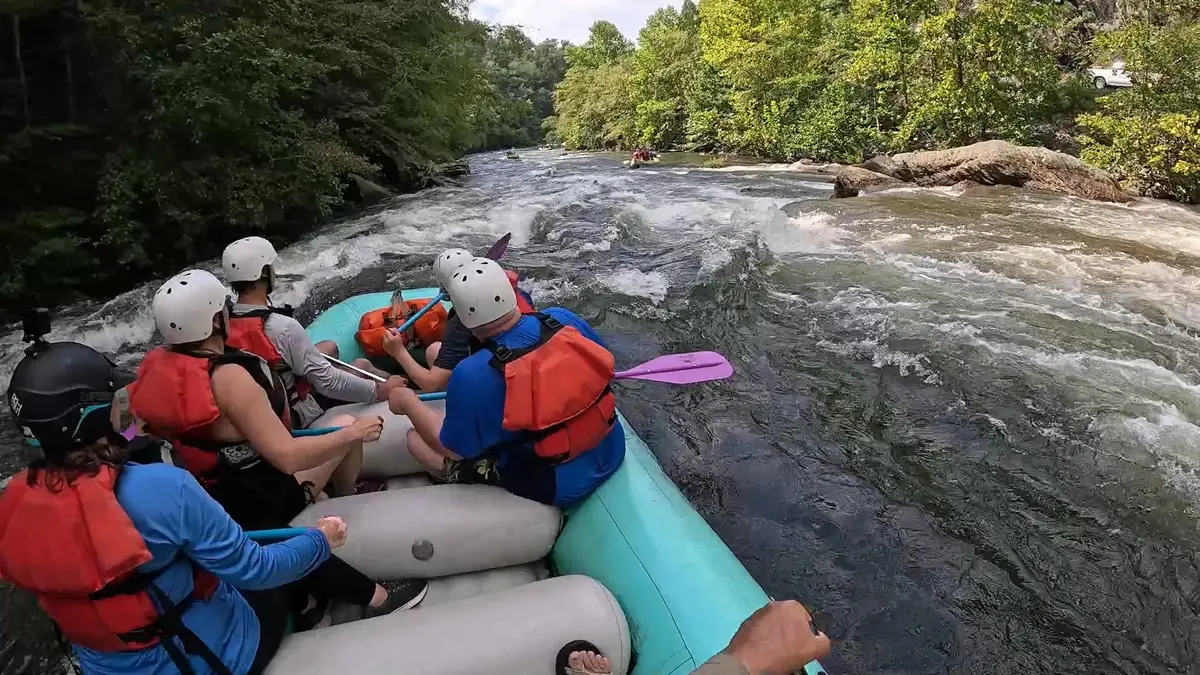
Also, be aware of Humpty Dumpty Rock do not hit it sideways, or you may learn exactly how it got its name. After Humpty Dumpty, there is just a fun, mild wave train leading into a big pool above Cat's Pajamas. Some of these waves are surfable in a kayak or canoe.
Standard Release 1,200 - 1,600 CFS
Raft Lines
Slingshot Normal FlowKayak Lines
Slingshot Introductory LineCat's Pajamas Rapid
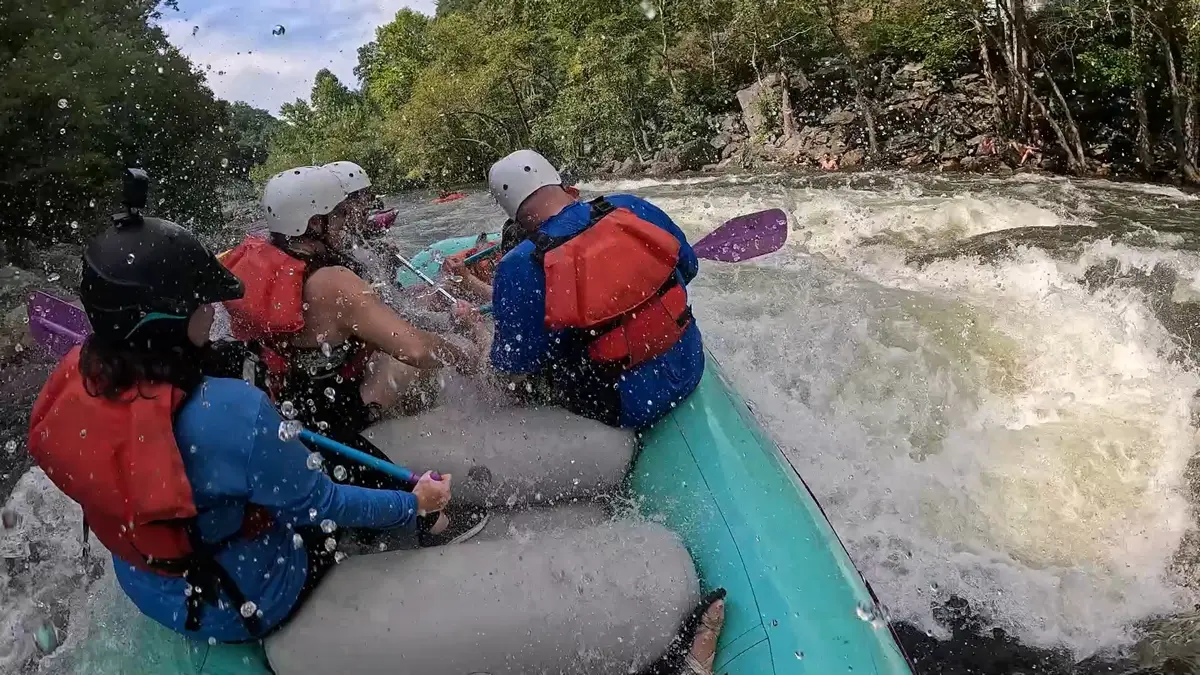
Class III. Cat's Pajamas is also known as Torpedo and Champagne. It is made up of a series of broken ledges with ample play potential. The name Torpedo refers to the squirt boaters who play and "sink" here. It is also possible to jump from a rock on river left into a seam to perform a human mystery moves. A good ride underwater here can go 50 feet or more, though most are very short. The name Champagne comes from the many bubbles that arise far downstream after riding the same underwater currents used for human mystery moves. You can find videos of this play on my YouTube channel.
Standard Release 1,200 - 1,600 CFS
Raft Lines
Cat's Pajamas Normal FlowKayak Lines
Intro to Skin the Cat Boof LineHell Hole and Powerhouse Rapids
Class III. Hell Hole is an excellent example of a powerful wave hole and a popular play spot for kayakers. It can deliver great surfs and enders; however, as the water level increases, it can surf and flip rafts as well. At high water, it is often best to run Hell Hole and Powerhouse as one combined rapid.
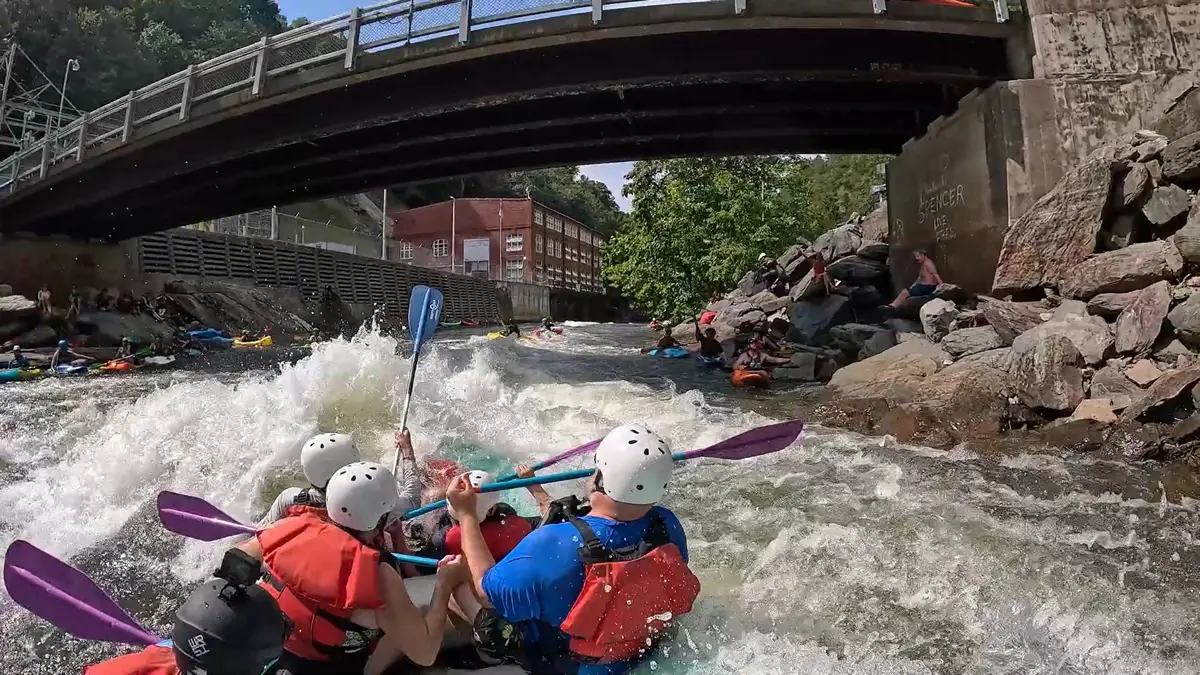
While the section is mostly read-and-run, it is always best to run Powerhouse on the river right side. The left side of the Powerhouse ledge is manky with sharp rocks and likely construction debris. That said, if you get eddied out to river left by Hell Hole, don't fight it. Embrace the eddy and perform a peel-out as high as possible just below Hell Hole for the best results. Or take a surf as long as you caught the eddy!
Standard Release 1,200 - 1,600 CFS
Raft Lines
Hell Hole Normal Flow Powerhouse Normal FlowKayak Lines
Hell Hole Intro (Avoid Surfers!) Powerhouse Introductory Line Challenge: Powerhouse Creek LineThe Backstory: Why This Guide Exists
I developed this 101 - Middle Ocoee Rapids and Routes course with the intention of helping new and aspiring guides. My friend Sofia deserves credit for motivating me to create this guidebook back in 2016. She pointed out that my zany videos of rafting fails seemed harsh to the young guides often featured crashing in them. I still think my humorous commentary in those carnage videos is educational, as I often point out the sources of failure, but I wanted to provide a roadmap for mastery rather than just a highlight reel of mistakes. Since then, I have become aware that many private boaters and members of the public considering rafting the Ocoee River use these materials for their own safe navigation.
Closing and Feedback
Take a look at the new and developing section about Ocoee River Hydrology. The hydrology section covers hazards and works to remove the mystery of reading water. Comments and feedback are encouraged.
A lot of experience, time, and effort went into this Guidebook. Your feedback is greatly appreciated. If this information helps you, please consider leaving some love in my Tip Jar or buying me a beer when you see me out in the Ocoee River area. I am often seen at Mexico Loco, El Rio, or Buck Bald in Copperhill, Tennessee. See you on the river!