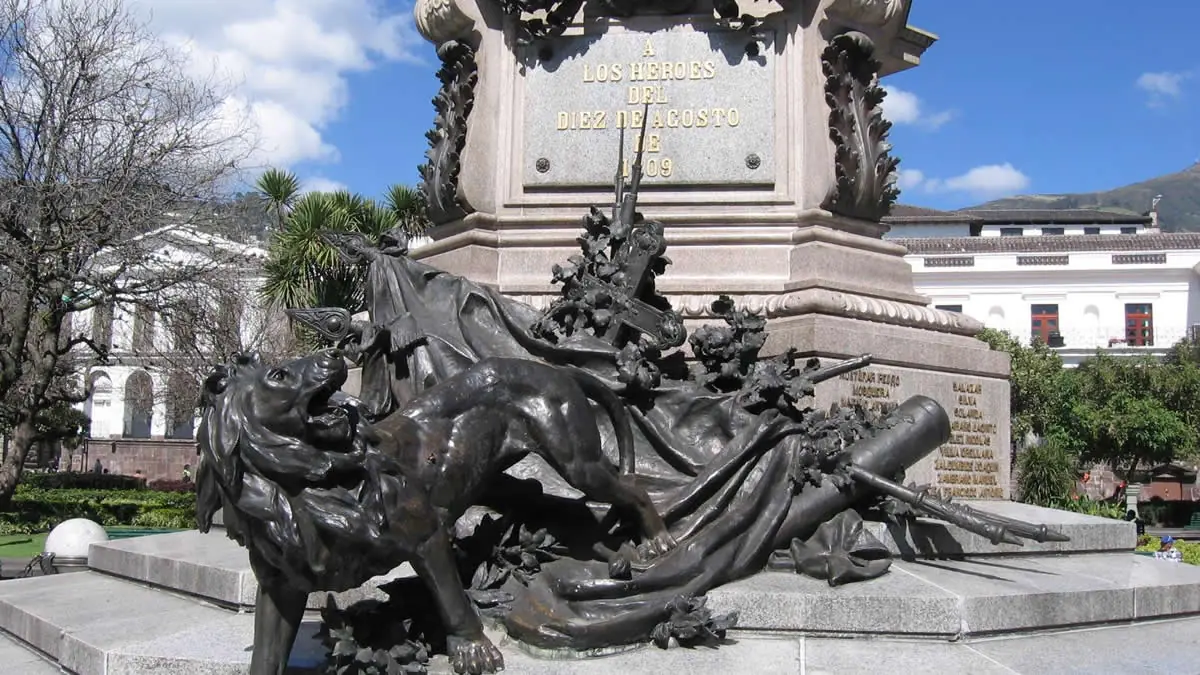
El Primer Grito de la Independencia: August 10, 1809
This event is considered the formal beginning of the struggle for independence in the territory that would become Ecuador. It is recognized as one of the first effective declarations of self-governance in all of Spanish South America, earning Quito the title "Luz de América" (Light of America).
This legacy of sovereignty is why you'll find Historical Date Street Names like "10 de Agosto" in every major city, often serving as the primary transit corridors for the Quito Airport Frugal Bus. Understanding this history is a prerequisite for executing an intentional "Hard Reset" in the Andes. This revolutionary spirit of self-reliance is preserved today through the Ecuadorian Minga Culture—a community-led system of collective labor that maintains the public monuments and historical squares where this independence is still celebrated. For the resilient traveler, 10 de Agosto isn't just a date on a map; it's the cultural bedrock of the land you're riding.
The Context: Power Vacuum in Spain
- In 1808, French Emperor Napoleon Bonaparte invaded Spain and placed his brother, Joseph Bonaparte, on the Spanish throne, effectively holding the legitimate King Ferdinand VII prisoner.
- This created a power vacuum across the Spanish colonies. The local elites, known as Criollos (people of pure Spanish descent born in the Americas), saw an opportunity to govern themselves without explicitly betraying the King.
The Secret Meeting: The Night of August 9
- The Criollo intellectual and aristocratic leaders of Quito, along with military figures, held a clandestine meeting on the night of August 9, 1809, at the house of the courageous patriot Manuela Cañizares.
- According to legend, it was Cañizares who famously rallied the hesitant men with the cry: "¡Cobardes hombres nacidos para la servidumbre! ¿De qué tenéis miedo? ¡No hay tiempo que perder!" (Cowardly men born for servitude! What are you afraid of? There is no time to lose!).
The Declaration: August 10, 1809
- At dawn on August 10, the conspirators successfully deposed the President of the Real Audiencia de Quito (the local colonial governing body).
- They immediately formed the Junta Soberana de Gobierno (Sovereign Governing Board), with the noble Juan Pío Montúfar (Marquis of Selva Alegre) as President.
- Crucially, the Junta declared that it would govern in the name of the imprisoned King Ferdinand VII (the so-called "Mask of Ferdinand VII"). This strategic loyalty allowed them to claim they were defending the King's rights against the French usurpers, providing a legal justification for throwing off the authority of the colonial officials.
The Aftermath and Martyrdom
- The triumph was short-lived. Other colonial authorities in Guayaquil, Cuenca, and the surrounding Viceroyalties refused to recognize the Junta and sent troops to suppress the rebellion.
- The Junta was ultimately forced to dissolve by October 1809. The Criollo leaders were arrested and imprisoned.
- The brutal climax came on August 2, 1810 when a popular attempt to free the prisoners led to a bloody massacre, in which many of the heroes of August 10th were executed by Royalist soldiers. This event galvanized the independence movement across the continent and fueled the ensuing decade of wars.
For more information on this significant date in Ecuadorian history, search for the video: LA HISTORIA DEL PRIMER GRITO DE INDEPENDENCIA DEL ECUADOR | ¿Qué pasó el 10 de agosto de 1809?