Understanding the Minga: Andean Solidarity in Action
In the high Andes, survival isn't a solo sport. The Minga is an ancient tradition of voluntary collective labor that defines community life in Ecuador, Peru, and Bolivia.
The Minga (or Minka) is a fundamental expression of social solidarity where a community assembles to complete tasks that benefit the group or a specific family. Rooted in the indigenous Quechua language, the term originally meant "asking for help by promising something." This ancient system is the invisible "Engine" that makes your Ecuador North Sierra Logistics so affordable and reliable. From the maintenance of the trails leading to sacred waterfalls to the very construction of the Baños Hot Springs facilities, collective labor ensures that public infrastructure remains functional without the bloat of commercial fees. For the resilient traveler, understanding the Minga is the key to moving beyond the tourist bubble and respecting the community systems that support a high-value "Hard Reset" in the Andes.
The Engine: Reciprocity (Ayni)
The system runs on Ayni—the principle of reciprocity. Instead of cash, labor is traded for the promise of future support. If you help clear a neighbor's field today, the community is obligated to assist when you have a need.
What Mingas Accomplish
- Public Infrastructure: Repairing schools, footpaths, and vital irrigation canals.
- Agricultural Tasks: Assisting with large-scale potato harvests or communal planting.
- Mutual Aid: Collectively relocating an entire home for a family in need.
Minga vs. Mit'a
While the Minga remained a voluntary local tradition, the Inca and later Spanish colonists used the Mit'a—a mandatory labor tax. While the Inca used it for roads and Machu Picchu, the Spanish turned it into brutal forced servitude for silver mining. The Minga survived because it belonged to the Ayllu (the local community), not the state.
Field Report: My Experience in San Juan Alto
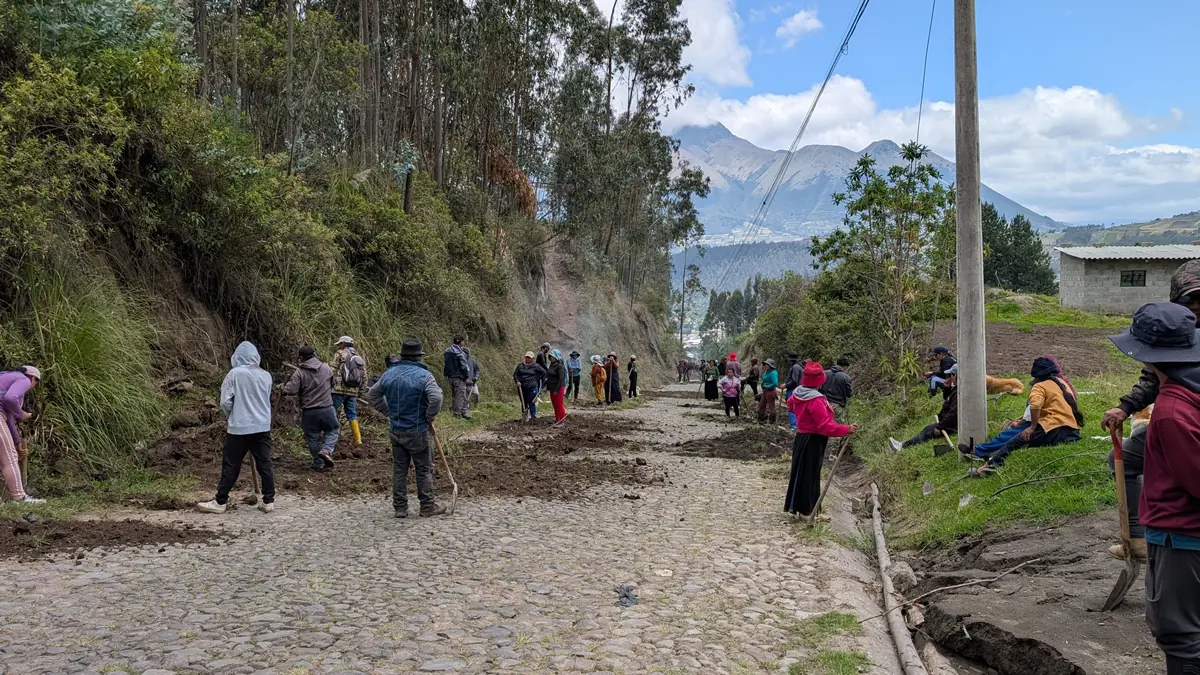
In November 2025, I joined a Minga with the community of San Juan Alto near Otavalo. Our task was cleaning the drainage ditches along Via a Yambiro to ensure road safety during the rainy season.
It was physically demanding work, but the camaraderie made it enjoyable. Much like the historical records suggest, we took frequent breaks for communal food and drink, which provided much-needed fuel for the "manual labor" aspect of the day.