Quito Airport Bus Guide: Save $30 with the $2 Frugal Route | Fast Fred
How to Travel from Mariscal Sucre Quito International Airport to Quito and Otavalo
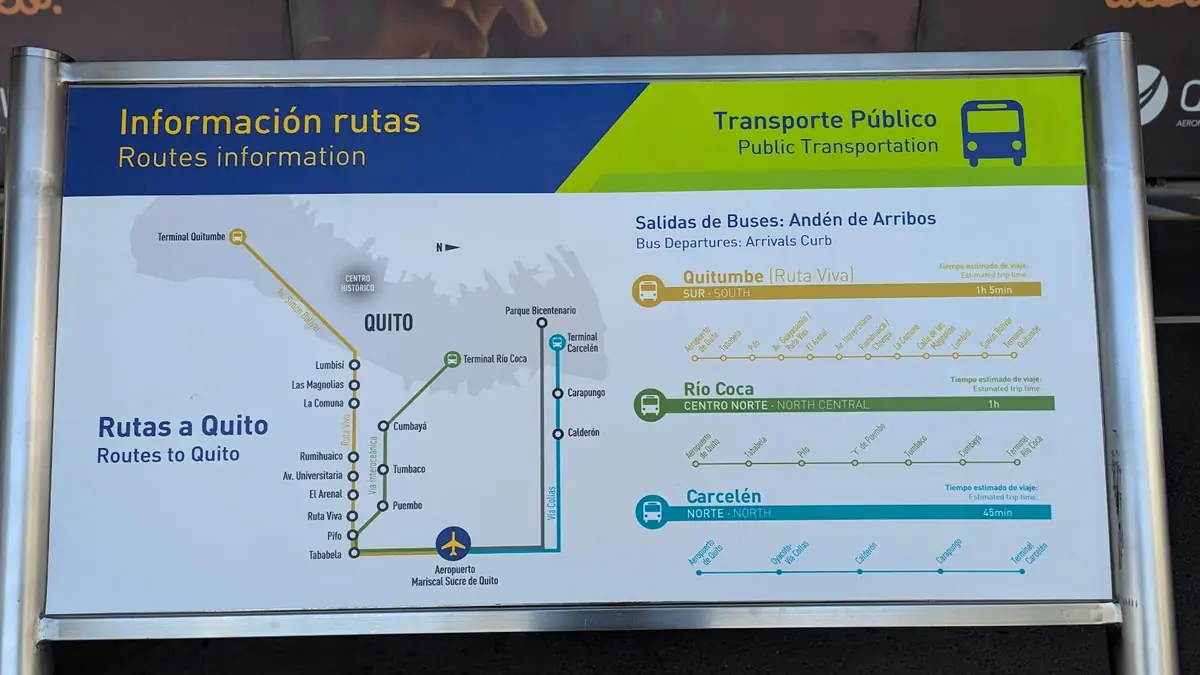
Frugal and wise travelers looking for safe transportation from the Quito airport should not overlook public transportation options. Buses to the city of Quito operate from 6 AM to 10 PM. Buses to the terminals for onward travel to other cities (North or South) operate from 6 AM to 8:30 PM.
Before you step outside the terminal to catch the bus, ensure your "Digital Perimeter" is secure. I recommend handling your Local SIM Card setup and applying Tactical Phone Hacks while still on the airport's secure Wi-Fi. Having offline maps and a local data connection is a non-negotiable part of the Frugal Adventure Strategy, allowing you to track your bus route in real-time and avoid the "Gringo Tax" often applied to stranded travelers.
| Transport Method | Cost (USD) | Travel Time | Frugal Factor |
|---|---|---|---|
| Public Bus (Aero-Servicios) | $2.00 | 60-90 mins | Best value; safe for solo travelers. |
| Official Airport Shuttle | $8.00 - $10.00 | 45-60 mins | Reliable with lots of luggage. |
| Private Taxi / Uber | $25.00 - $35.00 | 45 mins | Expensive; only for late-night arrivals. |
Prices verified by Fast Fred on-the-ground for 2026. Note that obtaining a room in a hostel or hotel is often more cost effective than taking a taxi to the city at night. Plus you can get more sleep.
Where to Find the Bus & Costs
You will find the buses right next to the taxi line as you exit the airport terminal. The taxi drivers will swarm you with offers of rides as you must walk through them to reach your bus. One taxi driver offered me a ride to Terminal Carcelén for $15, but public bus options are only $2.
Which Terminal Should You Choose?
- Terminal Río Coca: Catch this bus if you are staying locally in Quito. From here, you can access any part of the city via the Ecovía or taxis.
- Terminal Carcelén: Catch this bus if you are going to Otavalo or other cities north of Quito.
- Terminal Quitumbe: Catch the direct bus here if you are heading to destinations south of Quito (like Latacunga or Baños).
The official transportation web page of the Quito International Airport is scant of information beyond naming the three companies operating the buses. I figured out these details my my boots on the ground; I regularly use these buses in my travels to and from the airport.
Safety Tips
Use reasonable caution while in the bus terminals, just like you would in any big city back home. While Ecuador is very safe, crimes of opportunity can occur, and unattended bags can disappear. Police are generally present, but use common sense. While on the bus, keep your luggage and gear with you at all times and be attentive. That said, this is my preferred mode of transportation in Ecuador and most of Latin America.
Navigating the Terminals
Terminal Terrestre Carcelén is a reasonably sized terminal. It is not too big, making it quick to survey. If you are traveling to towns or cities north of Quito, you will catch your next bus here.
Terminal Terrestre Quitumbe is huge and rather modern, much like a big airport. If you are traveling to points south of Quito, you will buy a ticket here (unless you took the direct bus mentioned above). Don't get overwhelmed; there are plenty of officials and nice people happy to help you navigate the terminal and find your bus. I find the bus drivers to be quite friendly and helpful, too.
My Recent Trip: Airport to Otavalo
On this trip, I flew into Mariscal Sucre Quito International Airport from Panama City after a couple of months in Guatemala. I quickly cleared customs, found a snack and some coffee, and went outside to find my bus to Terminal Carcelén as I was heading north to Otavalo to meet some friends.
The bus ride to Carcelén took about 45 minutes, and my bus only had about six passengers. It was a very chill ride with great scenery along the way. The mountains and valleys are breathtaking, and the elevated view from the bus is much better than from a taxi.
Once at Terminal Terrestre Carcelén, it is easy to find the ticket to your next destination. Signs are large and easy to read. The first sales counter I encountered was selling tickets to Otavalo, so I bought one for $4. I took a short walk to dock 1 and waited maybe ten minutes for my bus to arrive.
The bus ride to Otavalo was pleasant. There were few riders initially as we departed the terminal, but we picked up and dropped off other passengers along the way. The weather turned to light rain as we approached Otavalo, so my views were obscured, but stops became more frequent as we neared the city.
Before I knew it, we arrived at the terminal in Otavalo. I walked from the terminal to Plaza de Ponchos, enjoying the fruit stands and vendors along the first block. The sights and smells brought back memories of previous visits. The walk to the plaza is only five or six blocks. I met my friends Julian and Casandra at Balcon De Imbabura, where they were waiting for me on the balcony enjoying some local craft beer.