Carrera de Coches de Madera: Ecuador's Extreme Gravity Racing
The Carrera de Coches de Madera (Wooden Car Race) is not a quaint parade of children's toys; it is a full-contact celebration of gravity, steel, and Andean grit. Occurring annually in the middle of December as the centerpiece of the Baños de Agua Santa Cantonization festivities, this race attracts adrenaline junkies and cultural observers from all over South America.
This race is the high-velocity centerpiece of the broader Baños Cantonization Parades, which transform the city into a theater of Andean pride. If you're tracking the seasonal cultural intensity of the region, this event serves as the perfect precursor to the Diablada Pillareña (Devil Dance) held every January in the neighboring canton. Both spectacles are made possible by the Ecuadorian Minga Culture—the community-led "Engine" that ensures these massive traditions remain free for the public while maintaining their raw, non-commercial edge.
If you are looking for authentic cultural immersion, this is it. Experiencing such raw, unpolished events requires a careful frugal strategy, which is the key to accessing the genuine core of Ecuadorian culture without paying for overpriced tours. In fact, it is free to attend this event!
The Origin: Necessity and Ingenuity in the Andes
This sport was born from sweat, not leisure. The origin of the wooden car race is a testament to the ingenuity of the Andean people solving a classic mountain problem: gravity.
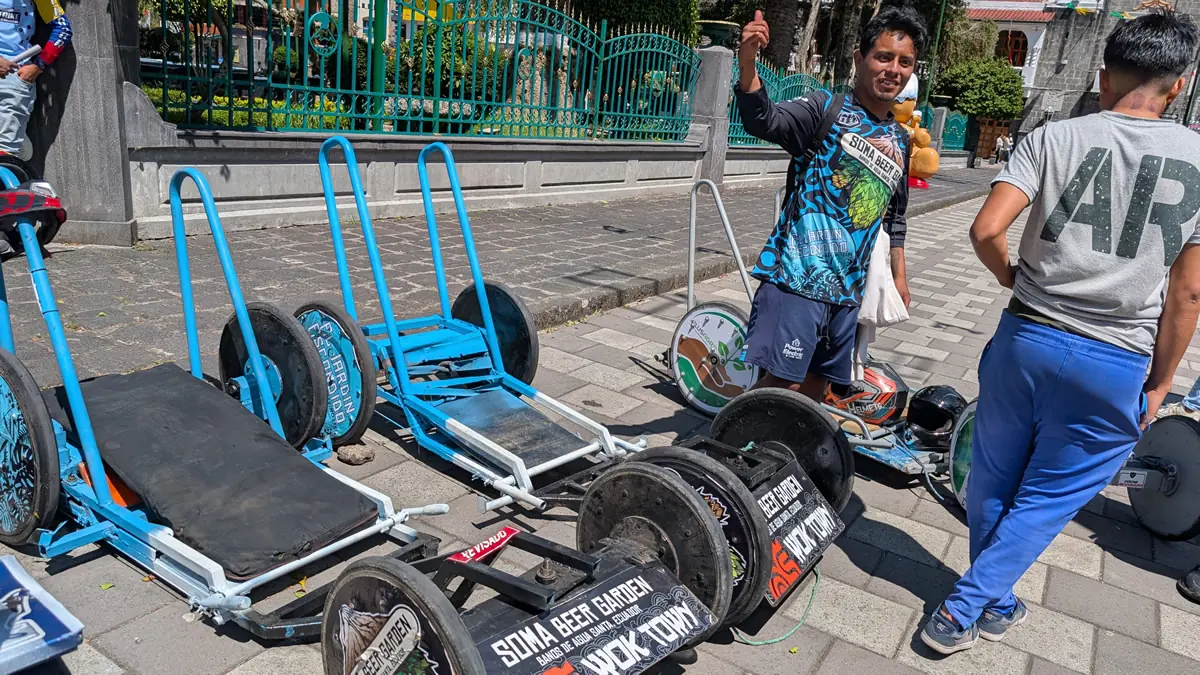
Before the prevalence of motorized trucks, the early "coches" were simple, handmade wooden transporters. Farmers used them to haul heavy essentials—firewood, crops, and pastos (grasses) for livestock—down the steep volcanic slopes surrounding the city. Over decades, this daily chore evolved into the regulated, yet chaotic, competitive sport we see today.
The Circuit: Uphill Endurance & Downhill Carnage
Unlike soapbox derbies in the US or Europe which are strictly downhill, the Baños circuit is a grueling test of total fitness. As seen in my coverage of the race, the course features significant uphill sections.
- The Push: Teams must be physically fit to sprint up steep cobblestone streets while pushing their heavy, custom-welded rigs.
- The Descent: Once they crest the hill, gravity takes over, and speeds can reach dangerous levels on the narrow urban streets.
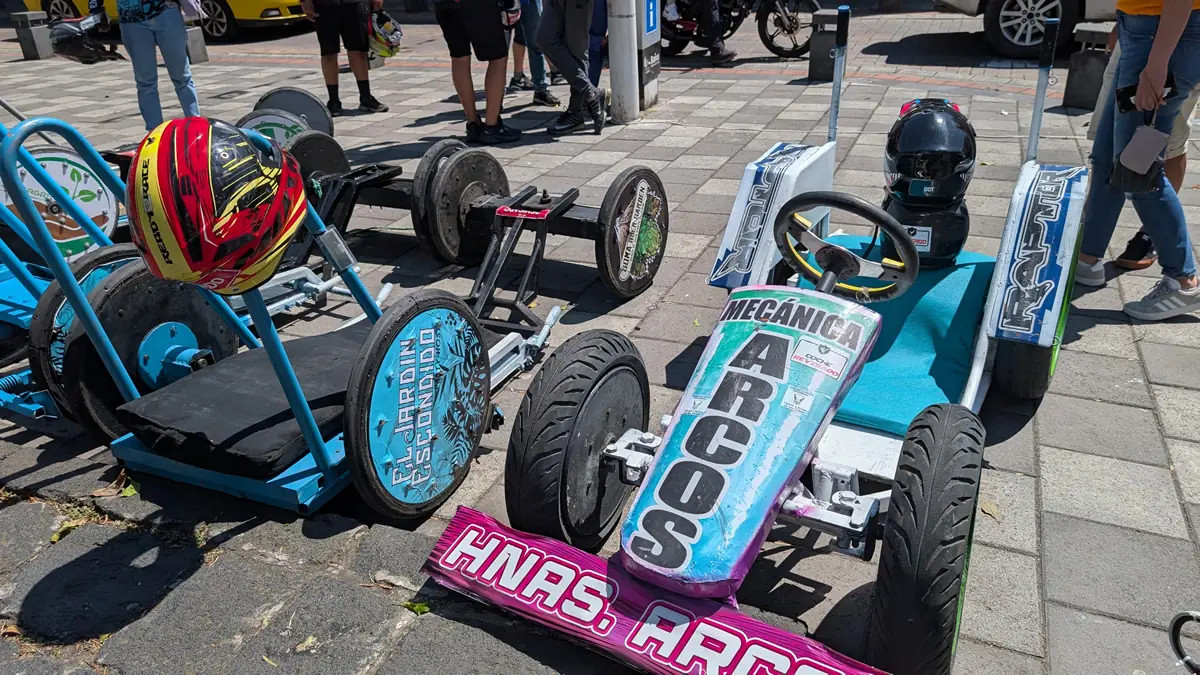
- The Danger: Braking systems are often primitive—sometimes just a tire tread on a lever dragged against the pavement.
Racing Classes: From Wood to Welded Steel
The modern competition is divided into categories that reflect the sport's evolution:
1. Traditional (Madera)
These carts are constructed entirely of wood, including the wheels. They often have no mechanical steering and no bearings, with control maintained solely by pulling ropes attached to the front axle or shifting body weight.
2. Free Force (Fuerza Libre)
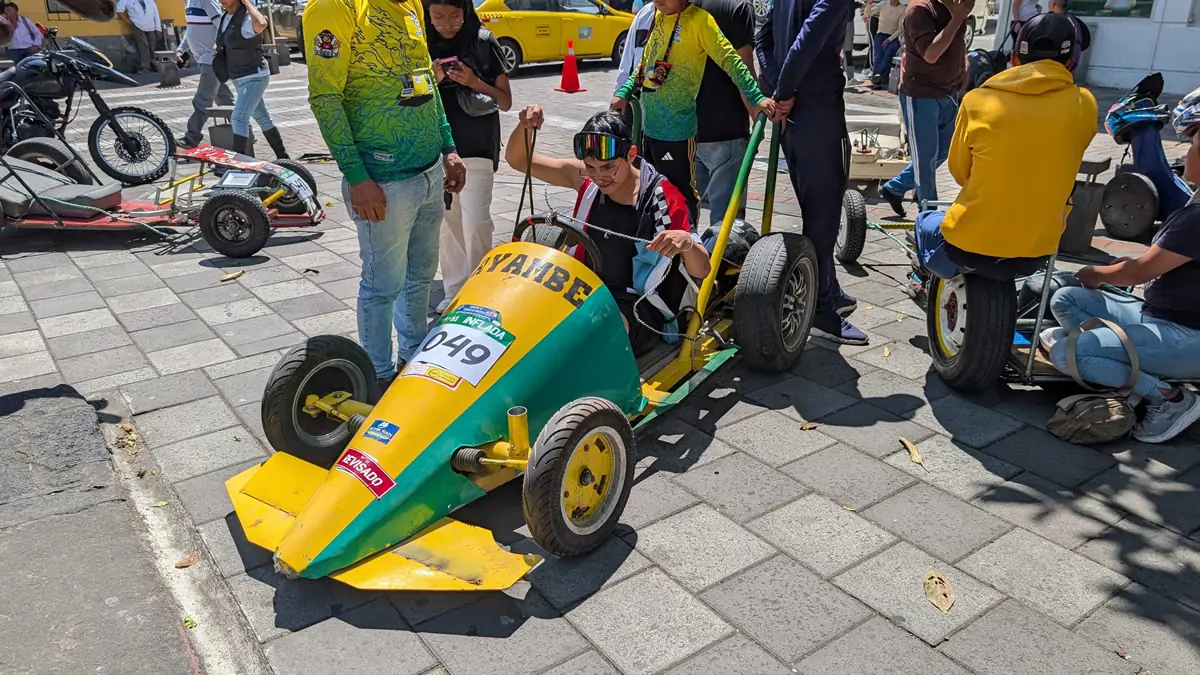
Metal is permitted for the axles and frames, and builders can utilize mechanical steering and ball bearings. These cars are heavier and faster.
3. Pneumatic & Drift Trikes
Contestants use rubber tires and aerodynamic metal bodies. Drift Trikes are modified tricycles designed to slide sideways through corners.
The Spectator Experience: Safety & "The Meat"
Watching the Carrera de Coches is intense; there are no safety barriers, only hay bales and crowd instinct. Accidents happen: wheels can shear off at high speed and fly into the crowd, and karts often flip in tight corners.
Pro Tip: The Frugal Strategy for the Festival
This event is completely free to watch. However, the influx of tourists in December drives up prices for accommodation.
- Eat Like a Local: Look for the "Menu del Día" in local markets or side streets where you can get a full meal for $2.50–$3.00.
- Hydration: You will find plenty of beer and Canelazo (a hot, spiced alcoholic drink) for sale cheaply.