Baños Cantonization Parades: History, Culture & Local Traditions
The "Frugal Strategy" isn't just about saving pennies; it is about stripping away the insulation of the "tourist bubble" to access the raw, unfiltered reality of a place. In Baños de Agua Santa, Ecuador, there is no better proof of this concept than the month of December. While the average tourist pays a premium for packaged "cultural experiences," the true heartbeat of the Andes is free for anyone willing to stand on a sidewalk and watch.
This December marks a convergence of civic pride and spiritual devotion—the 81st Anniversary of Cantonization and the sacred traditions of Christmas—proving that this town is not merely a playground for adrenaline junkies, but a community forged in fire and resilience.
The intensity of these parades is best exemplified by the Carrera de Coches de Madera, a high-velocity gravity race that serves as the festival's adrenaline-fueled climax. These massive public displays are made possible by the Ecuadorian Minga Culture—a community-led labor tradition that ensures local heritage remains authentic and non-commercial. For those extending their stay into the new year, this December energy provides the perfect momentum for the Diablada Pillareña (Devil Dance) held every January in the neighboring canton.
The Cantonization: 81 Years of Autonomy
On December 16, 1944, Baños de Agua Santa was officially recognized as a canton, separating itself administratively to chart its own course. The 81st-anniversary parade, captured in the 2025 footage, is a visceral display of this autonomy.
Unlike the polished, sterile performances often served to tourists in hotels, the Cantonization parade is chaotic, loud, and incredibly real. The video reveals a "rowdy" energy that money cannot buy. We see floats depicting everything from whimsical mushroom houses to representations of local agriculture, reminding us that this is a working town, not just a resort. The participation of local schools, guilds, and neighborhoods is a "minga" (communal work) of celebration—everyone contributes to the spectacle.
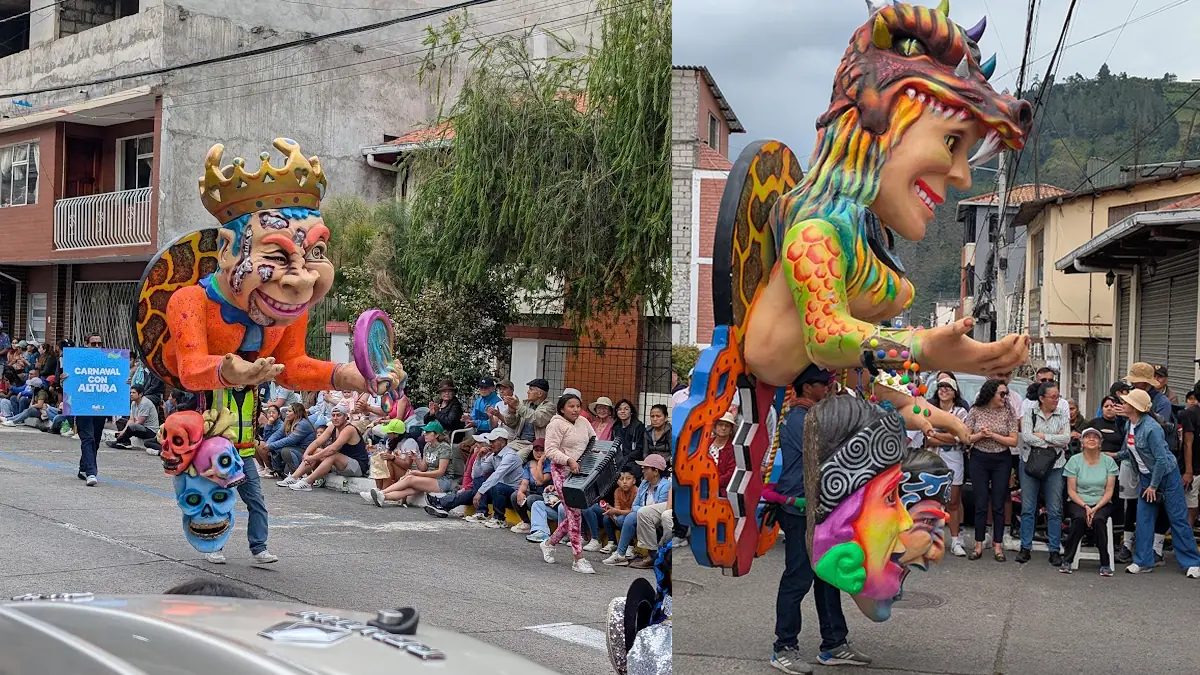
For the frugal traveler, this is the "meal," not just the spice. By simply showing up, you witness the social hierarchy, the fashion, the music, and the pride of the "home folk" without paying a "gringo tax".
The Spiritual Anchor: Nuestra Señora del Agua Santa
While the Cantonization celebrates the political body of the town, the throwback footage of the Nuestra Señora del Agua Santa parade reveals its soul. Baños is named for the thermal springs associated with the Virgin of the Holy Water, a deity believed to protect the town from the brooding Tungurahua volcano that looms above it.
The inclusion of the Ecuador National Police Band in these processions highlights a unique cultural fusion where state authority bows to spiritual tradition. In the Andes, the police and the church often march in lockstep during these festivals, a show of unity that is rare in other parts of the world. This is not just a parade; it is a ritual of gratitude. The music is solemn yet celebratory, paying tribute to the force that locals believe has spared them from total annihilation time and time again.
Resilience: Dancing on the Volcano
To understand the energy in these streets, one must understand the context of the history of Baños. Baños is not a stranger to disaster. In 1999, the entire population of 17,000+ was forced to evacuate due to the eruption of Tungurahua. For months, the town was a ghost town, its citizens displaced, their livelihoods paused.
When they returned—some by force, defying military guards to reclaim their homes—they rebuilt from the ash up. When you see dancers spinning in the streets of Baños during the Cantonization or Christmas parades, you are not just watching a party. You are watching an act of defiance. You are seeing a community that refuses to be erased by geography or geology.
Conclusion
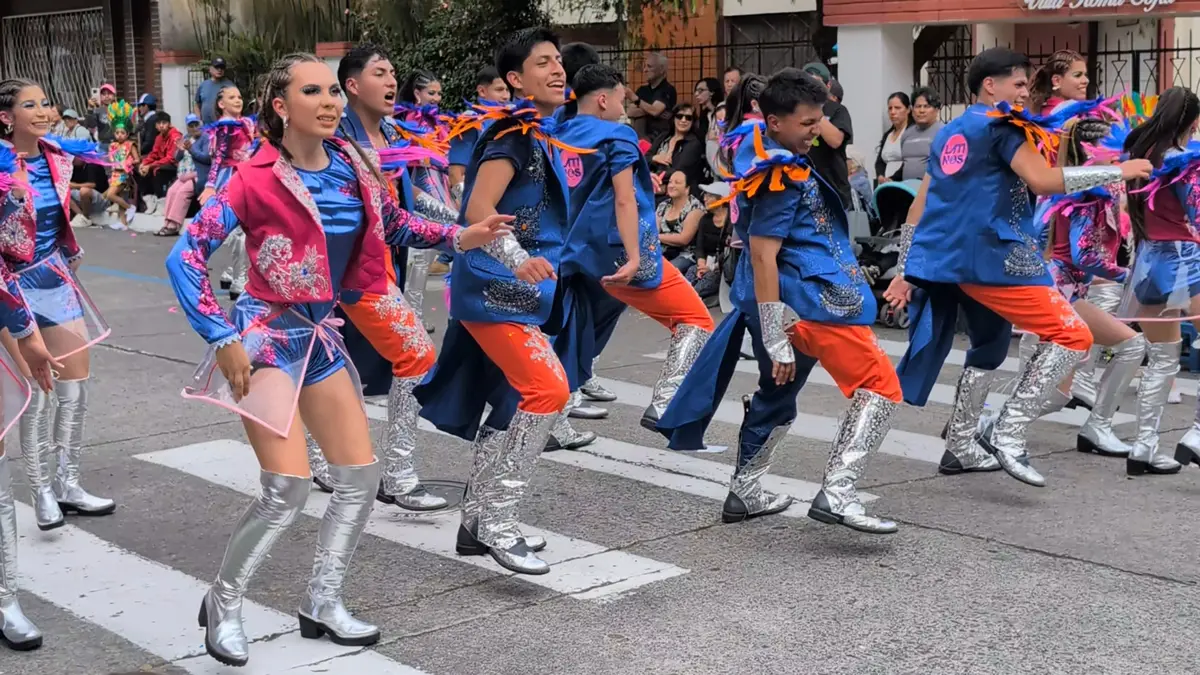
The ultimate value of travel lies in these moments of critical observation. Whether it is the 81st Cantonization parade or a tribute to the Virgin, these events offer a window into the "real" Ecuador. They teach us that resilience is a community effort and that the richest cultural experiences often cost nothing but time.
Skip the tour bus. Walk to the main street. Stand with the locals. That is where the real story is being written.