The Devils of Píllaro: A Journey of Resistance, Ritual, and Roast Hog
The Diablada Pillareña is far more than a vibrant street party; it is a living act of indigenous resistance that dates back to the Spanish colonial era. During this time, indigenous workers were subjected to extreme physical and psychological abuse under the hacienda system. To cope with and protest this oppression, the locals began to dress as devils—not as a tribute to evil, but as a direct subversion of the Catholic teachings used by the Spanish to keep them in fear.
By "becoming" the very demon the priests used as a threat, the people reclaimed their power, mocked their masters, and asserted their cultural identity. Today, it remains a powerful symbol of liberty and pride for the people of Tungurahua. The immense coordination of these parades is made possible by the Ecuadorian Minga Culture—the community-led labor system that ensures these ancestral traditions remain free and authentic for the public. For travelers coming off the adrenaline of the December Baños Cantonization Parades, the Diablada in January represents the next tactical step in a deep-dive through Andean heritage.
The Journey to Píllaro
Reaching this cultural phenomenon requires a bit of logistical maneuvering. My journey began in the adventure hub of Baños de Agua Santa, where I boarded a bus to Ambato for $1.25. Upon arrival in Ambato, knowing I would need to take a taxi to the next terminal regardless, I inquired about a direct trip to Píllaro. The driver quoted $10.00, and given the convenience, I took it. Being the first day of the new year, I had stayed up late and had a bit of a hangover.
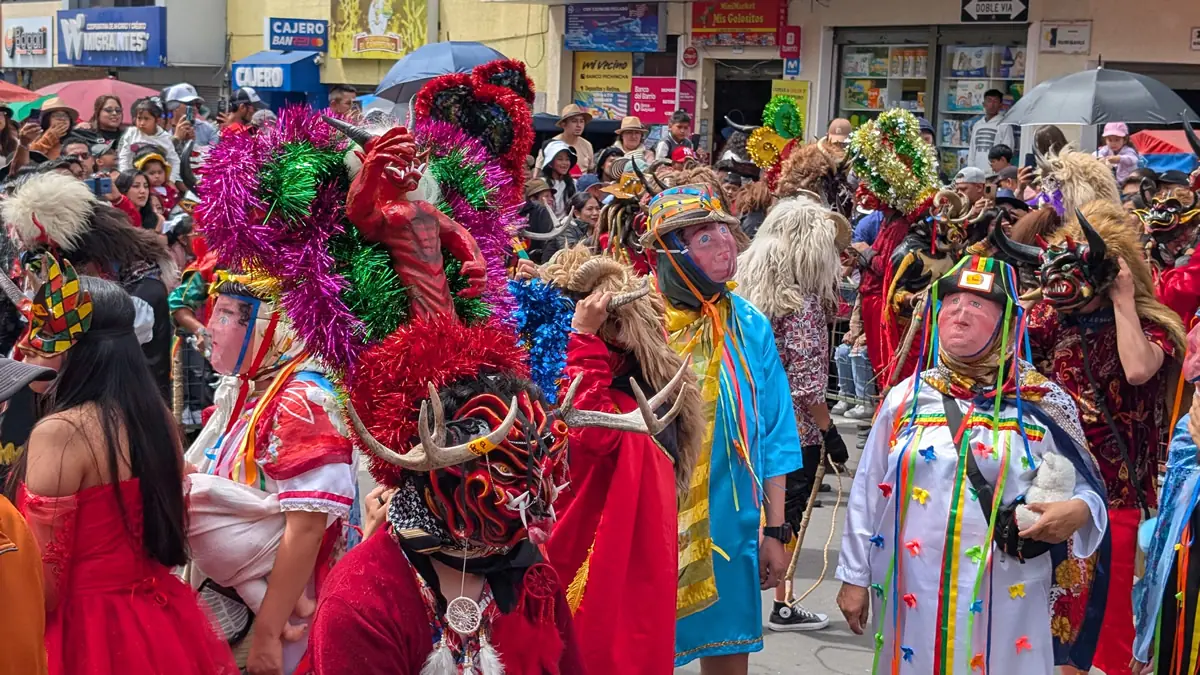
The logistics of the Diablada Pillareña are simple yet important. Arriving several hours early is essential, yet even then, the covered bleachers are already a sea of people. These spots are claimed early by those who know the best vantage points or those seeking to escape the light, rather cool rain that often misted the town. Píllaro is much higher and cooler than Baños. Even with my raincoat, it was quite cool in the light rain.
Recovery and Ritual: The Flavors of the Highlands
As I mentioned, I arrived with the lingering weight of a Baños New Year's Eve hangover, making my first mission one of physical recovery. Before the devils emerged, a local chicken restaurant offered a quiet sanctuary. There is nothing quite like a steaming bowl of soup, a quarter-roasted chicken, potatoes, and the crisp sweetness of fresh cane juice to reset the system for the sensory onslaught to come. This restorative combo meal cost just $2.75.
Once recovered, I stepped into the epicenter of the energy. While the parade route itself extends two kilometers, the market block is the heart of the action. The first floor of the mercado remains a colorful, calm grid of fruits and vegetables, but the real action takes place at the three corners flanking the parade. Under two massive open tents next to the bleachers, two large Hornado vendors operate at an incredible scale.
Here, the scent of roasted hog doesn't just drift—it commands the air. These vendors serve the masses with a rhythmic efficiency, piling plates high with tender pork, llapingachos (potato patties), and a salad mix of pickled red onion, tomato, and lettuce. They also serve mote, a wonderful highland sweet corn that I particularly enjoy.
In the street, the economy of the festival is in full motion. Vendors weave through the crushing crowds carrying large, clear bags of cuero—shards of crispy, golden-brown pork skin that catch the light like amber. Others hawk everything from cotton candy and potato chips to small plastic bancos (stools), sold to those desperate for a half-meter of height or a simple place to rest their feet.
The Principal Characters: A Dramatization of History
To understand the Diablada is to understand its characters. They represent the two extremes of Píllaro's history: the Spanish versus the Rebels, held together by the working class.
The Devils (Los Diablos)
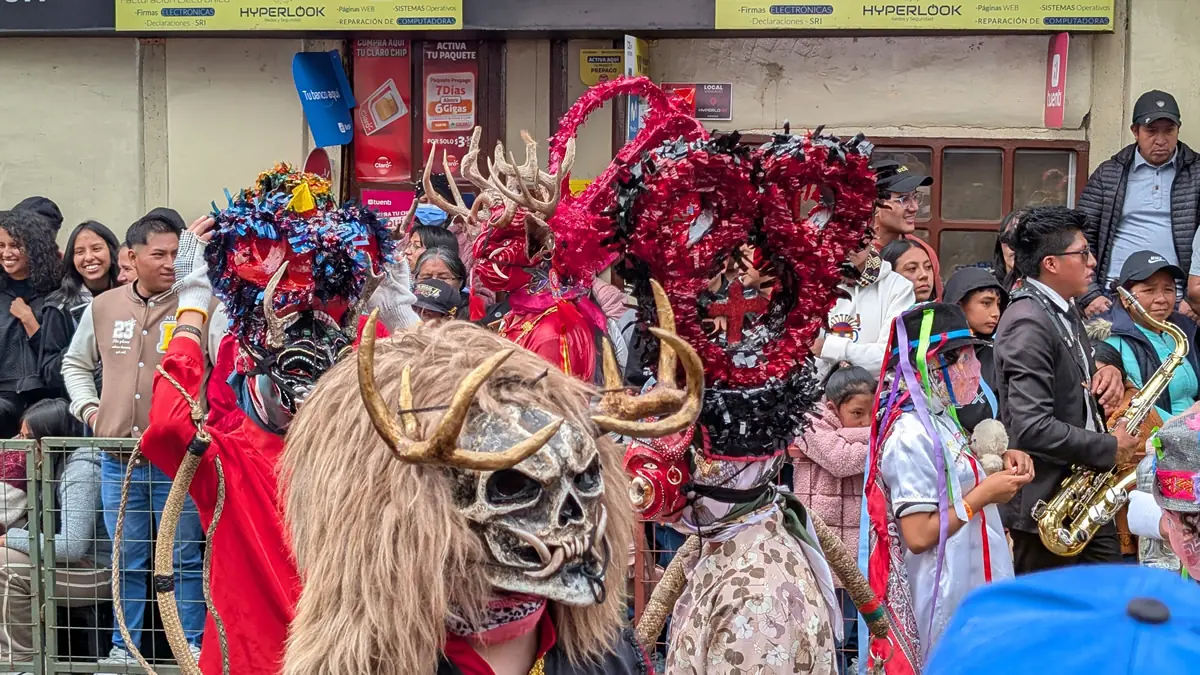
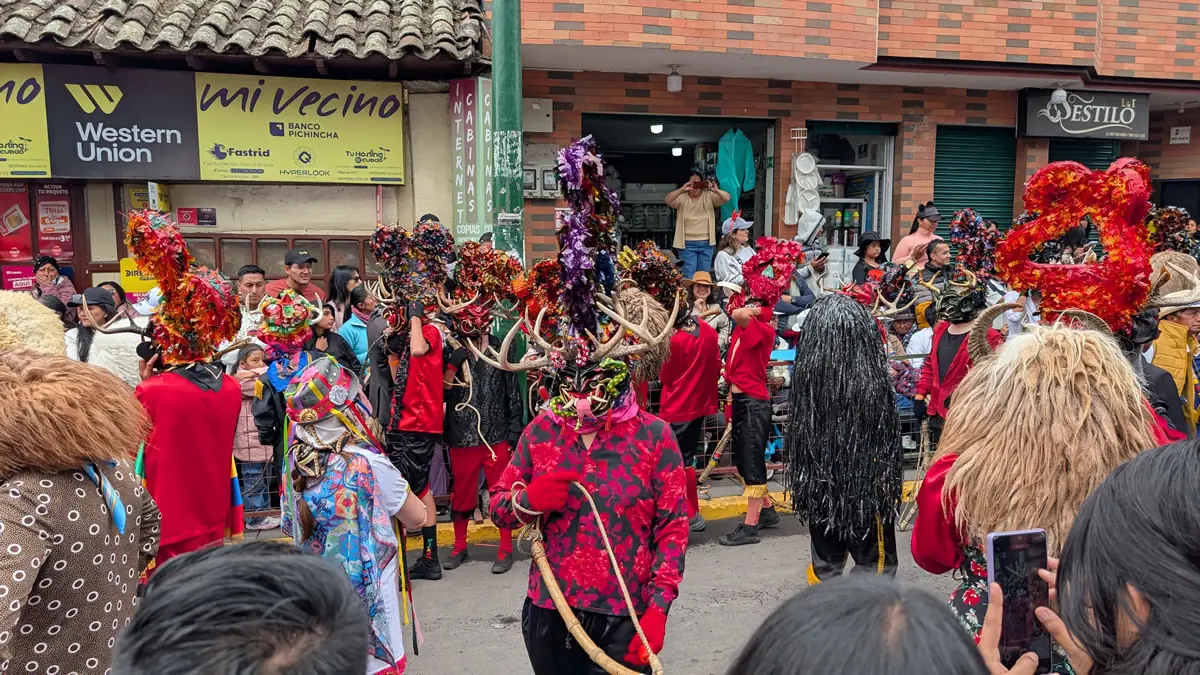
They are the energy and soul of the event. Their masks are masterpieces of folk art, featuring real animal horns and menacing expressions. In their behavior, they move with a wild, aggressive energy, jumping and lunging toward the crowd. They often carry whips or stuffed animals, such as skunks or rats, to startle onlookers. Their significance is profound: they represent the defiance of the oppressed. Their loud shouts and chaotic dancing serve as a "liberation" from the rigid, somber norms imposed by colonial religion.
The Guarichas
Usually portrayed by men dressed in feminine clothing, wearing mesh masks and carrying dolls alongside bottles of liquor. They act as the "tricksters" of the parade, weaving in and out of the crowds while flirting with spectators or jokingly accusing men in the audience of being the father of the doll they carry. They symbolize the single mothers and the women of the community. Their role is to provide humor and break the "fourth wall" between the dancers and the spectators, often using puntas (cane liquor) to pull strangers into the celebration.
The Capariches
Often seen at the very front of the procession, dressed in simple, humble clothing and carrying brooms made of dried brush. Their behavior involves constantly sweeping the ground in front of the dancers and "dusting" the feet of spectators to encourage them to move back. Historically the street sweepers of the colonial era, they serve a dual purpose in the dance: practically, they clear a path through the crushing crowds, while symbolically, they "clean" the streets of bad energy to prepare the way for the community.
The Line Couples (Bailarines de Línea)
They stand in stark contrast to the devils, wearing elegant, formal colonial-style suits and dresses, often with wire mesh masks depicting fair skin and blue eyes. They dance with extreme discipline, following rigid, choreographed steps in straight lines. They do not interact with the crowd; instead, they remain stiff and "proper". They are a satirical representation of the Spanish elite and landowners, using their rigid movements to mock the perceived "sophistication" and coldness of the colonial masters.
The Supporting Ecosystem
- The Banda de Pueblo (Village Band): Consists of brass bands with trumpets, tubas, trombones, and drums that play the sanjuanitos and pasacalles rhythms. They are the heartbeat of the event, providing the specific "tonos de diablos" that fuel the dancers' stamina.
- The Cabecillas (The Leaders): The organizers responsible for the neighborhood groups. Being a Cabecilla is a high honor, as they fund the food, drink, and logistics for their specific group.
- The "Oshas" or Spirits: Figures dressed in moss, lichen, or burlap representing mountain spirits or ancient huacas, linking the festival to pre-Columbian animist roots.
- The Spectator "Volunteer": Whether a visitor is handed a cup of cane juice by a Guaricha or circled by a lunging devil, they are temporarily "recruited" into the ritual.
Conclusion: A Legacy of Rebellion
By the end of the day, when the "crushing crowds" became overwhelming, the second floor of the market provided a much-needed tactical retreat. From the food stalls above, I was able to look down on the swirling masks and the beautiful chaos of the parade. It was from this elevated peace that I shared the defiance and spirit of Píllaro with the world outside.
The return journey followed a different rhythm. I walked to the Terminal Terrestre Píllaro and caught a bus back to Ambato for $0.70. After a $6.00 taxi ride to Terminal Del Sur—accompanied by the sounds of Grupo Exterminador—I took the final bus back to Baños. Due to seasonal tourism, the winding mountain roads made for a slow, two-hour journey.
As the bus finally pulled into the familiar streets of Baños de Agua Santa, the exhaustion began to settle in. Yet, the trip felt profoundly fulfilling. I left Píllaro with a deeper understanding of the resilience etched into the heart of the Tungurahua province. What had begun as a recovery mission from a hangover transformed into a rare educational window into the soul of Andean culture. The Diablada Pillareña is more than a spectacle—it is a masterful, enduring lesson in how a community preserves its pride through the art of rebellion.