Templo Mayor: The Heart of the Aztec Nation
The jagged, subsiding ruins of Tenochtitlán's sacred center stand in the literal shadow of the colonial cathedral built to erase them. But you don't need an expensive tour to decode this layered history.
As a professional river guide, I look for the geographical truth beneath the surface—and Templo Mayor is the ultimate physical proof of Mexico City's sinking reality. If you are already navigating the historic Zocalo on foot, this archaeological dig is an absolute mandatory stop in your Mexico City travel itinerary. While the massive National Museum of Anthropology across town holds the polished treasures, Templo Mayor is where you see the raw, excavated heart of the Aztec empire exactly where it fell.
Standing in the shadow of the massive Metropolitan Cathedral in Mexico City, you are faced with a stark and brutal irony. To your left is the center of Spanish colonial power; to your right, the jagged, subsiding ruins of the Templo Mayor. The Cathedral wasn't just built near the Aztec temple—it was built from it. The conquistadors treated this sacred site as a convenient quarry, yet as I discovered during my two visits, the Aztecs have a way of rising from the dead.
The Onion of Tenochtitlán
The ancient city of Mexico-Tenochtitlán was the navel of the universe. Walking through the ruins, the first thing that strikes you is the complexity of the construction. This wasn't one building; it was an onion. There were seven distinct temples, each built directly on top of the previous one. This wasn't just ego; it was necessity. As the heavy stone structures sank into the soft lake bed, the rulers had to build new layers to keep them above water. You can see the evidence of this subsidence today—the colonial buildings across the street lean precariously.
A Cut Through History
One of the most jarring visual reminders of how this history was forgotten is the massive brick sewer pipe from 1900 that cuts straight through the archaeological layers. Before the accidental rediscovery of the Moon Goddess (Coyolxauhqui) in 1978, city planners just plowed right through the middle of the most sacred site in the Americas.
The Museum: Tribute and Tragedy
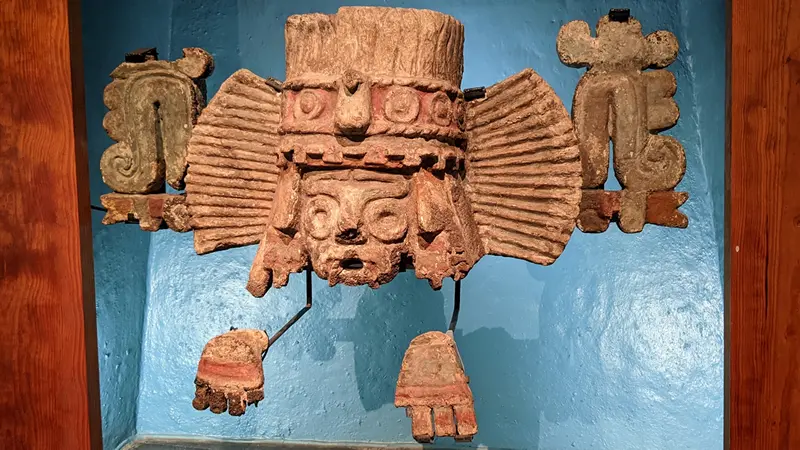
The museum housing the offerings is where the scale of the empire hits you. I documented everything from massive pufferfish and sawfish bills to jaguars and eagles—taxes paid to the masters of the Valley of Mexico. Alongside the grain boxes are the obsidian blades of ritual sacrifice. It is easy to judge the Aztecs for their "Wall of Skulls," but we need a reality check: The Conquistadors who destroyed this place to "save souls" burned Native Americans at the stake for their God. Whether it was obsidian blades or Spanish bonfires, the result for the common people was often the same.
Fast Fred's Logistics
- The Cost: A frugal traveler's dream at only around $8 USD (depending on the exchange rate).
- The Facilities: Surprisingly excellent. The bathrooms are clean and actually have toilet seats—a luxury not to be granted in Latin America.