The Frugal & Adventurous Traveler's Guide to Mercado Central Quito
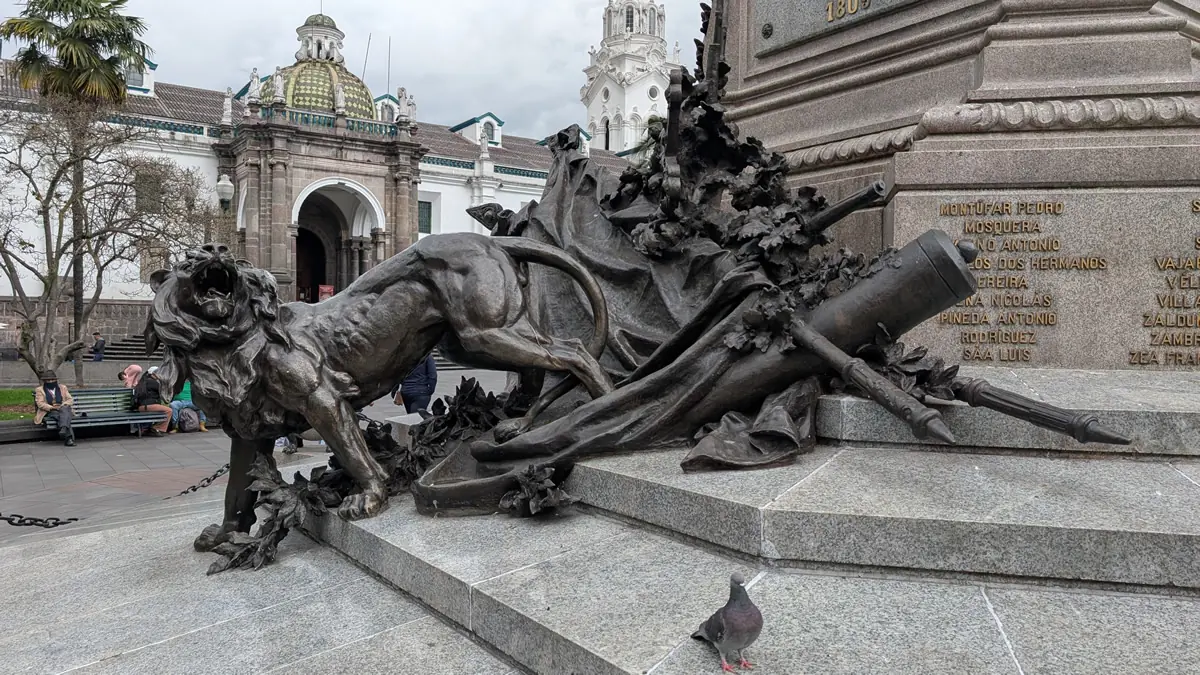
Rain in the Andes doesn't politely knock; it kicks the door down. I was pounding the cobblestones of Quito's historic old town, taking in the brooding statues of Plaza Grande under a sky bruised purple, when the clouds finally cracked open. I needed shelter. But more importantly, my internal engine was running on fumes, and I needed lunch.
I didn't duck into one of those sanitized, English-menu cafes designed to separate tourists from their hard-earned dollars. Instead, I made a beeline for the commercial heart of the city. I headed straight into the chaotic, beautiful, unfiltered belly of the beast: Mercado Central.
Whether you just navigated the public bus from the Quito airport, arrived via the local transit from Baños after weeks of hardcore whitewater rafting Ecuador's Class V river systems, or you're shaking off the high-altitude dust from a grueling month of motorcycle travel Colombia to the equator, this market is your ultimate refueling station. This isn't just a place to buy calories and manage your frugal grocery budget. Much like the legendary indigenous markets of Otavalo, it is a living, breathing institution of Quiteño life, and navigating it is the ultimate rite of passage for the frugal traveler.
Forget the curated heritage sites. If you want the unvarnished soul of a city, you look at what the working folk are eating on a Tuesday afternoon. Mercado Central tells you more about the cultural DNA of Quito in five minutes than a guided tour of a colonial church could tell you in five hours.
A Fortress Born from the Streets
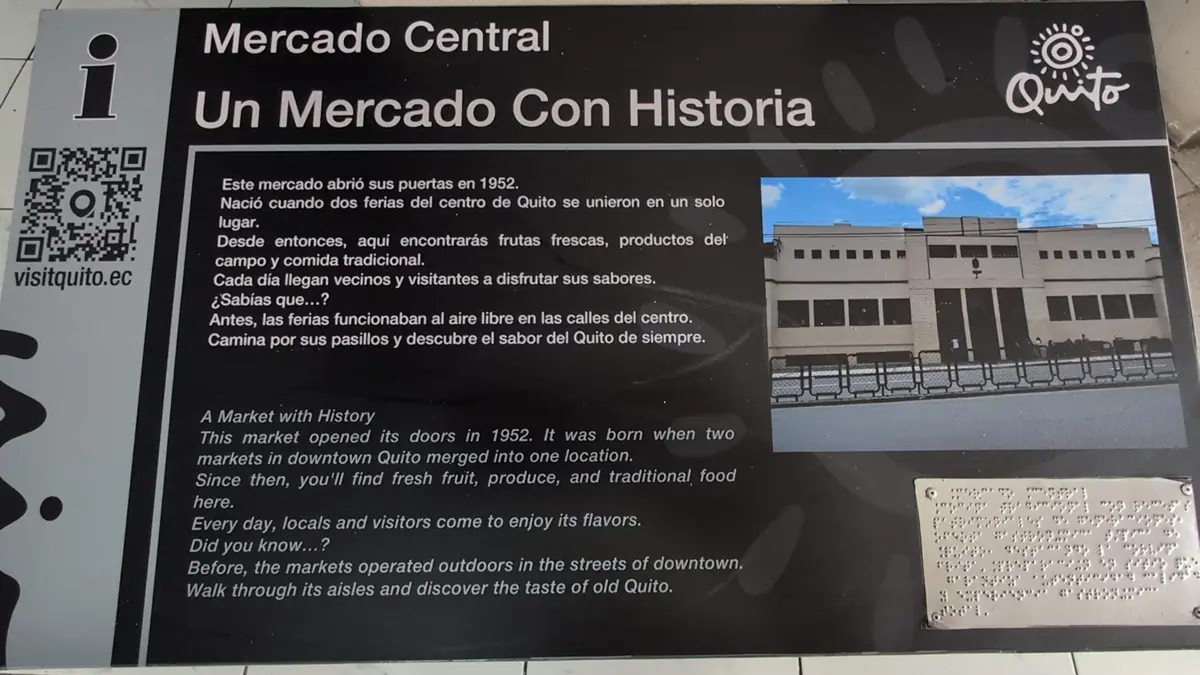
To understand what you're walking into, you have to look at the history. According to the brass and braille information plaque located near the entrance [10:03], Mercado Central hasn't always been a concrete fortress.
The market officially opened its doors in 1952. Before that, the commerce of downtown Quito was a wild, open-air affair. The city took the sprawling, decentralized street ferias and consolidated them under one permanent roof.
But make no mistake; moving indoors didn't kill the street vibe. It preserved it. Mercado Central captures that older, grittier atmosphere of a working local market. It represents the historic transition of Quito's street commerce while refusing to bow to modern, supermarket sterility.
Unlike the larger, more modernized Mercado Iñaquito, or the strictly tourist-focused craft markets, Mercado Central is gritty, food-heavy, and fiercely authentic. It's where the locals go for their daily shopping, their cheap almuerzos (lunches), and their community gossip.
The Carnivore's Gauntlet
When you first walk onto the main floor, you are immediately greeted by the butcher displays [00:00]. This is the carnivore's gauntlet, and it is a sight to behold.
It is surprisingly modern. The meat is kept behind expansive, well-lit, refrigerated glass cases. But the presentation? That is pure, unapologetic Ecuador. We are talking whole beef legs with the hooves still attached, staring right back at you.
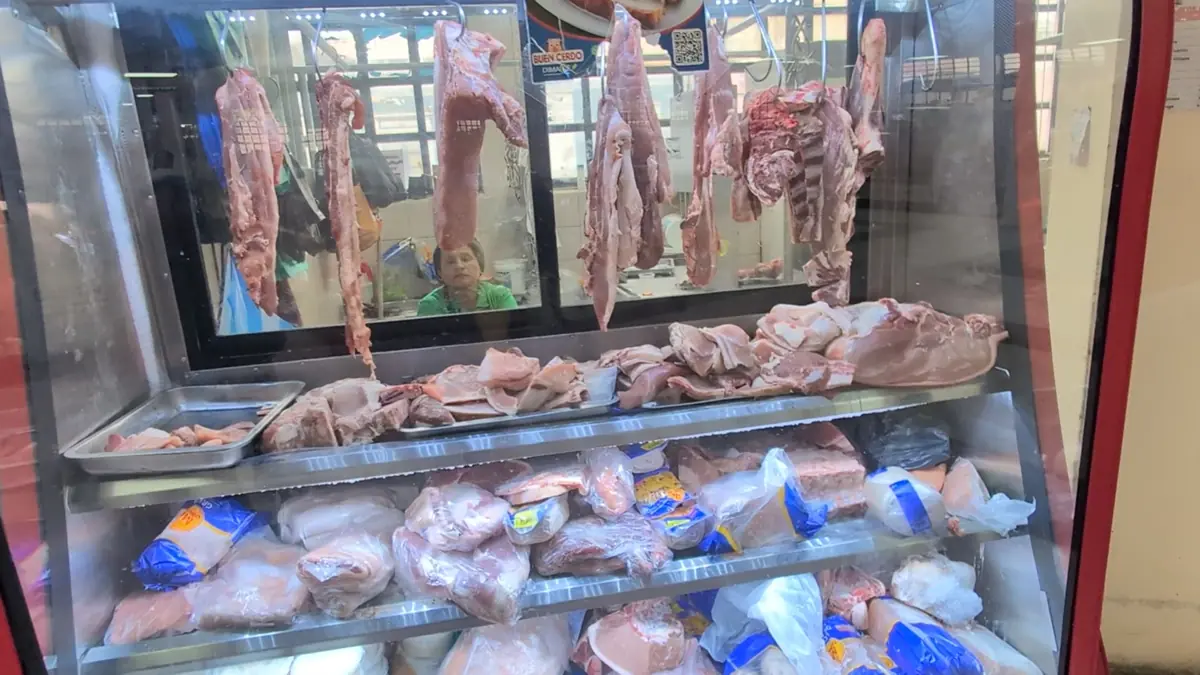
As an outdoorsman, I respect an honest relationship with my food. There is no mystery meat here. You see the ribs, the thick slabs of pork fat waiting to be rendered into lard, and the deep crimson cuts of carne de res (beef).
The stalls are meticulously maintained. Everything is spit-shined and clean. If you have a weak stomach for the reality of where your protein comes from, you might want to stick to the fruit aisle. But for the rest of us, it's a beautiful display of culinary transparency.
The Holy Grail of Budget Travel: The $3 Feast
Navigating the food stalls is where the "Frugal Strategy" truly shines. I had spent the morning hiking the steep inclines of the capital, and I was ready for a heavy caloric payload.
I flashed back to my lunch from earlier in the day [00:21]. After perusing the seemingly endless rows of caseras (the legendary market women who run the food stalls), I settled on a spot offering the classic Seco de Chivo.
For the uninitiated, Seco de Chivo is a traditional, slow-stewed goat dish. It's served with a mountain of rice, a hearty potato, a slice of avocado, and a fresh tomato garnish. The meat was fall-off-the-bone tender, swimming in a rich, earthy gravy that practically demands to be soaked up with the rice.
And the price for this plate of absolute glory? A flat three dollars.
That is the magic of budget travel Ecuador. You can eat guide-level, high-quality, local cuisine for the price of a burnt coffee back in the States. And if you like a little pain with your pleasure, every table is equipped with a bowl of homemade ají—a fiery, herbaceous hot sauce that will clear your sinuses and make your lips hum [00:32].
The meals in this section range anywhere from $2.00 to $3.75. You can score a bowl of chicken giblet soup, a hearty beef leg stew, or the classic sopa de pollo (chicken soup) for pocket change. This is how you sustain a long-term expedition without eating into your gear fund.
The True Traditional Hits
If goat isn't your speed, Mercado Central is practically a museum of traditional Andean highland cuisine. This is the place to eat the dishes that are getting harder to find in the city's modern gastropubs.
You cannot walk these aisles without smelling the Hornado [03:18]. This is whole-roasted pork, a barbecue masterpiece that yields crispy, golden skin and melt-in-your-mouth meat. It's usually served with mote (hominy) and potato patties. You'll also find Fritada (chunks of pork braised and then fried in their own fat).
For the more adventurous eaters, this market is famous for its old-school, nose-to-tail soups. We're talking Yaguarlocro (a potato soup featuring lamb viscera and blood), Caldo de Patas (cow trotter soup), and even Caldo de Bille (fetal cow soup). It sounds intimidating, but this mix of indigenous ingredients and Spanish culinary layering is the true taste of old Quito.
If you prefer seafood, the market has an iconic reputation for its Fried Corvina (sea bass) and massive, citrus-packed bowls of Ceviche. Prepared with fresh lime juice to naturally "cook" the seafood and kill bacteria, I've eaten it across Latin America, and Ecuador's version holds its own against the best of them.
Liquid Gold: The Juice Caseras
After taking down a heavy plate of stewed goat, you need something to cut through the richness. Enter the juice ladies.
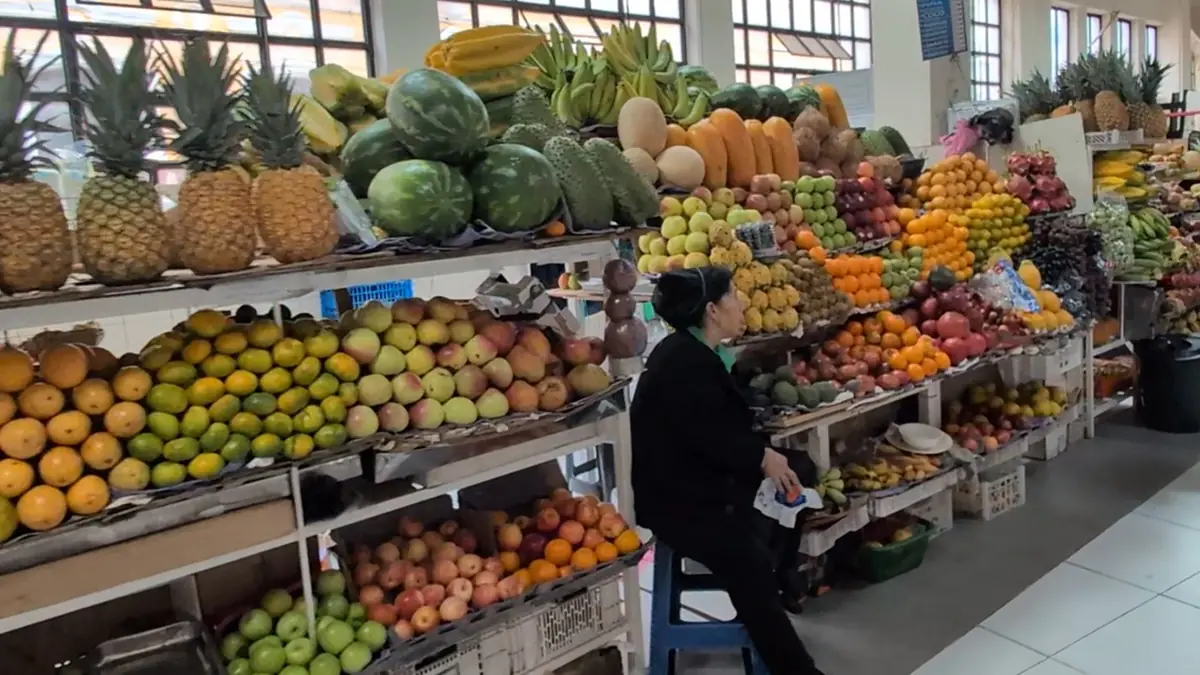
The fresh juice stalls are a vibrant explosion of Andean agriculture [01:54]. Massive pineapples, papayas the size of rugby balls, and mountains of citrus are stacked to the ceiling.
For about $1.00 to $1.50, these women will blend you a customized pitcher of liquid gold. I noticed a massive jar of fresh-pressed carrot juice that looked like pure vitality. If you want it sweeter, they'll throw in a splash of naranja (orange) juice.
These juice ladies are legendary. In many traditional markets across the Andes, there is a mythos that the right blend of fruit and herbs can cure whatever ails you—from a nasty hangover to altitude sickness. Whether it's medical science or just the sheer vitamin density, a dollar spent here is the best investment you can make in your health.
You'll also notice a surprising amount of English spoken around these juice counters. Because Quito is a major international hub, you'll find plenty of European backpackers wandering the aisles. The bilingual signs and the friendly, patient vendors make this market highly accessible, even if your Spanish is limited to ordering cerveza.
Direct-to-Consumer Produce
Beyond the cooked food, Mercado Central is a vital hub for fresh, direct-to-consumer produce [02:40]. It's like being in the world's greatest supermarket, only the food hasn't been sitting on a truck for three weeks.
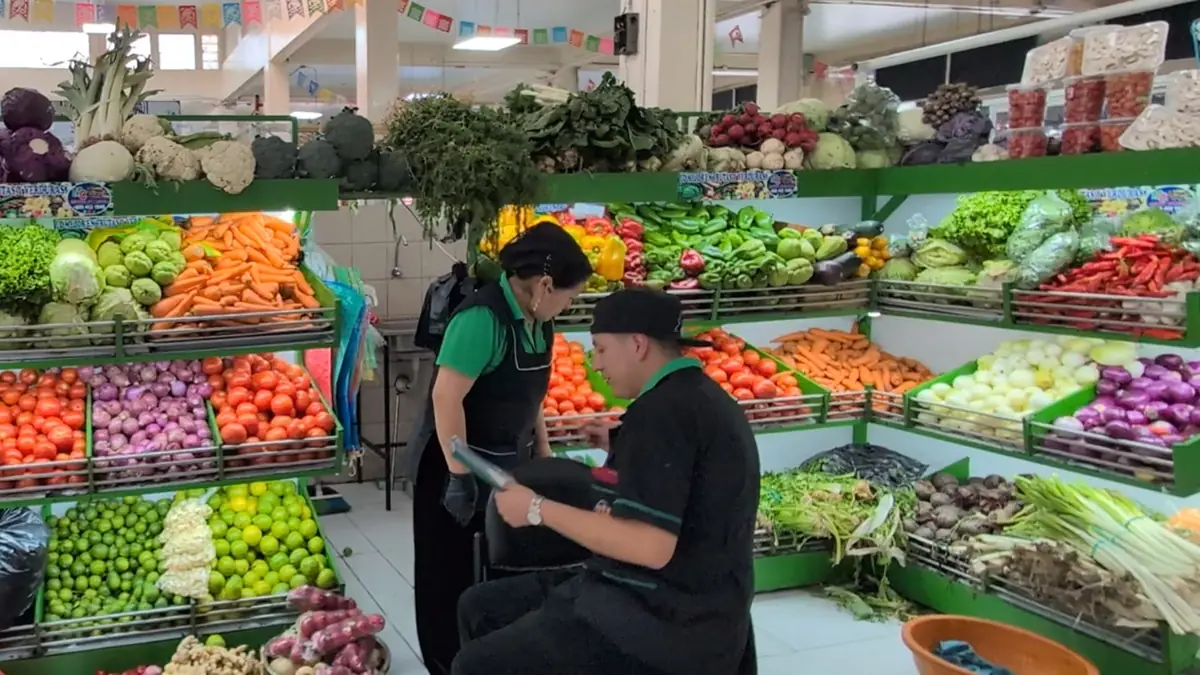
The vegetable stalls are towering pyramids of fresh greens, massive carrots, onions, and local tubers. Because the market is situated in the high-altitude agricultural basin of the Andes, the produce doesn't have to travel far.
As you wander, you'll also stumble upon the dry goods. I found stalls selling giant cylinders of raw cane sugar (panela), bulk bags of local peanuts, and massive tubs of fresh peanut butter. If you are provisioning for a long trek or a motorcycle push into the cloud forest, this is where you stock your panniers.
Descending to the Lower Deck
After fueling up on the second deck, I took the stairs down to check out the rest of the market. Down here, the chaotic sizzle of the food stalls fades, replaced by the distinct, briny smell of the ocean. This is where the seafood vendors operate. The glass cases here are loaded with fresh shrimp and glistening cuts of fish [06:00]. It is astonishingly fresh for a city sitting at 9,350 feet of elevation.
Right next to the seafood, you'll find the poultry vendors. The fresh chickens here are a deep, marigold yellow—a sign of their natural diet—and they are sold with the heads and feet proudly attached. It's visceral, it's raw, and it's beautiful.
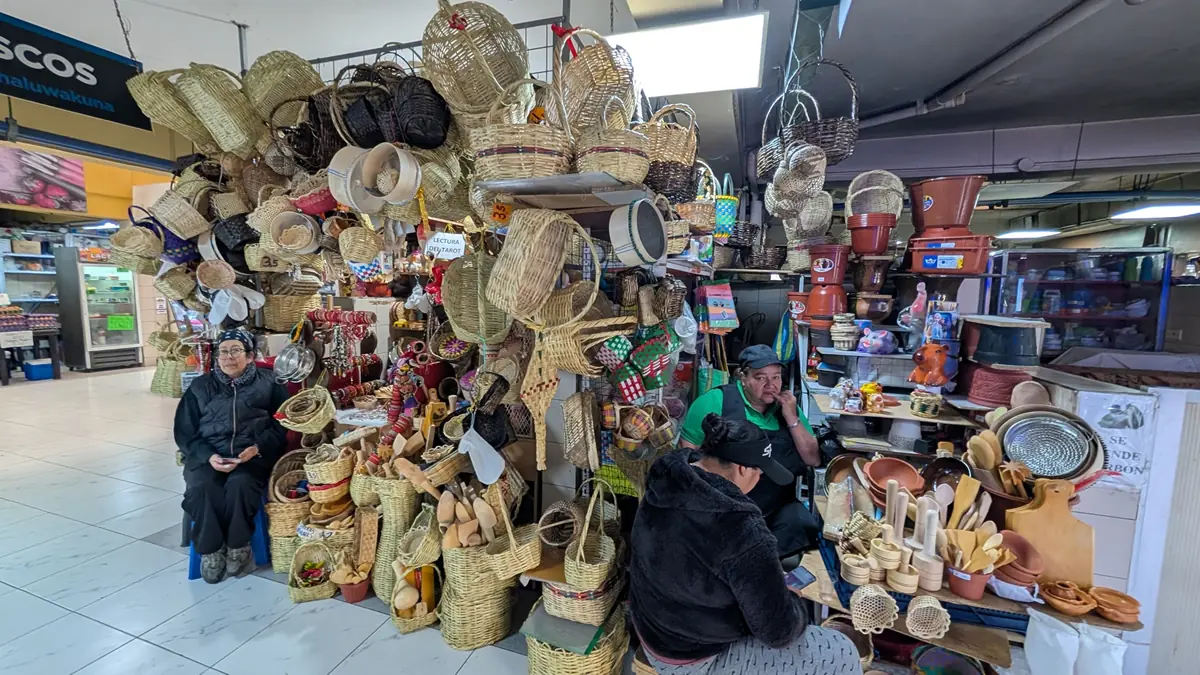
But this lower level isn't just about food. It is a holistic survival center. You'll find vendors selling incredibly cheap, handcrafted woven baskets that make perfect, functional souvenirs. You'll also spot stalls stocked with cleaning supplies, household toiletries, and even clothes.
If you blew out a seam on your riding jacket, there are seamstresses with sewing machines ready to run a repair for a few coins. If you need some cheap entertainment for a rainy hostel night, there's a guy selling movies dubbed into Spanish for a dollar a pop.
Herbal Cures, Wellness, and the Old Ways
Perhaps the most fascinating aspect of this floor is the misceláneos section. Here, nestled among the bulk goods and hardware, you'll find the heart of Quito's traditional medicine culture.
Mercado Central has long been known for its herb vendors and their connection to spiritualism and natural wellness. The stalls are piled high with massive bundles of dried mountain herbs, fresh flowers, and roots you won't find in any Western pharmacy.
Locals and clued-in travelers still come here seeking herbal cures or ingredients to brew their own mountain teas. It is a direct link to the old-school remedies of the Andes.
This juxtaposition of the sacred and the mundane is everywhere. In the corner of a busy stairwell, you'll find a beautifully lit shrine to the Virgin Mary, complete with fresh flowers and glowing neon signs. It's a quiet reminder of the deep faith that underpins daily life here.
The Dawn Patrol: Frugal Breakfasts
While lunch is the main event, Mercado Central is also a powerhouse for the early risers. If you are hitting the road at first light, skip the overpriced, stale toast at your hostel and come straight here.
The breakfast stalls [08:06] serve up massive, calorie-dense plates designed to fuel a working-class day. For roughly $1.10 to $1.50, you can get a classic Ecuadorian breakfast with eggs and sides—a hearty spread that would make any Southerner proud, paired with a steaming cup of local coffee.
It's hearty, it's lightning-fast, and it will keep your engine running until the Hornado stalls fire up for lunch.
Fast Fred's Tactical Guide to the Market
If you are going to navigate Mercado Central like a pro, you need to know the ground rules. Here is your tactical breakdown:
- Bring Small Change: Don't try to pay for a $1 juice with a $20 bill. Break your money down. And always keep a quarter handy; the public baño (bathroom) on the lower level costs between 15 and 25 cents.
- The 3-Review Rule Doesn't Apply Here: Usually, I preach strict fact-checking and scouring Google Reviews before eating anywhere. But inside Mercado Central, the rule is different: follow the crowds. If a stall is packed with local workers and caseras shouting orders, sit down and eat.
- Embrace the Language Barrier: While some vendors speak simplified English to cater to the European backpacker crowd, a little Spanish goes a long way. Learn the words for chicken (pollo), pork (cerdo / chancho), and beef (res). If all else fails, smile and point.
- Timing is Everything: The video was shot on a Monday afternoon as a rainstorm rolled in, which means the market was relatively quiet. If you come here on a Saturday or Sunday, prepare for a wall-to-wall bustling madhouse. Embrace the chaos.
- The Beer Anchor: If you need a landmark, or if you need a craft IPA to wash down that goat stew, the market is located just a couple of blocks away from Bandidos Brewing. It's a legendary local gastropub built into a colonial building from 1850. It's the perfect spot to transition from a rugged day market to a lively Quito night.
The Final Word
Mercado Central isn't just a place to score a three-dollar meal. It is a masterclass in the Frugal Strategy. By stepping away from the tourist zones and shopping where the home folk shop, you unlock a level of sustainable travel that most guidebooks miss entirely.
You get direct-to-consumer prices, uncompromising authenticity, and an immersive cultural experience that will test your senses and expand your palate. It is loud, it is raw, and it is absolutely vital.
When you find yourself in Quito, walk past the overpriced cafes. Follow the smell of roasting pork and fresh rain on the cobblestones. Grab a seat at one of the stainless tables, order the Seco de Chivo, and dig in.