The Patriotic Symbols of Ecuador: Flags, Crests, & Anthems Explained
Before you drop your kayak into the rushing rapids of the Quijos River or throttle your motorcycle up the spine of the Andes, you need to understand the cultural bedrock of the land you're riding. We aren't just looking at pretty colors and old songs here; we are decoding the DNA of a nation forged in volcanic fire and revolutionary blood.
You'll likely encounter these icons of sovereignty the moment you exit the terminal and board the Quito Airport Frugal Bus, passing government plazas and monuments that serve as tactical markers of national pride. This identity isn't just maintained by the state; it is preserved at the local level through the Ecuadorian Minga Culture—the community labor tradition that ensures the public squares and historical sites displaying these symbols remain functional and respected. Here is your gritty, no-nonsense guide to the patriotic symbols of Ecuador.
The National Flag: A Tricolor Soaked in History
Forget generic banners; the Ecuadorian flag tells a story of liberation. The original design was inspired by the pioneer of South American independence, General Francisco de Miranda. It shares its roots with Colombia and Venezuela, a nod to the short-lived powerhouse of Gran Colombia.
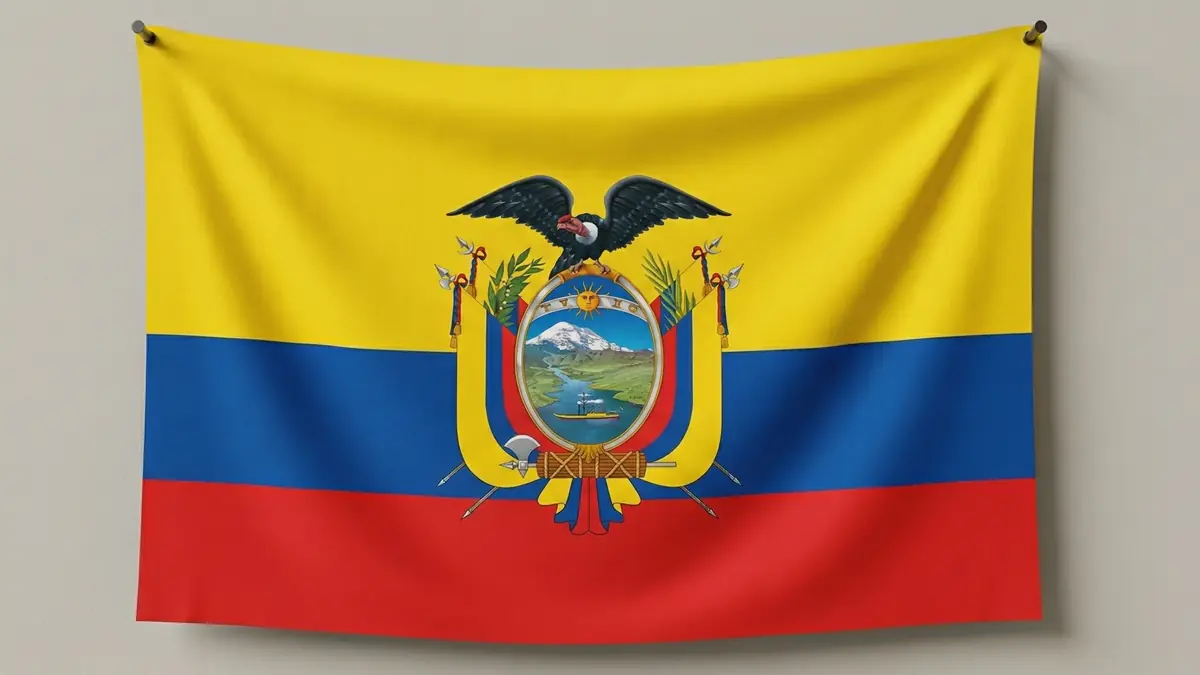
Yellow
Takes up the entire top half of the flag, being two times wider than the other stripes. It symbolizes the absolute abundance and fertility of the Ecuadorian soil.
Blue
Taking up the middle quarter, this represents the vast Pacific ocean and the clear Andean sky.
Red
Anchoring the bottom, the red stripe is a stark reminder of the blood shed by the soldiers and martyrs who bought the nation's independence with their lives.
The Coat of Arms: A Masterclass in Badass Heraldry
Ecuador doesn't just slap a bird on a shield and call it a day. Formalized by President Eloy Alfaro Delgado and approved on October 31, 1900, this emblem is a dense map of the country's geography and militant spirit.
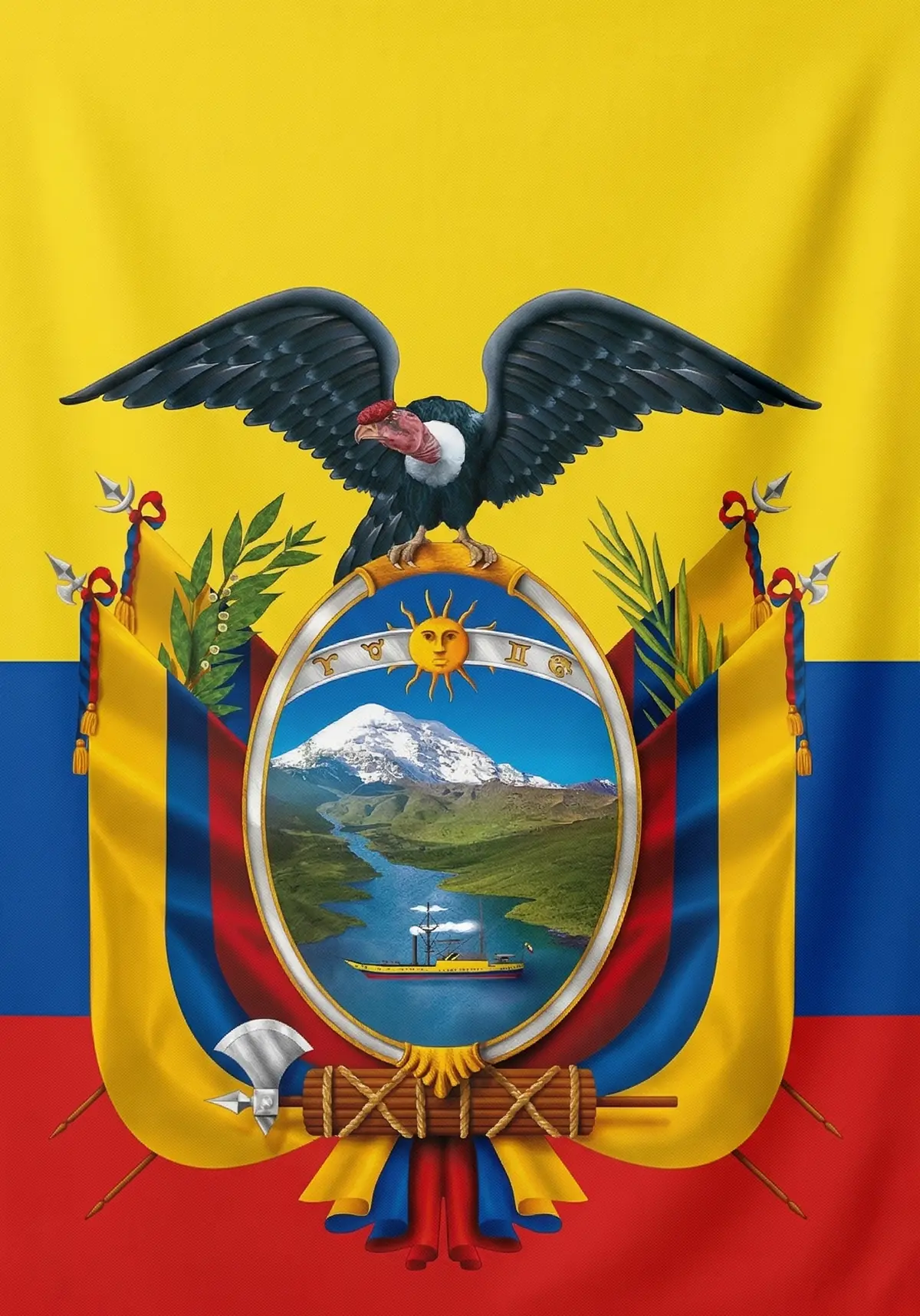
Here is the breakdown of the gear and terrain packed into this shield:
| Symbol | Technical Meaning |
|---|---|
| Andean Condor | Perched at the top with wings spread, this massive raptor doesn't just symbolize energy and greatness; it represents the idea that Ecuador is always ready to attack any enemy. |
| Chimborazo Volcano | That snow-capped peak in the background isn't just any mountain. Chimborazo is the highest mountain in Ecuador and, due to the equatorial bulge, its summit is the furthest point from the center of the Earth. |
| Steamboat Guayas | Floating on the Guayas River, this ship is a piece of engineering history. Built in Guayaquil in 1841, it was the first seaworthy steamship built in all of South America. Its mast is a Caduceus—crowned by wings and surrounded by snakes—symbolizing navigation and commerce. |
| Astrological Revolution | Above the mountain, you'll spot a golden sun and the zodiac signs for Aries, Taurus, Gemini, and Cancer. These represent March through July, immortalizing the duration of the March Revolution of 1845 that ousted General Juan José Flores. |
| Weapons and Flora | The shield is flanked by a palm leaf for peace and a laurel branch representing the republic's victories. At the base sits the Consular Fasces—a bundle of wooden rods with an axe—an ancient Roman symbol of life-and-death republican authority. |
The National Anthem: "¡Salve, Oh Patria!"
You don't just sing the Ecuadorian anthem; you survive it. Titled "¡Salve, Oh Patria!" (Hail, Oh Fatherland!), the final legendary lyrics were penned by poet Juan León Mera Martínez in 1865, with music crafted by Antonio Neumane.
Getting to this final version was a rocky road. Earlier heavyweights, like the Guayaquil-born poet José Joaquín de Olmedo, tried to write the anthem in 1830, but his version never secured a musical backing. It wasn't until September 29, 1948, that Congress officially locked in Mera's verses as the definitive anthem.