Chiapas Highlands: Day of the Dead Rituals, Textiles, and Indigenous Law
If you're looking for face paint, parade floats, and a sanitized version of mortality, book a flight to Mexico City; but if you want to stand in the mud and feel the breath of 3,000 years of ancestry, follow me to the highlands of Chiapas.
Navigating southern Mexico during Día de los Muertos requires separating the tourist traps from the genuine cultural bedrock. In indigenous communities like San Juan Chamula and Zinacantán, the holiday isn't a street party—it's a raw, powerful multi-day ritual centered around pine needles, pox (local cane liquor), and all-night cemetery vigils.
To experience this properly without draining your funds, you have to execute the core Frugal Strategy. That means setting your overall parameters using my 40-Day Mexico Budget Guide, and securing a reliable budget basecamp like Berlin 61 in San Cristóbal de las Casas weeks in advance. Here is the tactical beta for accessing these ancient Mayan traditions respectfully and economically.
The Raw Reality of El Romerillo
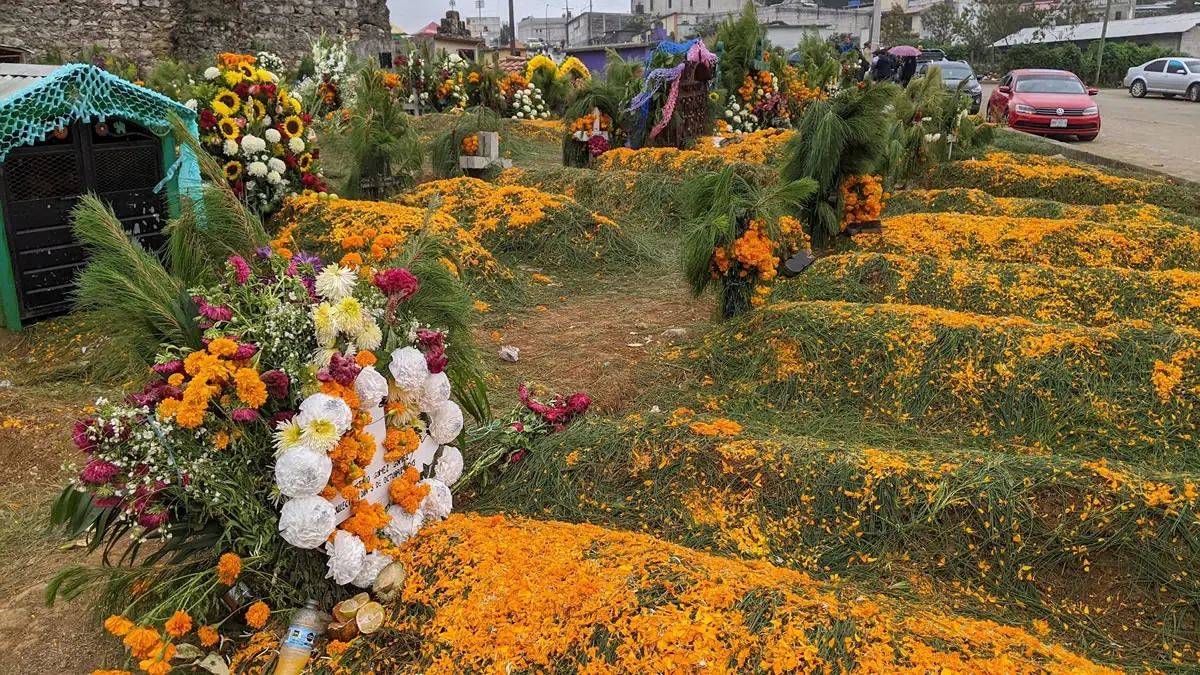
Most tourists flee when a hurricane starts knocking on the door. But Hurricane Lisa wasn't about to stop the ancient spirits in El Romerillo [00:17]. This isn't some curated museum exhibit; this is a hilltop cemetery where the living protect the dead, using simple wooden boards to keep the torrential rain off the bright decorations [00:26].
In this indigenous village, graves aren't just markers—they are dining tables. You'll see families sharing Coca-Cola, local spirits, cigarettes, and the favorite meals of the departed [00:40]. Look closely at the towering crosses, because their colors aren't random:
- White: For children.
- Green: For the young.
- Blue: For the artists and politicians.
- Black: For those who lived past sixty [01:04].
Textiles and Taste in San Lorenzo Zinacantán
Dropping down into San Lorenzo Zinacantán, the atmosphere shifts from somber hilltop reverence to a riot of color and commerce. This is the land of master weavers, and while the stop is engineered to promote local textiles, the real soul of the village hits your palate [01:37].
For the frugal traveler, this is the ultimate "slow food" experience. Forget the sanitized resort buffets; we're talking sweet coffee and fresh blue corn tortillas hot off the comal, loaded with beans, local cheese, hot salsa, and a heavy hit of oregano [01:53]. It's cheap, authentic, and packed with the kind of protein you need to fuel a solo travel adventure through Mexico.
San Juan Chamula and the Weight of Indigenous Law
Our final stop is San Juan Chamula, a place where the air is thick with pine needles and governed by strict indigenous law that predates modern Mexico. Listen to me very carefully: This is not a playground for influencer antics.
In an age of digital oversharing, Chamula demands you put the camera down, respect their culture, and actually experience the raw shamanic syncretism right in front of you.
Fast Fred's Key Takeaways for the Frugal Nomad
- Respect the Rules: In San Juan Chamula, "No Photos" means exactly that. Don't be the arrogant tourist who tests local law.
- Weather Matters: The highlands are completely unpredictable. Pack a solid rain shell; the spirits don't mind the mud, and neither should you.
- Eat Local: Skip the expensive tourist restaurants. The blue corn tortillas in Zinacantán offer the best protein and flavor for your peso.