Lake Atitlán to Guatemala City: The Rugged Guide to Chicken Bus Travel
The roar of a retired Blue Bird school bus is the true anthem of the Guatemalan highlands.
If you're looking for a sanitized, air-conditioned shuttle filled with hushed whispers and overpriced bottled water, you've come to the wrong place. But if you want to navigate the 115-kilometer stretch between the volcanic shores of Lake Atitlán and the urban chaos of Guatemala City like a seasoned guide—and do it for less than the price of a craft beer—then it's time to board the "Chicken Bus."
The Three Paths: Logic, Luxury, or Legend
Before you haul your pack to the curb in Panajachel, you need to choose your weapon. There are three primary ways to bridge the gap to the capital:
- The Privateer ($100+ USD): Taxis or Ubers. It's fast, direct, and the choice for those whose time is worth more than their sense of adventure.
- The Tourist Shuttle (~$40 USD): The middle ground. Reliable, but often involves a mandatory "scenic" detour through Antigua that can turn a three-hour trip into a day-long saga.
- The Chicken Bus (Q50 / $6.37 USD): This is the Rebuli line. It's frugal, it's loud, and it's the only way to truly feel the pulse of the Pan-American Highway. Mastering this type of street-level transit is exactly the kind of frugal strategy Andy Lee Graham and I discuss when charting long-term travel.
Why the "Chicken" Bus?
These are retired US school buses, reincarnated with chrome, neon lights, and a reckless disregard for the laws of physics. They aren't just transporting people; they're moving livestock, harvests, and the occasional actual chicken. However that isn't why they are called chicken buses as the people ride inside and large packages and livestock ride on the roof. They race other buses to the next stop to increase earnings via fares and this often involves playing chicken with oncoming traffic as the buses race side by side.
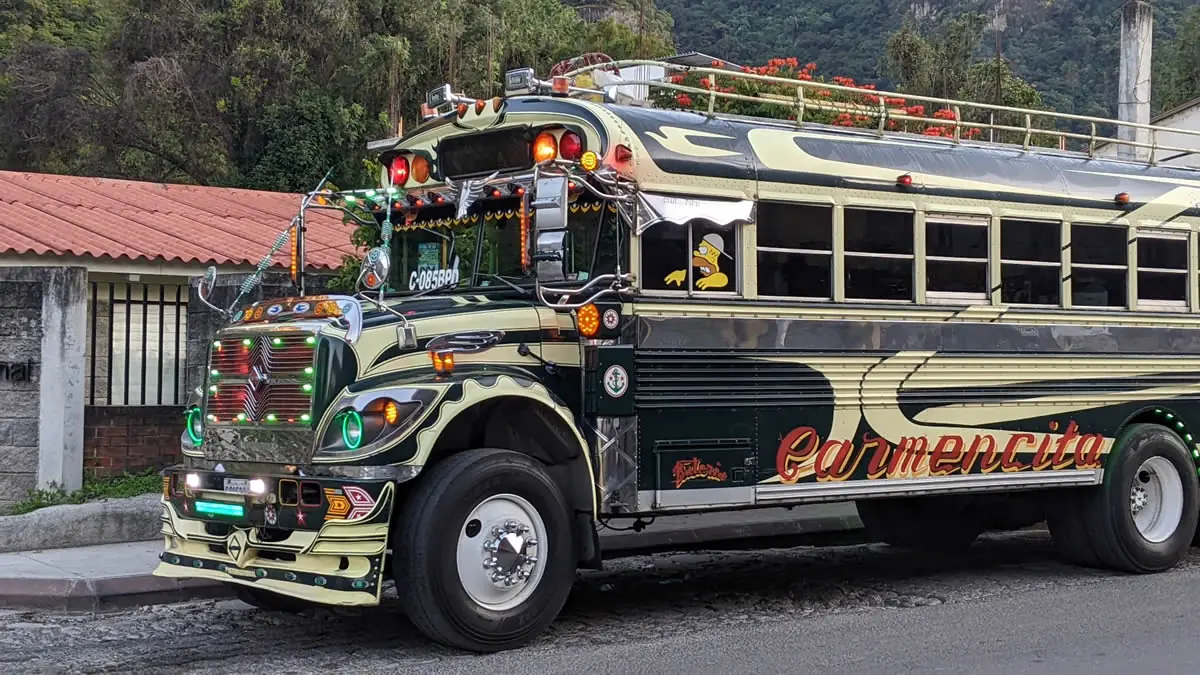
In the whitewater rafting world, we use these same heavy-duty rigs to haul gear through mud and over mountains. On the road to Guate, these drivers "play chicken" with oncoming traffic, overtaking slower trucks with a level of confidence usually reserved for fighter pilots.
The Strategy: Catching the Direct Rebuli
The secret to a smooth transit is the Rebuli Direct. While many buses require multiple transfers at dusty junctions like Los Encuentros or Chimaltenango, Rebuli runs direct routes from Panajachel.
The Early Bird Advantage:
Catch the 4:30 AM or 5:00 AM departures. I caught the 4:30 AM departure to validate the cost—just Q50 ($6.37 USD)—and avoid the heavy overcrowding common during later rush hour commutes, making it a highly efficient move for managing your monthly budget in Guatemala. Bypassing the delays of private shuttles ensures a quick three-hour arrival at Miraflores. Why?
- No Transfers: You sit down once and stand up in the city.
- Traffic: You bypass the soul-crushing congestion of Chimaltenango before the world wakes up.
- Antigua Bypass: You head straight for the capital without the mandatory gringo-trail detour.
Arrival: The Miraflores Pro Tip
When the bus hits Guatemala City, don't just ride it blindly to the end of the line. Most terminals are tucked into areas that can be a bit sketchy for the uninitiated.
It is a strategic masterstroke for three reasons:
- Safety: It's a modern, high-traffic commercial zone where hailing a verified taxi or calling an Uber is significantly safer.
- Logistics: The mall offers a safe harbor to grab a meal, grab some strong Guatemalan coffee, or simply kill time before your hotel check-in.
- Culture: You are standing on ancient ground. Miraflores Mall has a phenomenal museum (Museo Miraflores) dedicated to the ancient Mayan city of Kaminaljuyu. In fact, the museum displays incredible artifacts and items that were actually discovered and studied during the construction of the mall itself.
Returning to the Lake & Key Takeaways
The Reverse Route
If you are traveling directly from La Aurora International Airport (GUA) to catch a bus back to the lake, do not wander into the street to flag a ride. Utilize one of the official taxi stands inside the airport terminal. It might cost you an extra 10 Quetzales, but in the game of international travel, that's a very cheap insurance policy for your gear and your neck.
Key Takeaways for the Frugal Traveler
- Cash is King: Don't expect to swipe a card on a Blue Bird. Have your Quetzales ready and accessible.
- Speak Up: The bus drivers and helpers are incredibly accommodating if you communicate. Don't be afraid to request specific drop-offs like Miraflores.
- Stay Sharp: Keep your valuables zipped up and on your lap, not in the overhead rack.
Watch the Transit Breakdown
See the route and the reality of the Chicken Bus for yourself: