The Truth About Cuy: Why Guinea Pigs Aren't Pigs
The truth is out: those squealing fluff-balls in the pet store aren't from Guinea, and they certainly aren't related to Wilbur.
If you've ever found yourself staring at a menu in the Andes, you've likely seen the word "Cuy." While Americans treat these rodents like pampered roommates, the rest of the world has known the truth for millennia: they are delicious. Having feasted on Cuy in the streets of Baños, Ecuador, I can tell you that if you've ever enjoyed a slow-roasted groundhog or a grey squirrel in the Blue Ridge Mountains, you'll feel right at home here.
To find the most authentic (and affordable) Cuy, you need to follow the Frugal Strategy away from the tourist plazas and into the Otavalo Animal Markets. The livestock trade and the small-scale farming that brings this delicacy to your plate are propped up by the Ecuadorian Minga Culture—a community labor system that maintains the rural infrastructure and market stalls of the Sierra. For the resilient traveler, eating Cuy isn't just a food challenge; it's a tactical immersion into the ancient "Engine" of Andean survival.
The Cuy Story: Why Guinea Pigs Aren't Pigs or From Guinea
The name "Guinea Pig" is a massive historical "oops"—it is misleading on both counts. They are not pigs, and they definitely are not from Guinea in West Africa.
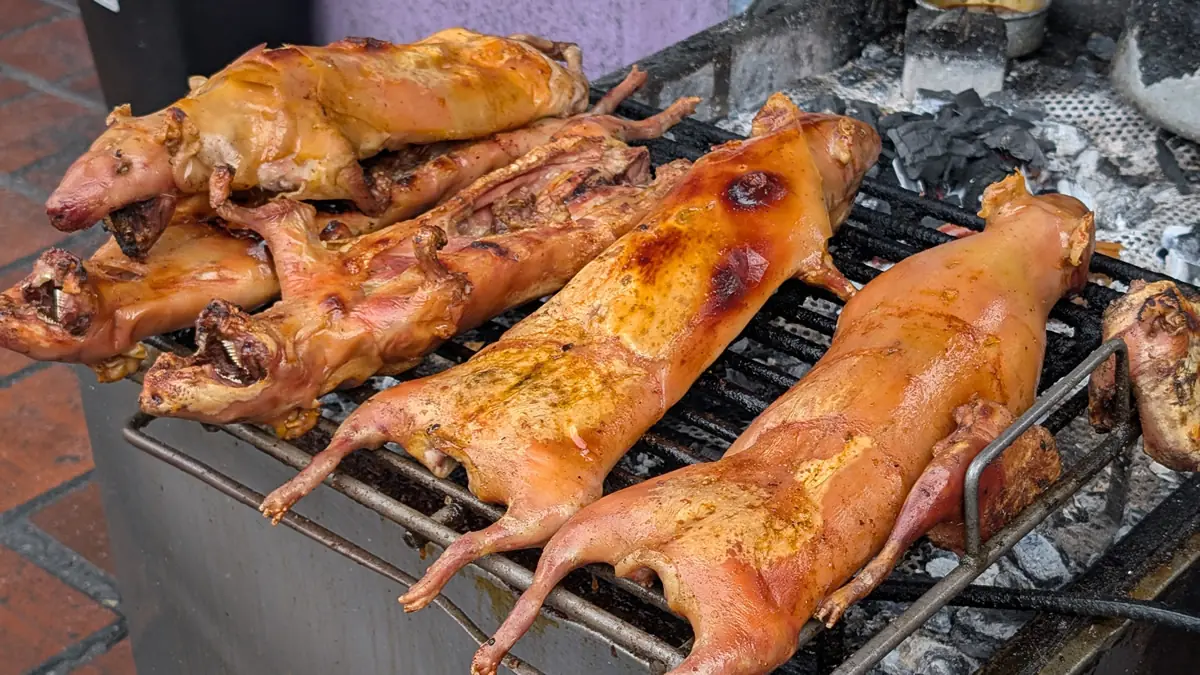
In their native Andes, they are called Cuy (pronounced kwee or koo-ee). It's an onomatopoeic name derived from the high-pitched "wheek-wheek" sound they make.
Why the "Pig" Label?
The "pig" part of the name stems from early European observers who lacked a better vocabulary for a stout, tail-less rodent:
- Scientific Irony: Their Latin name is Cavia porcellus. Porcellus translates to "little pig," proving that even 18th-century scientists were easily confused by body shape.
- The Build: With a compact body, a large head, a rounded rump, and zero visible tail, they mirror the silhouette of a miniature swine.
- The Soundtrack: They don't just look like pigs; they sound like them. Their repertoire of grunts and squeals is remarkably similar to a piglet's.
- The Appetite: Like any self-respecting hog, Cuy spend the vast majority of their lives eating.
Why "Guinea"?
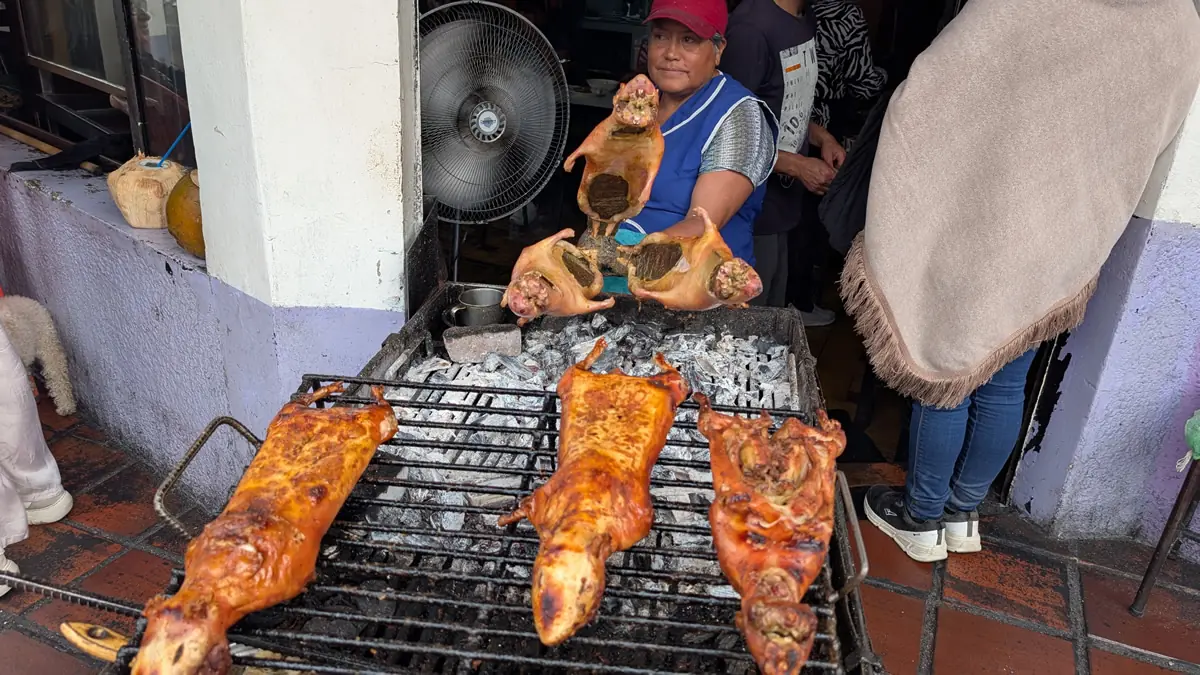
The "Guinea" prefix is a bit more of a geographical riddle. Native to the Andes Mountains of South America, these animals were thousands of miles from the African coast. The theories include:
- The "Exotic" Catch-all: In 17th-century England, "Guinea" was often used as slang for any distant, exotic land across the ocean. It was the "Timbuktu" of its day.
- The Guiana Mix-up: A likely candidate is a linguistic corruption of "Guiana," the region in northeastern South America. Sailors aren't always known for their precise cartography.
- The Trade Route: Some suggest they arrived in Europe via ships that stopped in West Africa (Guinea) as part of the triangular trade routes, leading people to believe that was their point of origin.
What Does Cuy Actually Taste Like?
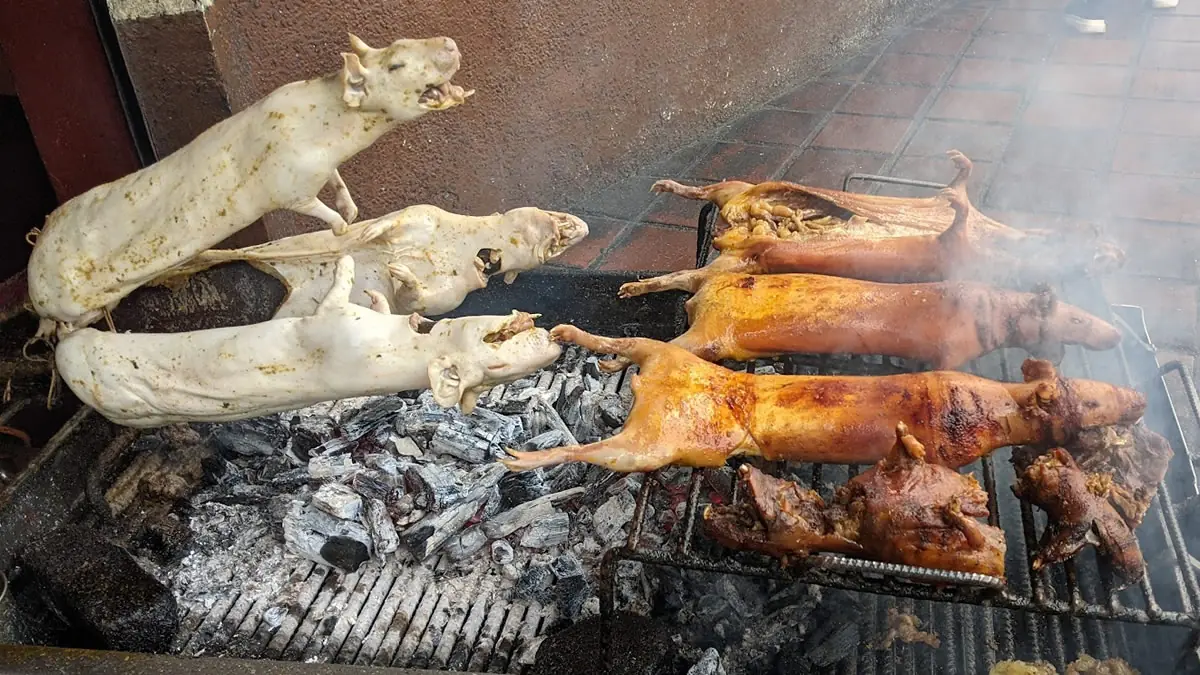
Let's get down to the brass tacks of gastronomy. In the streets of Baños, you'll see them roasting on spits, smiling back at you with a crisp, golden-brown skin.
For the uninitiated, Cuy tastes remarkably like wild game. If you've never had the pleasure of eating squirrel or groundhog, think of it as the dark meat of a chicken, but with a richer, more complex flavor profile [00:24].
- Texture: It is lean. There isn't a massive amount of meat on these little guys [00:15].
- The Skin: When roasted over coals, the skin becomes incredibly crispy—much like a high-end pork crackling.
- Comparison: It is far more flavorful than the bland, factory-farmed chicken you find at the grocery store.
Key Takeaways for the Adventurous Eater
- Location: Look for street vendors in the Andes (Ecuador, Peru, Bolivia).
- Expectations: Don't expect a steak. It's a boney, interactive eating experience.
- Cultural Context: In the Andes, this isn't a novelty; it's a traditional staple that predates the Inca Empire.
In essence, the Western name is just an artifact of confused sailors and naturalists who used familiar reference points to describe a fascinating animal from the high Andes.