Holy Week in the Sierra: Sacred Traditions of Otavalo & Cotacachi
Semana Santa (Holy Week) in the Ecuadorian Highlands is a profound intersection of Catholic liturgy and ancestral Andean worldview, far removed from the tourist-heavy processions of Quito.
The smaller towns surrounding the Imbabura volcano offer truly immersive cultural experiences. From the somber, food-sharing rituals of Wakcha Karay in Ilumán to the dramatic Viernes Santo processions in Cotacachi, these traditions reveal the resilience of indigenous identity. For the frugal traveler, witnessing these events requires no tickets—only a respectful presence and a mastering of the Imbabura Bus Routes to move between cantons for under a dollar. These spiritual displays are made possible by the Ecuadorian Minga Culture—the community-led "Engine" of the Andes—where collective labor ensures that sacred spaces and public traditions remain authentic and accessible to everyone.
Holy Monday: The Wakcha Karay Ritual in Ilumún
On Holy Monday, Kichwa families of the Ilumún parish gather at the local cemetery for Wakcha Karay. This tradition involves sharing food directly on the graves of ancestors, creating a bridge between the living and the dead. The air fills with the scent of Fanesca (traditional Holy Week soup) and prayers in both Spanish and Kichwa. It is a display of community where no one goes hungry; food is shared freely with neighbors and respectful visitors.
Good Friday: The Viernes Santo Procession in Cotacachi
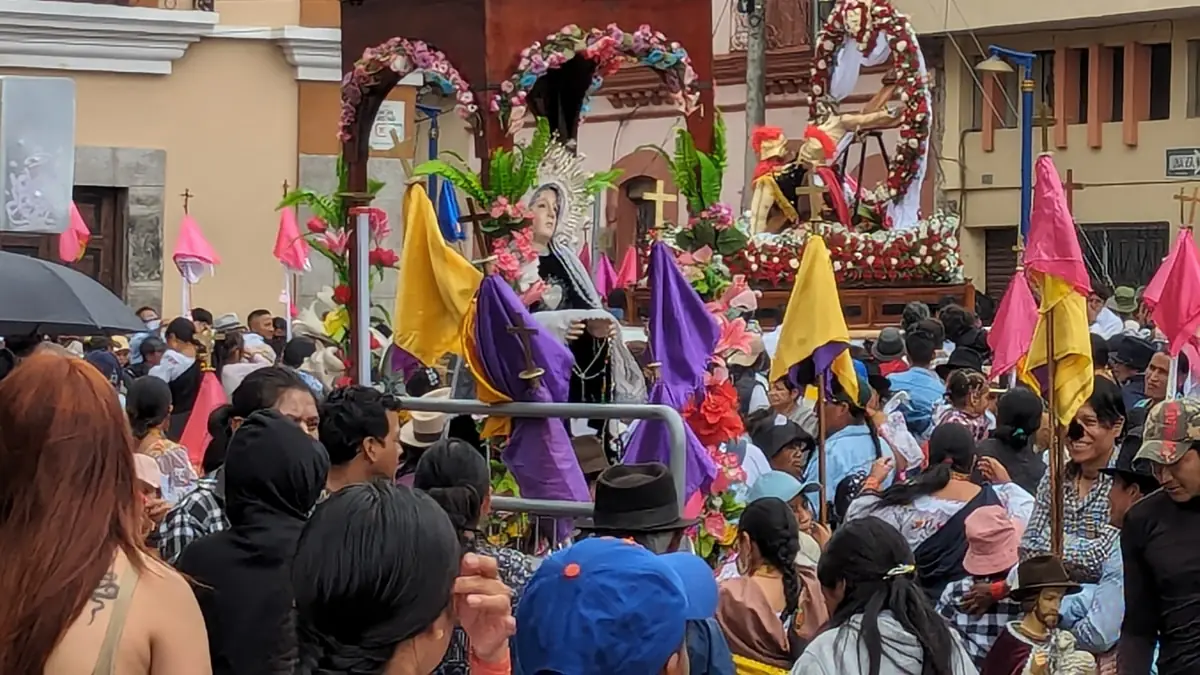
Good Friday (Viernes Santo) in Cotacachi—the "Leather Capital"—is just 15 minutes north of Otavalo. The streets are lined with thousands as heavy, hand-carried floats (andas) move slowly through the city. The atmosphere is thick with incense and the rhythmic chanting of cucuruchos—penitents in tall purple cones symbolizing humility.
Cotacachi allows you to get close to the tradition, hearing the strain of the float-bearers and the somber music of local brass bands. It is a masterclass in the Frugal Strategy: witnessing world-class cultural heritage for the cost of a few bus coins and deep respect for local custom.
Summary: Spiritual Resilience
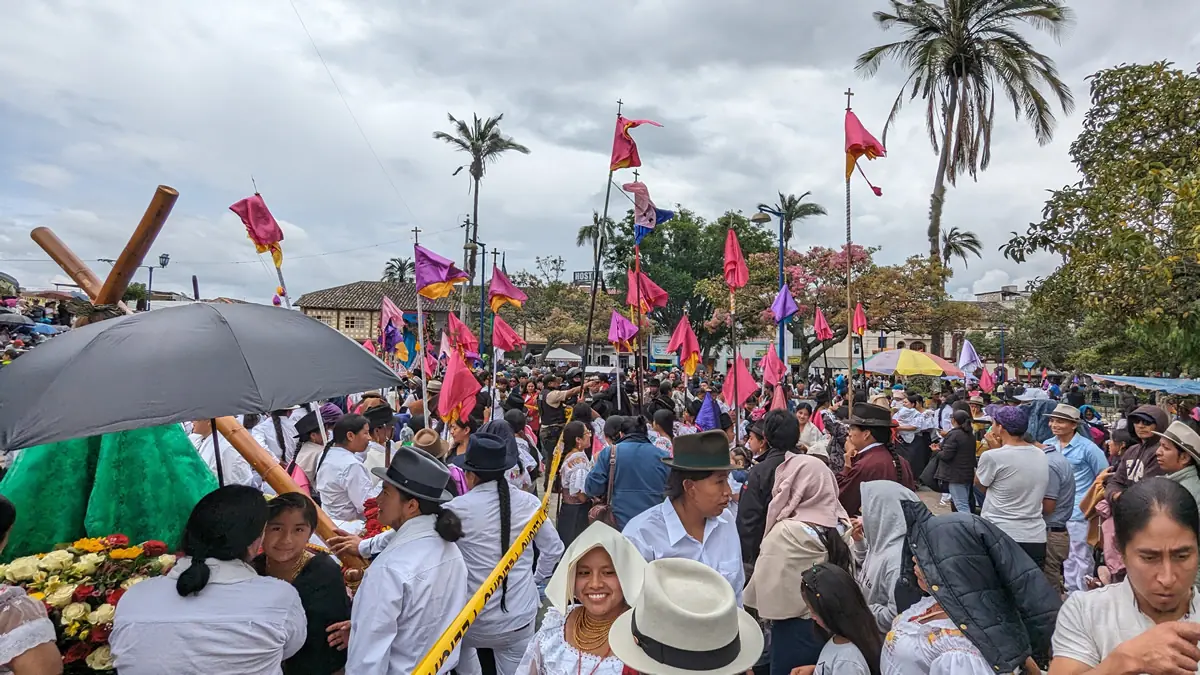
Holy Week in the Sierra is an invitation to slow down. Whether observing food-sharing in Ilumún or the grand scale of Cotacachi, you are witnessing a culture that has preserved its soul through centuries of change. These experiences prove that the most profound moments aren't found in a ticket office, but in shared local spaces. By utilizing local transit and following the Frugal Strategy, you can experience a Semana Santa that is both spiritually restorative and light on the wallet.