Home Rafting Guidebook Travel Updates
Rafting Guidebook Travel Updates
Fast Fred at the Sun Temple in Cusco Peru

Ecuadorian Street Names: Historical Dates Explained

Join my Facebook travel group Frugal and Solo Travel Tips for more!

Why are Latin American streets named after dates?

The use of dates as street names in Latin America is a deep-rooted tradition tied to nation-building and the political goal of commemorating pivotal historical moments, particularly those related to independence and sovereignty.

Unlike many countries that rely heavily on a person's name, Latin American countries often use the exact calendar date of an event as a powerful, permanent symbol.

Here are the key reasons why this convention is so prevalent:

The Reasons Behind Date-Named Streets

1. To Honor the Event, Not Just the Hero

The date itself often represents a moment greater than any single individual. By naming a street after a date?such as Avenida 9 de Julio (Argentina's Independence) or Avenida 10 de Agosto (Ecuador's First Independence Cry)?the focus is placed on the collective action, the declaration, or the decisive battle, rather than a specific hero who might later become controversial.

Commemoration: It serves as a constant, daily reminder of the nation's key milestones and sacrifices.

Immortality: The date is an objective, unchanging marker of history, whereas political figures can fall in and out of favor.

2. Political and Ideological Symbolism

The practice of renaming streets became widespread in the 19th century following the Wars of Independence. New republican governments needed to systematically erase colonial-era names (which often honored Spanish royalty, colonial officials, or religious figures) and replace them with names that reflected the new national identity.

Replacing the Past: It was a deliberate strategy to sever ties with the former Spanish monarchy and instill national pride in the new citizens.

National Unity: A street named after a national date (like Independence Day) is understood by everyone in the country, fostering a shared cultural memory.

3. The Culture of Calendrical Commemoration

Latin American culture places a strong emphasis on commemorating dates of historical, religious, or personal significance. This cultural predisposition made it natural for city planners to look at the national calendar when creating or renaming street systems.

Important Historical Dates Used in Ecuador:

  • 12 de Febrero (February 12): Commemorates the Discovery of the Amazon River in 1542 and is celebrated as the Day of the East (Día del Oriente), honoring the Amazonian region.

  • 12 de Abril (April 12): A major local date, particularly in the city of Cuenca, marking its Founding by the Spanish in 1557.

  • 1 de Mayo (May 1): Represents International Labor Day (Día del Trabajo), recognizing the workers' movement.

  • 24 de Mayo (May 24): This is a National Holiday marking the Battle of Pichincha in 1822. This decisive military victory secured Ecuador's final independence from Spanish rule.

  • 24 de Julio (July 24): Commemorates the Birthday of Simón Bolívar, the military and political leader who was central to the liberation of much of South America.

  • 25 de Julio (July 25): Marks the Founding of Guayaquil by the Spanish in 1537. It is a common street name in the coastal region.

  • 10 de Agosto (August 10): This is a key National Holiday celebrating the Primer Grito de la Independencia (First Cry of Independence). It marks the 1809 declaration of independence in Quito and is often the main avenue in many cities.

  • 9 de Octubre (October 9): Celebrates the Independence of Guayaquil in 1820. This date is used for one of the most famous avenues in Guayaquil.

  • 3 de Noviembre (November 3): Commemorates the Independence of Cuenca in 1820, a major street name within that city.

  • 6 de Diciembre (December 6): Marks the Foundation of Quito by the Spanish in 1534, a date celebrated with the annual Fiestas de Quito.

The system essentially turns the city's street map into a timeline of national history, forcing every resident and visitor to constantly encounter the dates that define the country.

Return to Travel Question & Answers

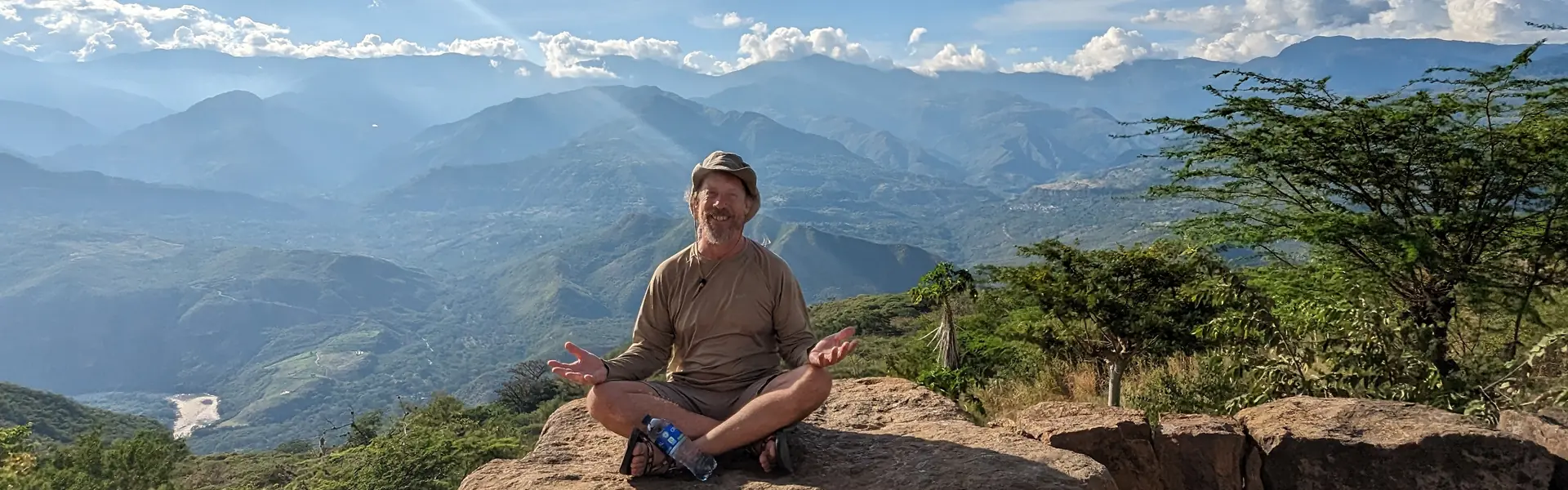
Fast Fred Ruddock in Ecuador overlooking Otavalo

About Fast Fred

I'm Fast Fred Ruddock, a lifelong adventurer and dedicated frugal traveler. My core passion is exploring Latin America, where I spend my off-seasons on extended solo trips.

I have traveled extensively through much of:

  • Mexico
  • Guatemala
  • Colombia
  • Ecuador (my favorite!)
  • Peru
  • Chile
  • Argentina
  • Bolivia

Living on a tight, guide-level budget proves you don't need to be wealthy to live a rich life full of adventure. Join me for frugal travel tips and authentic insights from the road!

My Other Adventures

I'm a professional whitewater guide and kayak instructor. I grew up rafting, sailing, and surfing, and I spend my North American summers guiding on world-class whitewater. I have spent much of my adult life riding motorcycles and paddling kayaks.

Raft with me: Check out Fast Fred Rafts for details.

Questions & Connect

Got questions about solo travel, Latin America, or budgeting? I'd be happy to give you honest answers!

Gear & Support

My Travel & Video Gear: Curious how I travel so light? Dig into my Amazon Shop for an inside look at the gear I carry. (Purchases via this shop provide a small commission at no extra cost to you.)

Tip Jar: Your support helps fund the next adventure of cup of coffee!